Prague for the Weekend: The Castle, the Bridge, and What Lies Beyond

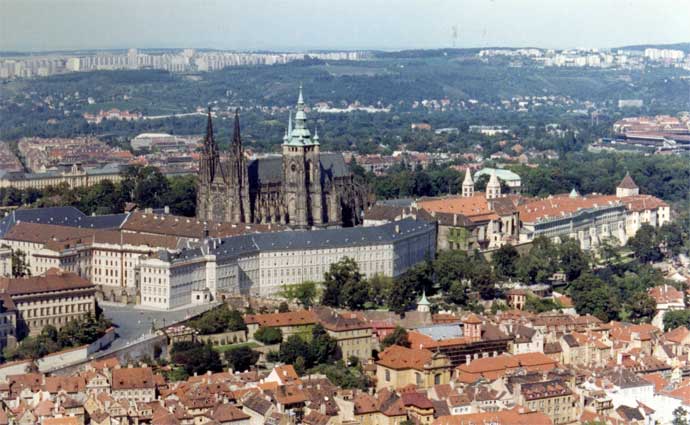
Photo: БережнойСергей at Russian Wikipedia, CC BY 2.5
Prague is set up so that you don't need to invent the main route: it was laid out back in the fourteenth century. The Royal Road went from the Powder Tower through Old Town Square and Charles Bridge to the Castle, and the main flow still goes along it.
The problem is exactly this: the flow is dense. Two days in Prague turn out good if you spend half the time on the Royal Road, and the second — near it.
Day One: The Castle and Lesser Town
Prague Castle is the largest castle complex by area in the world, about seventy thousand square meters. This is not one building, but a quarter: palaces, temples, streets, gardens and a vineyard on the slope.
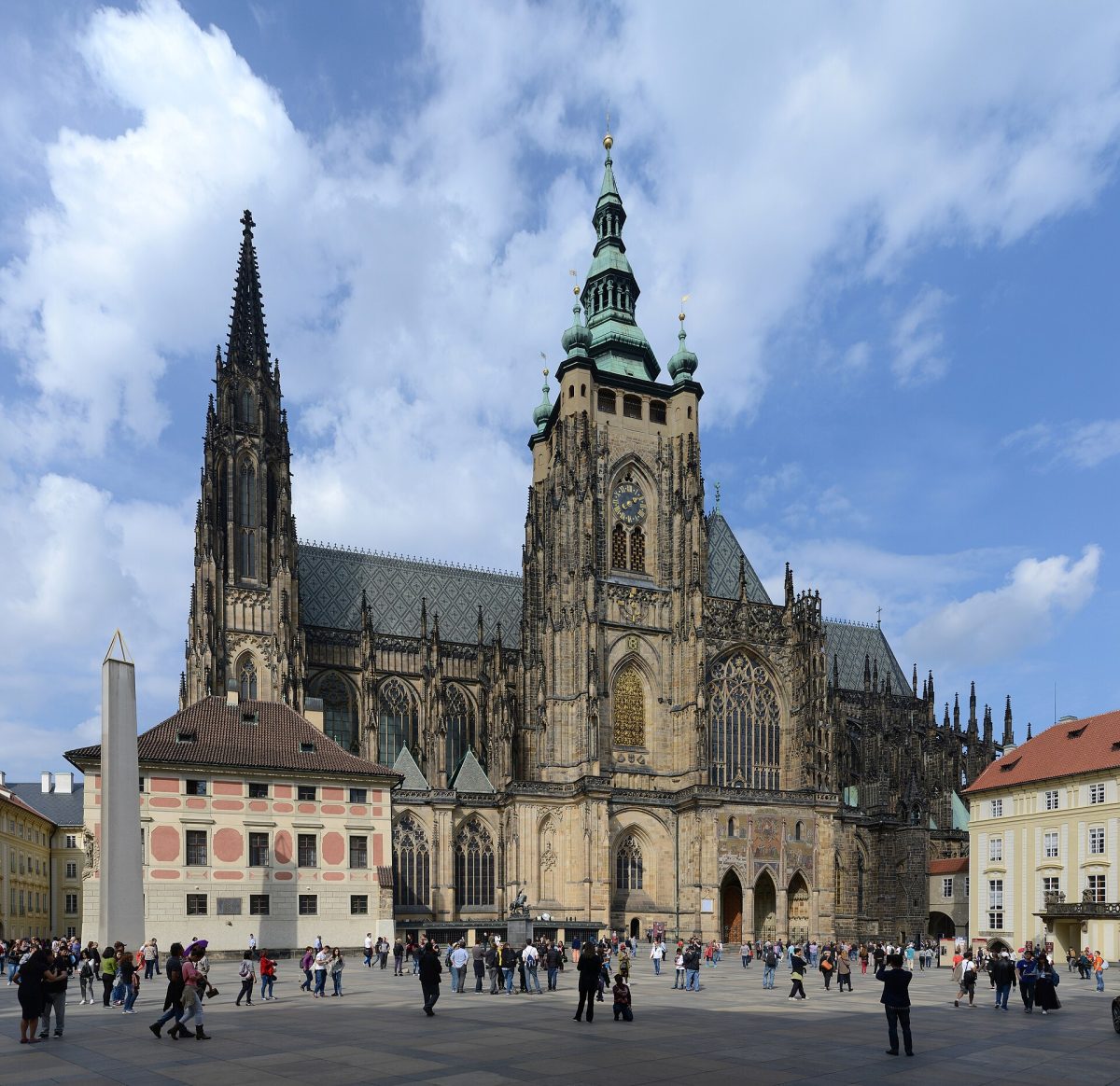
In the center stands St. Vitus Cathedral, which was built from 1344 to 1929 — almost six hundred years. The difference is visible on the facade: the western part is noticeably newer. Inside there are twentieth-century stained glass windows, among them a window by Alphonse Mucha, and the Chapel of St. Wenceslas with walls laid with semi-precious stones.
Tickets to the Castle come in several types; the basic one covers the cathedral, the Old Royal Palace, the basilica and Golden Lane. Entry to the complex territory is free, you only pay for the buildings.
Down from the Castle go gardens and stairs to Lesser Town — a quarter of baroque palaces, embassies and quiet streets. From there it is a stone's throw to Charles Bridge.
The bridge was laid in 1357, and according to legend eggs were added to the mortar to hold it stronger. Length five hundred sixteen meters, thirty statues on the sides — all copies, originals in the lapidary. During the day a solid flow goes over it; at six in the morning it is almost empty, and this is worth one early rise.
Day Two: Old Town and What's Nearby
Old Town Square gathers everything at once: Gothic Tyn Church with two towers, Baroque Church of St. Nicholas, town hall and monument to Jan Hus.
On the town hall hangs the astronomical Orloj of 1410 — the oldest working astronomical clocks in the world. Every hour figures of apostles pass in the windows; the show lasts less than a minute, and a crowd gathers for it a quarter of an hour before. Watching the dial itself is more interesting: it shows the position of the sun and moon, zodiac and Old Czech time.
Nearby lies Josefov — the former Jewish ghetto. The Old-New Synagogue of the thirteenth century remains the oldest active one in Europe, and about one hundred thousand people are buried in twelve layers in the old cemetery: they were not allowed to expand the plot, and graves were laid one on another.
In the second half of the day it is worth leaving the main route. Vyšehrad is the second fortress of the city, where there are almost no tourists: walls over the river, Romanesque rotunda of the eleventh century and a cemetery where Dvorak, Smetana and Capek are buried.
Another option is Petrin Hill with a funicular and a lookout tower of 1891, built after the model of the Eiffel Tower in five times reduced form. Due to the hill its top ends up approximately at the same height above sea level as the original.
Practical
You cannot exchange money in exchange offices in the center: the rate there is predatory, and the commission is hidden in the fine print. Withdrawing at bank ATMs is cheaper, and when asked about conversion always choose crowns, not rubles or euros.
Lunch on Old Town Square costs twice as much as two blocks away from it, with the same quality. Service charge is sometimes already included — the bill is worth reading.
Transport is good: tram route twenty-two passes most of the list above and replaces a tour bus for the price of a regular ticket.
Everything else that is open in the city is gathered on the Prague page.


