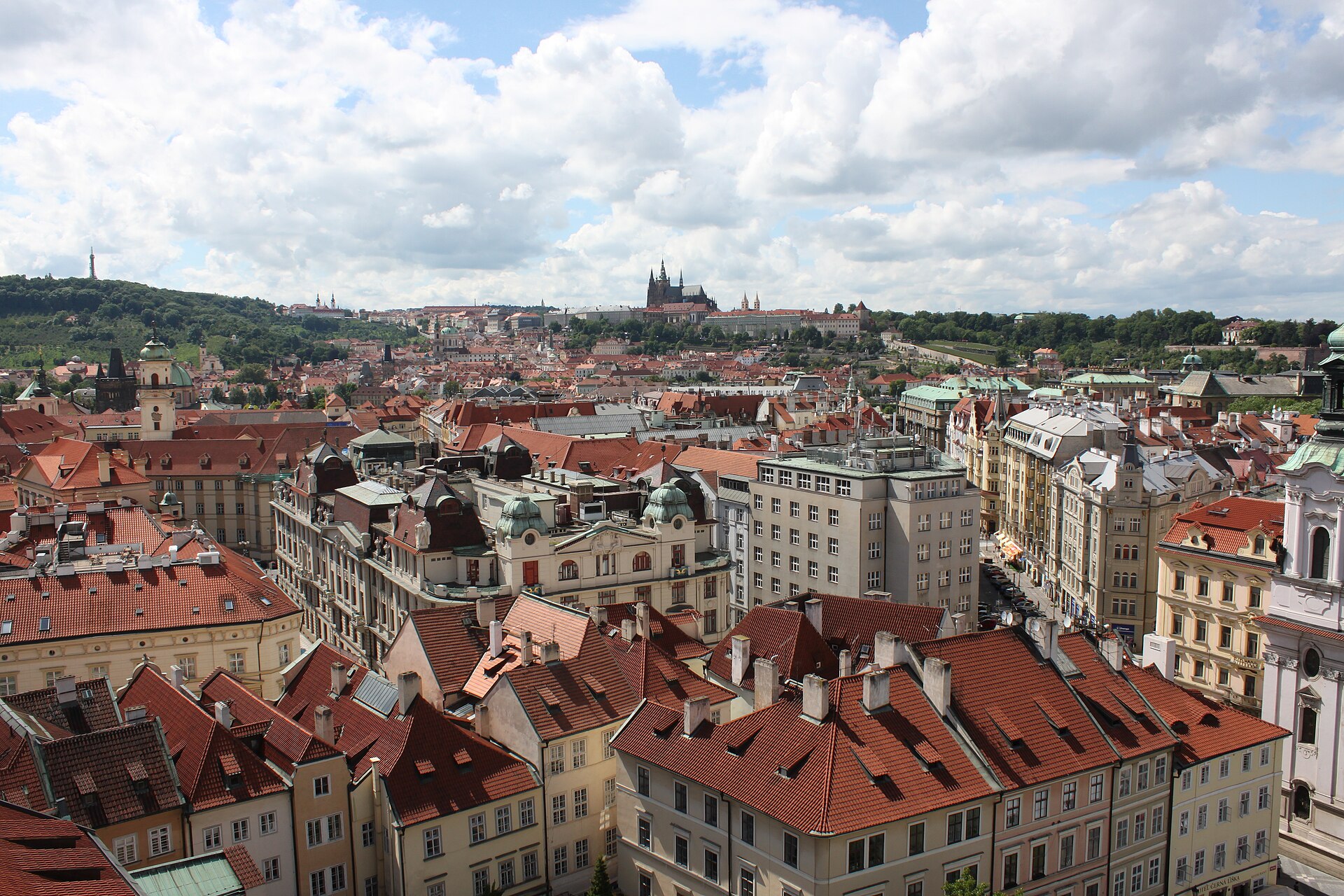
Prague Castle isn’t just a fortress or a landmark—it’s where Czech history seeps into the city’s daily rhythm. Perched on a hill above the Vltava, it has overlooked Prague for over a thousand years, standing as a symbol of power, faith, and national identity. This was where Bohemian kings were crowned, where fateful decisions were made, and where the president and government still work today. But the Castle isn’t just a political hub; it’s a living place where medieval walls stand beside manicured gardens, where crowds of tourists give way to the quiet of empty courtyards.
The Castle’s architecture tells the story of the Czech lands, layer by layer. The first fortifications appeared in the 9th century, when Prince Bořivoj established the Přemyslid dynasty’s seat here. Around the same time, the first Christian church—the Basilica of St. George—was built, though only fragments remain. The Romanesque style gave way to Gothic grandeur under Charles IV, who commissioned St. Vitus Cathedral, the spiritual heart of the Castle. Later, the Habsburg emperors reshaped the palace in Renaissance splendor, adding the Vladislav Hall with its soaring vaults. Each era left its mark, turning the Castle into a patchwork of styles—Gothic spires beside Baroque facades, Renaissance courtyards next to modernist touches.
St. Vitus Cathedral isn’t just the Castle’s centerpiece; it’s where Czech statehood is most vividly embodied. Construction stretched over six centuries, resulting in a building that blends architectural visions across time. The massive stained-glass windows, designed by Alphonse Mucha in the early 20th century, glow with light, while the Chapel of St. Wenceslas, adorned with semi-precious stones, holds the relics of the nation’s patron saint. The cathedral also houses the tombs of Bohemian kings and Holy Roman Emperors, including Charles IV, whose reign marked Prague’s golden age. It remains both an active place of worship and a museum, where visitors can see medieval relics and treasures.
The palaces within the Castle each have their own stories. The Old Royal Palace’s Vladislav Hall, once the stage for knightly tournaments, now hosts official ceremonies. Its vast, intricate vaults seem to float overhead, a testament to Gothic engineering. Nearby, Ludvík’s Wing preserves original frescoes in its Gothic halls. The Queen Anne Summer Palace, built in the Italian Renaissance style, sits in a garden offering one of the best views of Prague. These buildings aren’t just relics—they still serve their original purposes, whether for state functions or exhibitions.
Wandering through the Castle feels like stepping through time. Cobblestone lanes wind past the canons’ houses, where clergy once lived, while gardens from different eras stretch along the walls—some formal and Renaissance, others lush and English-style. In summer, the courtyards are quiet, broken only by the occasional footsteps or rustling leaves. Winter transforms the Castle into a snow-dusted silence, as if time itself has paused. The best moments come at dusk, when the setting sun gilds the palace walls and the city below begins to twinkle with lights.
The Castle isn’t just about the past—it’s a place where history and modern life intersect. Official events take place here daily, museums welcome visitors, and services are held in the cathedral. Yet it’s also where Praguers come to stroll, meet friends, or simply sit on a bench and watch the city. In summer, classical concerts fill the gardens; in winter, a Christmas market brings warmth to the courtyards. Despite its popularity with tourists, the Castle retains a sense of living history, not a museum frozen in time.
For many, the visit starts at Golden Lane, a row of tiny houses clinging to the fortress walls. Once home to alchemists and craftsmen, and later to the Castle guard, the lane now holds souvenir shops and small exhibits. Even in its tourist-friendly form, it still carries the charm of the Middle Ages. Nearby, Daliborka Tower, once a prison, now displays medieval instruments of torture and cramped cells. Walking here feels like glimpsing the past, even if it’s slightly polished by time.
The Castle is open to everyone, but to truly understand it, you need to take your time. Arrive early in the morning, when the crowds are thin, or linger into the evening, when lanterns cast a soft glow. Wander the courtyards, peek into open church doors, or sit on the cathedral steps and watch the city below. There’s no set path—each visitor finds their own way. Some come for the history, others for the views, and some simply because Prague wouldn’t be the same without it. The Castle has a way of drawing people back, and even those who’ve visited countless times always discover something new.