Charles Bridge is one of those rare places in Prague that feels untouched by time. Its stone arches and towers don’t just span the Vltava River—they bridge centuries, carrying the weight of history in every weathered block. The bridge begins at the Old Town Bridge Tower, a formidable structure that looms like a silent guardian over the city’s oldest quarter. Walking across it is like stepping into another era, where the past isn’t just remembered but felt underfoot. The stones here have absorbed the footsteps of merchants, pilgrims, soldiers, and lovers, each leaving behind an invisible trace of their presence.
Construction began in the 14th century under the reign of King Charles IV, whose name the bridge bears. Before it stood the Judith Bridge, a predecessor swept away by a flood. The new crossing wasn’t just meant to be sturdy—it was to symbolize the strength and ambition of the Bohemian Kingdom. Building it took decades, and even after completion, the bridge continued to evolve. Statues were added, chapels rose along its length, and over time, it became a bustling thoroughfare for trade, art, and daily life. Today, it’s hard to imagine horse-drawn carriages clattering across its surface, but the echoes of that past linger in the worn cobblestones.
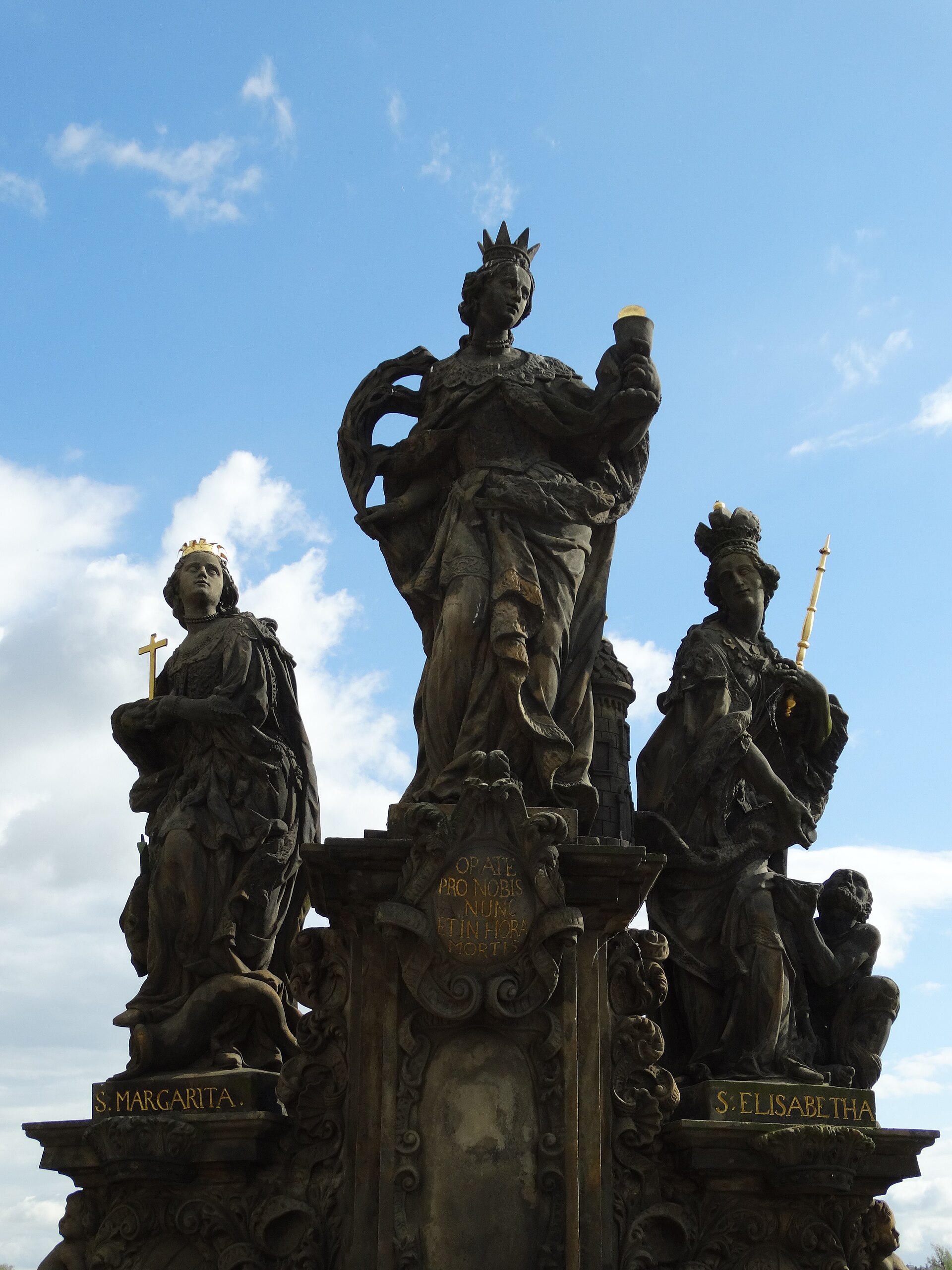
The architecture of Charles Bridge is a story told in stone and sculpture. Thirty statues and sculptural groups line its sides, most of them Baroque additions from the 17th and 18th centuries. Though the originals have long since been replaced with replicas, the spirit of the bridge remains unchanged. The most famous among them is the statue of St. John of Nepomuk, a martyr whose bronze relief is polished smooth by the hands of countless visitors seeking luck. Touching the small dog at its base is said to grant wishes, but even without superstition, the urge to run your fingers over the warm, sun-baked stone is irresistible. The bridge has been worn into a patina of history—its steps hollowed by centuries of use, its railings smoothed by generations of hands.
For centuries, the bridge was more than just a crossing. It was a stage for tournaments, a marketplace for goods and ideas, and a gathering place for the city’s inhabitants. That role hasn’t faded. Today, artists sketch portraits of passersby, musicians fill the air with melodies, and vendors display their wares. The rhythm of life here is timeless. Early mornings are quiet, offering a rare chance to appreciate the details that get lost in the daytime crowds—the intricate carvings, the play of light on the statues, the way the river reflects the sky. By sunset, the bridge transforms. Golden light spills over the statues, the water shimmers, and for a moment, it feels as though the world has slowed down.
Charles Bridge isn’t just a tourist attraction; it’s woven into the fabric of Prague itself. Locals still use it to commute, meet friends, or take a quiet evening stroll, just as their ancestors did. Despite the crowds, it never feels like a thoroughfare—there’s a sense of intimacy here, a connection to the past that’s hard to find elsewhere. The bridge changes with the seasons. In winter, frost dusts the statues like sugar, while summer brings potted flowers and the hum of conversation. Autumn wraps it in mist, lending an air of mystery, and even rain doesn’t dampen its charm. The wet stones glisten, the statues seem to come alive, and the whole scene takes on a dreamlike quality.
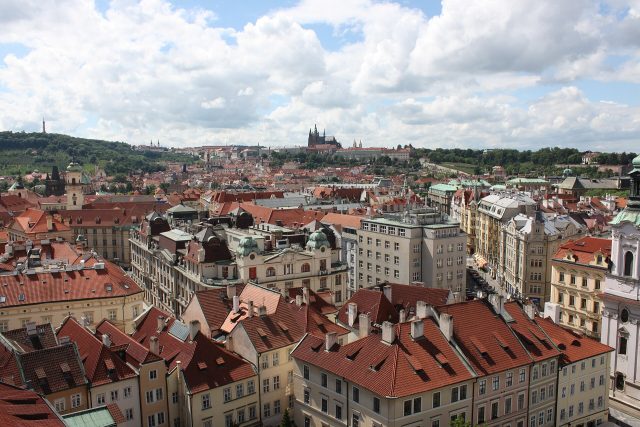
The views from the bridge are among the best in Prague. On one side lies the Old Town, a maze of narrow streets crowned by the spires of the Church of Our Lady before Týn. On the other, the Lesser Town unfolds with its red-tiled roofs and church domes. Above it all, Prague Castle looms like a silent sentinel, its presence a reminder of the city’s enduring legacy. At night, the bridge becomes a luminous arch, its statues bathed in soft light while the river below mirrors the glow of the streetlamps. Many come for the views, but most stay for the atmosphere—the kind of magic that can’t be captured in a photograph.
What makes Charles Bridge special is the way history isn’t just observed here but experienced. You can touch the same stones that kings and commoners once walked upon, feel the weight of centuries in the uneven cobblestones beneath your feet. It’s not a museum, frozen in time, but a living place that continues to breathe and evolve. Even if you’ve crossed it a hundred times, there’s always something new to discover—a detail on a statue you’ve never noticed, a different angle of the city, or simply a mood that can’t be replicated. That’s the real allure of the bridge: it doesn’t just connect two sides of the river. It connects the past to the present, and every visitor to something deeper.