Where to Go for New Year's in Russia: From Vologda to Kaliningrad

Photo: Сергеев Павел, CC BY-SA 3.0
If you want snow and frost without extremes, head to Vologda, Kostroma, and Suzdal: in December, daytime temperatures hover around −4° to −5°C, dropping to −8° to −10°C at night. Vologda has also been named Russia’s New Year Capital for 2027. For those seeking a true northern experience with a chance to see the northern lights, Karelia and Murmansk with Teriberka are ideal, but be prepared for darkness: in Petrozavodsk, the sun appears for an average of just twelve minutes a day in December, while in Murmansk, it doesn’t rise at all. If you prefer no frost at all, Kaliningrad is the choice. December daytime temperatures there average +4°C, and New Year’s will likely be snow-free.
The holidays this year are long—eleven days, from December 31 to January 10—so you don’t have to choose just one destination but can combine two neighboring ones.
Light and Frost: How the North Differs from the Middle Belt
Everyone knows that winter days are short in the north. The real issue is that even those few hours are often overcast. That’s why what matters more isn’t the length of the day but the number of sunny hours—the average time the sun actually shines per day. In Kostroma, December brings about an hour of sunshine; in Vologda, around forty minutes; and in Petrozavodsk and Sortavala, just twelve minutes. In Murmansk, it’s zero: polar night sets in, and the sun doesn’t rise above the horizon from roughly December 2 to January 11.
Frost is less extreme than commonly believed. The middle belt and Karelia in December average −2° to −5°C during the day, cooling by another degree or two in January. The coldest nights in this list occur in January in Murmansk, around −15°C. Kaliningrad is an exception: December nights hover around 0°C, with daytime temperatures at +4°C.
All figures below are long-term averages from weather stations. Any given winter can be milder or harsher, so these are guidelines, not forecasts for the holidays.
| City | December: Day / Night | January: Day / Night | December Precipitation | December Sunshine per Day |
|---|---|---|---|---|
| Vologda | −4°C / −10°C | −6°C / −12°C | 43 mm | about 40 minutes |
| Kostroma | −4°C / −8°C | −5°C / −11°C | 51 mm | about an hour |
| Suzdal | −5°C / −10°C | −5°C / −11°C | 82 mm | no data |
| Petrozavodsk | −3°C / −7°C | −5°C / −11°C | 51 mm | about 12 minutes |
| Sortavala | −2°C / −6°C | −4°C / −10°C | 75 mm | about 12 minutes |
| Murmansk | −5°C / −12°C | −7°C / −15°C | 43 mm | 0, polar night |
| Teriberka | −3°C / −8°C | −4°C / −10°C | 26 mm | no data |
| Kaliningrad | +4°C / 0°C | +2°C / −2°C | 82 mm | no data |
Precipitation is measured in millimeters of water. In frost, it falls as snow, so 82 mm in Suzdal means a lot of snow, while the same 82 mm in Kaliningrad likely means rain or sleet.
Vologda: New Year Capital 2027
The Ministry of Culture named Vologda Russia’s New Year Capital for 2027. The festive program, "Vologda Winter," runs from December 12 to January 9, covering nearly the entire holiday period.
The weather here is typical of a Russian winter: December daytime temperatures average −4°C, dropping to −10°C at night, while January brings −6°C and −12°C. Snowfall is moderate, with 43 mm of precipitation in December. Sunshine is scarce: about forty minutes a day in December and twenty-five in January.
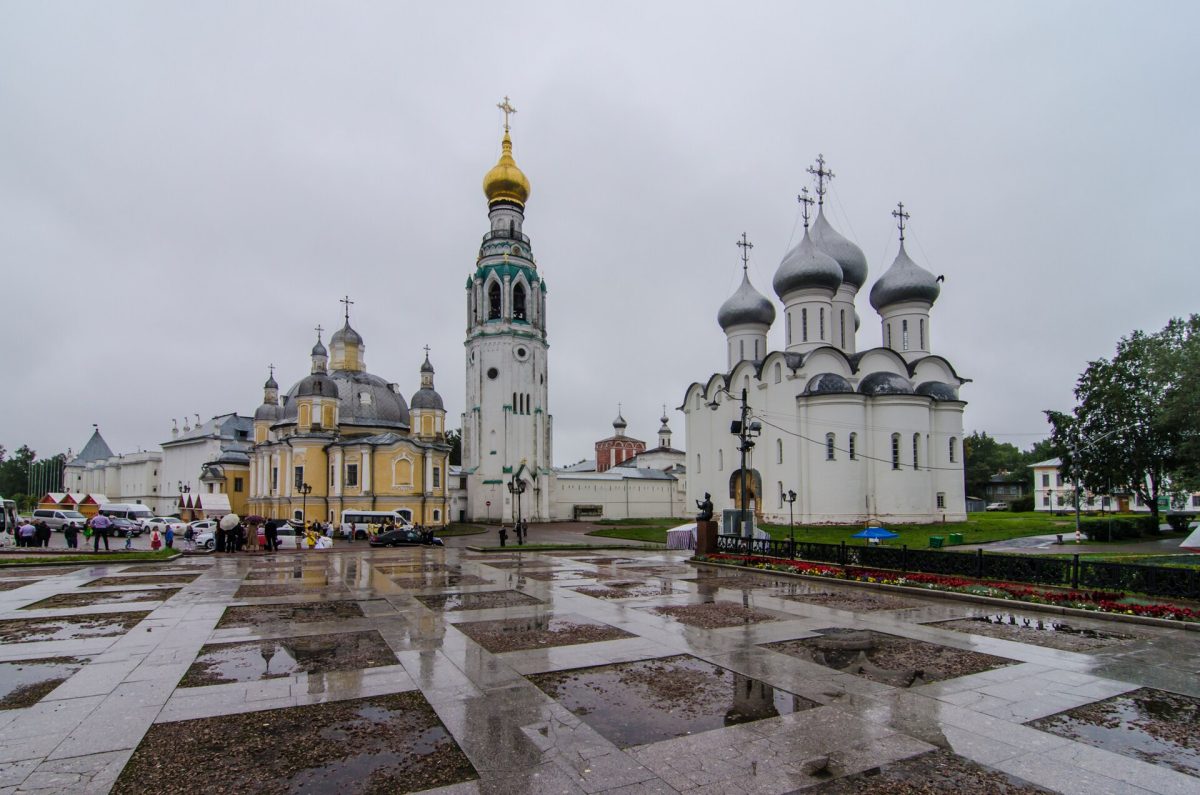
Start at the Vologda Kremlin and Saint Sophia Cathedral, built in the 16th century under Ivan the Terrible. The Kremlin, once the bishop’s residence, now houses the Vologda Museum-Reserve. Nearby is the Peter the Great House Museum: the tsar visited Vologda several times, and the museum in this house opened as early as the 19th century. The Vologda Exile Museum-Reserve tells the story of how the city served as a place of political exile for centuries. From Revolution Square, you can walk to old parish churches like Pokrov Church on Kozlyonok and St. Varlaam of Khutyn Church. Families with children often visit the puppet theater "Teremok," while adults head to the drama theater. Check the holiday schedules for both in advance.
Being the capital for the year means more visitors than usual, and demand for accommodation spikes during the holidays, so it’s best not to delay booking. Veliky Ustyug, home to Ded Moroz, is also in the Vologda region, but it’s hundreds of kilometers away—a separate trip that can’t be done in half a day.
Kostroma: Snow Maiden and the Volga
Among the cities with sunshine data, Kostroma has the most—if December can be described that way: about an hour a day, dropping to thirty-five minutes in January. The weather is similar to Vologda’s: December brings −4°C during the day and −8°C at night, while January sees −5°C and −11°C. Kostroma calls itself the birthplace of the Snow Maiden, and not without reason: Ostrovsky wrote his play at his estate in Shchelykovo, Kostroma region.
In 1613, Ipatiev Monastery was where Mikhail Romanov was informed of his election as tsar. Nearby is the Kostroma Museum of Wooden Architecture, where houses and churches from the region’s villages have been relocated. Everything is outdoors, so winter walks are short. The city center fans out from Susaninskaya Square, where the Fire Watchtower, with its columns, looks more like a mansion than a fire station. The Trade Rows are still in use today. Overlooking the Volga is the 17th-century Resurrection Church on Debra. On bad weather days, the Linen and Birch Bark Museum and the Kostroma State Drama Theatre named after A.N. Ostrovsky, one of the country’s oldest, are good options.
Kostroma is small: two days are more than enough, and the holidays are too long to spend entirely there. The monastery and wooden architecture museum are across the Kostroma River, not a five-minute walk from the center, and the open spaces by the water make the frost feel harsher than the thermometer suggests.
Suzdal: Christmas in a Small Town
Suzdal is one of those towns that looks better under snow than in summer: white monastery walls and dark wooden houses. The weather here is the most stable on the list: both December and January average around −5°C during the day and −10° to −11°C at night. December is typically the wettest month of the year, with 82 mm of precipitation—almost twice as much as in Vologda—and nearly all of it falls as snow. Sunshine data for Suzdal isn’t available.
Everything worth seeing fits into a walking tour. The Suzdal Kremlin with the Nativity Cathedral, which has blue domes with golden stars. The Saviour-Euthymius Monastery is a true fortress with long walls over the Kamenka River, housing several museum exhibits. On the opposite bank stands the Pokrovsky Monastery, where disgraced wives—from Vasily III’s to Peter the Great’s first wife—were sent. The market square features the Trade Rows and the Resurrection Church on the Marketplace. The Wooden Architecture and Folk Life Museum displays houses and churches in the snow, just as they should be.
But Suzdal is small, and during the holidays, it gets crowded: in early January, the center fills with tour groups, and accommodation in the city books up quickly. A day or two is enough for the town itself, so for the long holidays, it’s best combined with Vladimir, less than an hour away.
Karelia: Petrozavodsk, Sortavala, and Ruskeala
Winter in Karelia is milder than many expect: in Petrozavodsk, December averages −3°C during the day and −7°C at night, while January brings −5°C and −11°C. In Sortavala, on the shore of Lake Ladoga, December is even milder, around −2°C and −6°C, with January at −4°C and −10°C. Sunshine, however, is nearly nonexistent: Petrozavodsk gets about twelve minutes a day in both December and January, while Sortavala has the same in December and about half an hour in January.
Petrozavodsk
The city stretches along Lake Onega, and the main walk here is the Onega Embankment, lined with sculptures gifted by sister cities. When the lake freezes, the embankment becomes the edge of a vast white field. The center features Round Square, the Karelia National Museum, Governor’s Park, and the Alexander Nevsky Cathedral. From the city, trips go to Kivach Waterfall, which partially freezes in winter, and to Marcial Waters, Russia’s first resort, founded by Peter the Great.
Getting to Kizhi is more complicated. In summer, hydrofoils run there, but in winter, there’s no navigation, turning a half-day trip into a separate challenge. Check in advance with the museum itself to see if it’s accessible during your dates and how to get there.
Sortavala and Ruskeala
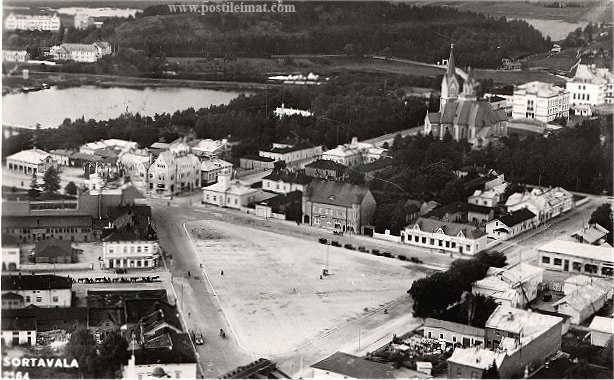
Sortavala is a small town on the shore of Lake Ladoga, Finnish in the first half of the 20th century, and this is evident in its center. Start at Kirov Square, walk to St. Mary’s Lutheran Church and Merchant Serebryakov’s House, and visit the local history museum. From here, head to Ruskeala Mountain Park, a flooded marble quarry with sheer white walls. The canyon is lit in the dark, and the short days work in your favor: the light on the marble and ice is visible only after sunset, and December sunsets are early. Near the park are the Ruskeala Waterfalls, and another set, Akhinkoski.
Those coming for long forest walks will find that in late December, it’s light for about five hours, and most of that time is gray. The Ladoga Skerries are ice-bound in winter, and Valaam Monastery, the main summer trip from Sortavala, becomes hard to reach without navigation. So this trip is for those who enjoy quiet and evening light, not for those who want to see everything in a week.
Murmansk and Teriberka: Polar Night and the Northern Lights
People come here for what you can’t find in the middle belt: the polar night and a chance to see the northern lights. The polar night covers the entire holiday period, so New Year’s here is celebrated in darkness, briefly brightened by blue twilight around noon.
Temperature-wise, Murmansk is only slightly colder than Vologda: December averages −5°C during the day and −12°C at night. January cools to −7°C and −15°C, the coldest nights on this list. Precipitation is around 43 mm in December and 47 mm in January, all of it snow.
In Murmansk itself, visit the Nuclear Icebreaker Lenin, the world’s first surface vessel with a nuclear power plant, now a museum by the sea terminal. The Alyosha Monument stands on a hill overlooking the city, offering views of Kola Bay. The bay doesn’t freeze thanks to a warm current, and in severe frost, steam rises from the water. The Murmansk Oceanarium features seals, a good option for children on dark days. The city center is Five Corners Square.
The northern lights aren’t on a schedule. You need clear skies and an active sun simultaneously, but winter on the Kola Peninsula is often cloudy. City lights interfere, so to see the aurora, you need to head into the dark—Teriberka is the best spot.
Teriberka is a village on the Barents Sea coast, over a hundred kilometers from Murmansk via a road through the tundra. It gained fame after the film "Leviathan." Here, the Ship Graveyard in Teriberka lies right on the shore, along with Dragon Eggs Beach, covered in round boulders, the Batareysky Waterfall, and the Teriberka Cape Viewpoint. The village itself has St. Nicholas Church and a local history museum. Teriberka is warmer than Murmansk: December averages −3°C during the day and −8°C at night, while January brings −4°C and −10°C. The sea here doesn’t freeze—December waters are around +4°C, January around +2°C—and this prevents the shore from freezing deeply. However, the open sea often brings wind, and −3°C on a windy day can feel colder than Murmansk’s −5°C.
The road to Teriberka can close during blizzards or allow cars only in convoys behind snowplows, so plan an extra day or two. No one can guarantee the northern lights, no matter what ads promise. And the polar night itself is a challenge: a week without sunlight affects well-being more than the cold.
Kaliningrad: A Frost-Free New Year
Kaliningrad is for those who want to stroll during the holidays, not warm up indoors. December daytime temperatures average +4°C, dropping to around 0°C at night, while January brings +2°C and −2°C. The Baltic Sea in December is around +3°C, January around +1°C, and it’s this sea that keeps the city from freezing. Snow does fall, but with daytime temperatures above freezing, it doesn’t last long, so the holiday will likely be snow-free.
Winter here is different—almost European. The brick gates of old Königsberg, the Brandenburg Gate and Friedland Gate. Königsberg Cathedral on Kant Island, with the philosopher’s grave and organ concerts. The Amber Museum in Don Tower. The Church of the Holy Family, a former cathedral now housing a philharmonic with an organ. For rainy days, there’s the World Ocean Museum with ships at the dock and the Kaliningrad Regional Museum of History and Art, while the excavations at the Königsberg Castle Ruins can be seen in any weather. The Curonian Spit with its Dancing Forest is empty and quiet in winter—a plus if you’re not afraid of the sea wind.
But December in Kaliningrad is one of the wettest months of the year: 82 mm of precipitation on average, almost as much as in October. The sky is low, and underfoot, it’s more slush than snow. If you want snowdrifts, this isn’t the place to go: here, New Year’s comes with an organ and an umbrella.
When to Go
The holidays are long, but the busiest days are the same almost everywhere, from December 31 to Christmas. After January 7, it’s usually quieter, so the same Suzdal or Kostroma is better visited in the second half of the holidays.


