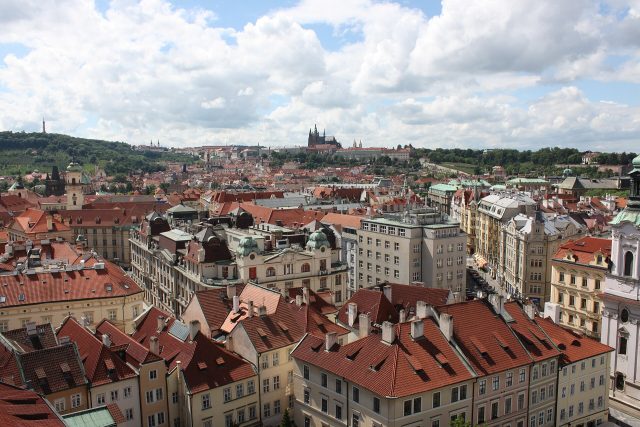
Prague’s Jewish Quarter, known as Josefov, feels like a place where time moves differently. The narrow cobblestone streets wind past old buildings with weathered facades. Tucked between the Old Town and the Vltava River, this small area carries a weight far beyond its size. It’s easy to see Josefov as just another stop on a tourist route, but its story is deeper—one of resilience, creativity, and loss.
The quarter began in the Middle Ages as a segregated enclave. Prague’s Jews were forced to live here under royal decree. For centuries, walls separated it from the rest of the city, and residents faced restrictions that shaped their daily lives. Yet within those boundaries, a community took root. By the Renaissance, Josefov had become a center of Jewish scholarship, trade, and culture. Rabbis, writers, and thinkers from across Europe were drawn here. Synagogues and schools became hubs of learning. The name Josefov came later, in the 19th century, when Emperor Joseph II eased some of the discriminatory laws.
Today, several synagogues stand as witnesses to that history.
The Old-New Synagogue, built in the 13th century, is one of the oldest active synagogues in Europe. Its Gothic arches and thick stone walls have heard countless prayers. The legend of the Golem, said to have been created by Rabbi Loew, is tied to these walls.
The Pinkas Synagogue is now a memorial. Its walls are covered in the names of Czech Jews lost in the Holocaust. The Klausen Synagogue houses exhibits on Jewish traditions. The Maisel Synagogue holds a collection of ceremonial silver and textiles, each piece reflecting faith and craftsmanship.
The Old Jewish Cemetery is essential to any visit. One of the most famous in the world, it holds the remains of tens of thousands of people who lived in Prague over three centuries. The gravestones, packed tightly together, appear chaotic, but the arrangement was necessary—space was scarce, and new burials were layered over old ones. Among the stones, you’ll find the names of Rabbi Loew and Franz Kafka, whose family once lived nearby. The cemetery isn’t just a place of mourning. It’s a connection to the past, where history feels tangible.
Josefov is more than a museum. It’s a neighborhood where old shops and cafés sit alongside synagogues and memorials. In summer, classical music drifts through the streets during open-air concerts. Winter brings strings of lights that soften the cobblestones. But the quarter’s survival wasn’t guaranteed. In the 1960s, city planners proposed demolishing much of it to make way for modern buildings. The plans were never carried out, and today Josefov remains one of Prague’s most important historical sites.
Walking through Josefov is like stepping into different eras. You can imagine Renaissance merchants trading goods with cities across Europe. The 19th century brought intellectual energy, when the quarter thrived. But the shadows are always there—pogroms, deportations, the Holocaust—each leaving its mark on the stones.
This is a place where the past lingers in the details. The worn steps of the synagogues. The names on the cemetery walls. The echo of a prayer sung centuries ago.
Josefov doesn’t rush you. To understand it, you have to slow down. Look beyond the postcards and souvenir stands. The quarter doesn’t shout its history. It whispers it—in the creak of an old door, the inscription on a gravestone. It’s a place where every corner holds a story. Where the line between past and present blurs just enough to make you pause. And in that pause, you might catch a glimpse of what it means to carry history forward—not as a burden, but as a reminder.