Weather overview
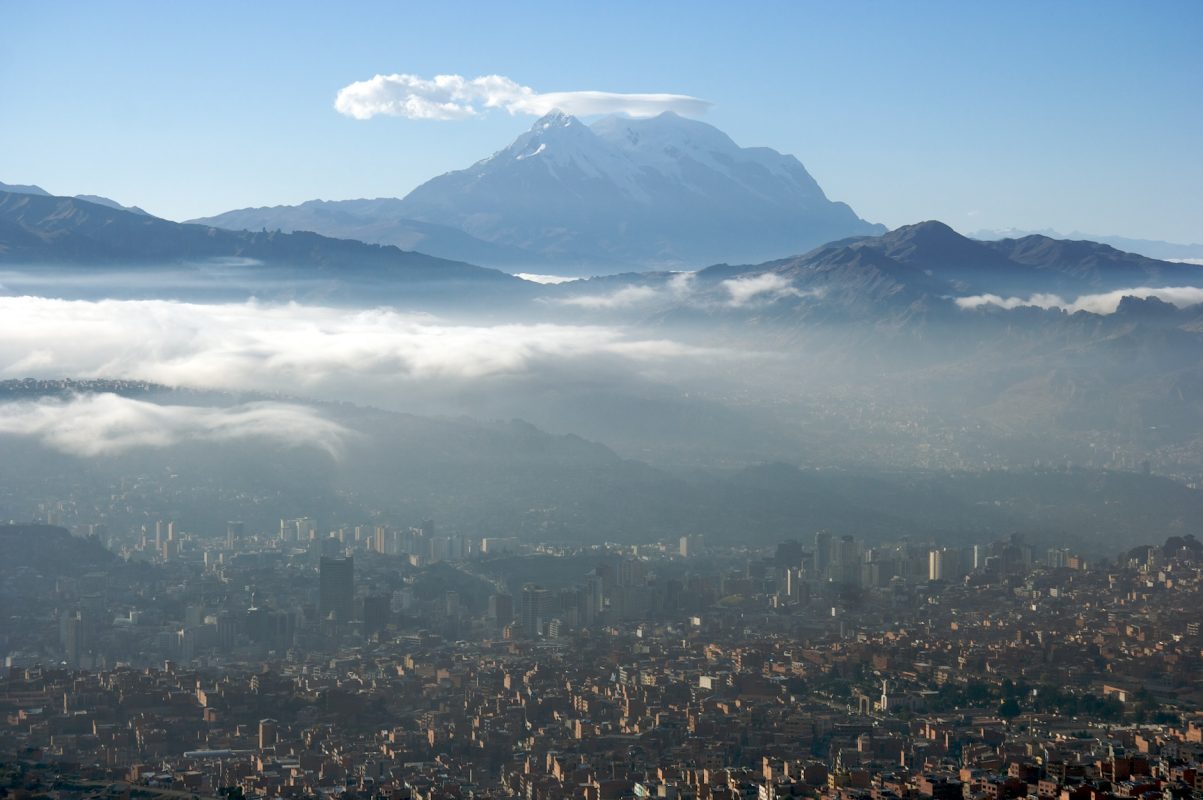
Ла-Пас sits high in the Andes, and its weather reflects the city’s dramatic elevation. Days are mild year-round, but nights can turn chilly, especially in the cooler months. The climate splits neatly into three distinct periods: a wet season, a dry season, and two transitional windows in between.
From November to March, Ла-Пас sees the most rain, with frequent afternoon showers that rarely last all day. The air feels heavier, and clouds often cling to the hillsides. By April, the skies begin to clear, leading into the dry season from May to October, when sunshine dominates and the air grows crisp. The shoulder months of April and October offer a mix of both, with fewer crowds and comfortable conditions.
Temperature
Temperatures in Ла-Пас stay relatively steady, but the difference between day and night can be striking. During the wet season, daytime highs hover around +16...+18 °C, while nights dip to +3...+5 °C. The coldest months are June and July, when nighttime temperatures can fall to 0 °C or below, though days remain pleasant at +16 °C.
By September, the city starts to warm up again, with daytime highs reaching +18 °C and nights becoming less biting. The transitional months of April and October offer the most balanced temperatures, with days around +16 °C and nights around +4 °C. Even in the warmest months, the thin mountain air means the sun feels gentler, but the chill returns quickly after sunset.
| Month | Minimum | Maximum |
|---|---|---|
| January | 5.7 | 16.9 |
| February | 5.6 | 16 |
| March | 5.5 | 15.8 |
| April | 3.8 | 16.6 |
| May | 2.1 | 16.1 |
| June | 0.1 | 16.3 |
| July | 0.7 | 16.9 |
| August | 1.1 | 17.4 |
| September | 3 | 18.3 |
| October | 4.4 | 18.8 |
| November | 5.1 | 18.4 |
| December | 5.4 | 17.3 |
Precipitation
Ла-Пас has a clear wet and dry cycle, with nearly all the year’s rain falling between November and March. January and February are the wettest months, averaging over 100 mm of rain each, often in short, intense bursts. These showers usually arrive in the afternoon, leaving mornings clear for exploring.
From May to August, rain is almost nonexistent, with June and July seeing just 1 mm or less. The dry season brings bright, sunny days and cool nights, making it a popular time to visit. September and October mark the shift back to wetter weather, with rain gradually increasing but still manageable for travel.
| Month | Precipitation |
|---|---|
| January | 106 |
| February | 129 |
| March | 144 |
| April | 77 |
| May | 50 |
| June | 1 |
| July | 7 |
| August | 9 |
| September | 30 |
| October | 68 |
| November | 105 |
| December | 114 |
What to pack
In Ла-Пас, layers are key no matter when you visit. During the wet season, pack a lightweight waterproof jacket for afternoon showers, along with quick-dry clothing. Even in warmer months, evenings can be cool, so a sweater or fleece is useful. A hat and sunscreen are essential year-round due to the strong high-altitude sun.
For the dry season, especially from June to August, bring warmer layers for the cold nights, including a heavier jacket and gloves if you plan to be out after dark. Comfortable walking shoes are a must for the city’s steep streets, and a scarf can help with the occasional wind. If you’re sensitive to altitude, consider packing altitude sickness remedies as a precaution.
| Month | Wind speed | Direction |
|---|---|---|
| January | 1.5 | 124 |
| February | 1.5 | 136 |
| March | 1.2 | 140 |
| April | 0.5 | 120 |
| May | 0.5 | 344 |
| June | 1.1 | 318 |
| July | 0.4 | 309 |
| August | 0.1 | 30 |
| September | 1.2 | 105 |
| October | 1.1 | 105 |
| November | 1.3 | 115 |
| December | 1.2 | 123 |