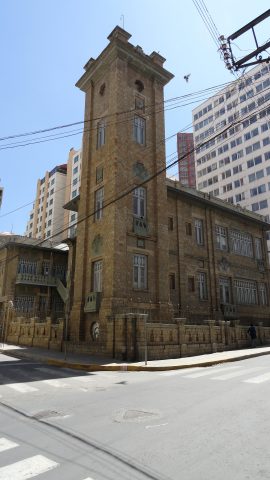
San Francisco Basilica stands at the heart of La Paz, where the city’s layered history feels almost tangible. Built in the mid-1700s, it rises from a square that once pulsed with colonial life, its sturdy walls and intricate carvings telling stories of a time when Spanish influence merged with local traditions. The façade is a striking example of this blend—baroque grandeur softened by indigenous motifs, where saints and vines intertwine in stone. Inside, the space unfolds with quiet dignity: soaring arches draw the eye upward, while gilded altars glow under the dim light filtering through stained glass. The craftsmanship here isn’t about opulence but precision, each detail a testament to the hands that shaped it over centuries.
The basilica’s interior holds more than just religious art. In the side chapels, biblical scenes share space with depictions of Andean flora and fauna, a subtle nod to the land’s identity. One of the most revered pieces is the statue of the Virgin Mary, a figure that has become a symbol not just for the church but for the city itself. Locals and visitors alike pause before it, whether in prayer or quiet reflection. The air inside carries the scent of old wood and candle wax, a reminder that this is still a living place of worship, not just a relic of the past.
The building hasn’t always looked as it does today. The original 16th-century structure was destroyed by an earthquake, and the current version took shape decades later. Even then, it underwent changes—19th-century renovations introduced neoclassical touches, though the overall feel remained rooted in the colonial era. Now, the basilica serves as both a church and a museum, its archives holding manuscripts, ceremonial objects, and paintings that trace La Paz’s evolution. Walking through its halls, you can almost hear the echoes of sermons, the murmur of prayers, and the footsteps of those who have passed through over generations.
The square outside is just as much a part of the story. Once a hub for markets and public gatherings, it has witnessed everything from lively trade to political protests. Today, it’s a place where tourists snap photos of the basilica’s façade while locals sit on benches, sipping coffee or chatting with neighbors. In the evenings, the glow of streetlights casts long shadows across the stone, making the old walls appear even more imposing. The square still hums with activity, though the nature of that energy has shifted with time.
For La Paz, San Francisco Basilica is more than just a landmark—it’s a cultural anchor. During religious festivals, the church overflows with worshippers, and the square transforms into a stage for music, dance, and celebration. Even those who don’t consider themselves religious are drawn here, whether for the architecture, the history, or simply the atmosphere. The basilica has a way of grounding you in the city’s rhythm, offering a pause from the chaos of modern life.
The streets around the basilica feel like a world of their own. Narrow alleys lead to small shops selling handmade textiles, silver jewelry, and traditional sweets like *turrón* and *cocadas*. Cafés spill onto sidewalks, their tables offering views of the square, while vendors set up stalls with fresh fruit and steaming cups of *api*, a warm corn drink. This part of La Paz moves at its own pace, untouched by the rush of the city’s newer districts. There’s no forced nostalgia here—just the quiet persistence of daily life, where old and new coexist without fanfare.
What makes the basilica special is how it bridges different eras. It’s a monument to Bolivia’s colonial past, yet it remains firmly embedded in the present. You could spend an hour studying the carvings on the portal or linger longer, listening to the bells toll and watching the light shift across the stone. In a city defined by its altitude and contrasts, the basilica offers something rare: a sense of continuity. It’s a place where history isn’t just remembered—it’s still being lived.