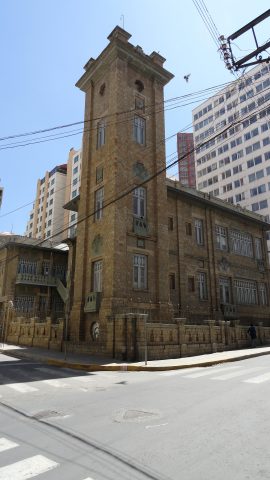
Tucked away on a quiet street in La Paz, the Museo de Metales Preciosos Precolombinos feels like a hidden conversation with the past. The building itself is part of the story—a colonial-era mansion with thick adobe walls and wooden balconies that have witnessed centuries of change. It was once home to a wealthy family, but today it shelters something far more precious: the craftsmanship of cultures that thrived long before the Spanish arrived. There’s no grand entrance or flashy displays here, just a sense of stepping into a space where history hasn’t been polished for tourists, but preserved as it was found.
The collection centers on gold and silver artifacts unearthed across what is now Bolivia, each piece a testament to the skill of pre-Columbian artisans. Delicate earrings, ceremonial knives, and intricately worked vessels reveal a level of artistry that still feels astonishing. Some of the most striking items are small gold figurines—deities, animals, and mythical beings—whose details are so fine they seem almost alive. These weren’t just objects; they were part of rituals, offerings, or symbols of power, and their presence in the museum offers a rare glimpse into the beliefs and daily lives of the Tiwanaku, Inca, and other Andean civilizations.
Beyond the gleam of precious metals, the museum holds copper and bronze tools, as well as ceramics that tell their own stories. The pottery, in particular, stands out for its vivid designs—geometric patterns, scenes of hunting or farming, and depictions of gods that hint at a worldview far removed from modern perspectives. Some vessels were used in burial rites, others in feasts, and their wear and repair marks suggest they were cherished, not just decorative. These pieces don’t just sit behind glass; they feel like fragments of a conversation that’s still unfolding, one that connects the present to a time when these objects were part of living traditions.
The museum’s setting adds another layer to the experience. The building’s architecture blends Spanish colonial elements with indigenous influences, a quiet reflection of the cultural fusion that shaped Bolivia. The courtyard, shaded by a single tree, is a peaceful spot to pause, surrounded by the same walls that once housed generations of families. It’s easy to imagine the clatter of colonial life here, or the hushed voices of servants moving through the rooms. The space doesn’t feel like a museum at first—more like someone’s home, which in a way, it still is.
What makes this collection especially compelling is its role in piecing together Bolivia’s past. Many of the artifacts were recovered from archaeological sites, and each one fills in gaps in our understanding of pre-Columbian societies. The goldwork from Tiwanaku, for instance, speaks to the sophistication of a civilization that dominated the region centuries before the Inca. Meanwhile, silver items from Potosí—once the heart of the Spanish colonial mining empire—hint at the brutal extraction that followed the conquest. The museum doesn’t shy away from these contrasts; it presents them as part of a larger narrative, one where beauty and exploitation are intertwined.
There’s also a small but well-curated library on-site, where visitors can dive deeper into the history of Andean cultures. Temporary exhibitions occasionally rotate through the galleries, often focusing on recent archaeological discoveries or themes like traditional metalworking techniques that persist in Bolivia today. On rare occasions, the museum hosts talks or workshops, offering a chance to see how these ancient skills are still practiced. It’s the kind of place where you might spend an hour—or linger for half a day—depending on how much you want to let the past pull you in.
One of the most thought-provoking aspects of the museum is how it challenges modern assumptions about value. For pre-Columbian societies, gold and silver weren’t just wealth; they were sacred, tied to the gods and the cycles of nature. The Spanish, of course, saw them differently—as commodities to be seized and melted down. The artifacts here bear the weight of that shift, their survival a small act of resistance against centuries of looting. Standing in front of a display case, it’s hard not to wonder about the hands that shaped these objects, the rituals they were part of, and the lives they touched before ending up here.
Unlike the more famous attractions in La Paz, this museum doesn’t draw crowds. That’s part of its charm. There’s no rush, no jostling for a better view—just the quiet hum of a space that invites you to look closely. It’s not a substitute for visiting Tiwanaku’s ruins or the silver mines of Potosí, but it does something those places can’t: it makes the past feel immediate. Whether you’re a history enthusiast or simply curious about the layers beneath Bolivia’s surface, this is a place where the past isn’t just remembered—it’s still speaking.