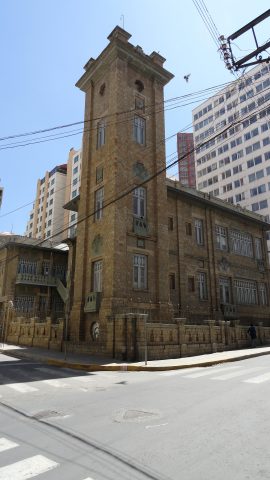
St. Peter’s Church in La Paz is one of those quiet places where time seems to have paused, preserving the spirit of a bygone era. Tucked away on one of the city’s oldest squares, it stands where the story of Bolivia’s capital first began to unfold. Built in the late 18th century, the church has witnessed the sweep of history—from Spanish colonial rule to the struggles for independence and the social upheavals that followed. It was more than just a place of worship; it was a silent observer of change, its walls holding the echoes of the past.
The architecture reflects the Andean Baroque style, a blend of European influences and local traditions. The facade is understated yet striking, with tall columns, arched doorways, and minimal ornamentation—typical of churches from that period. Inside, the space feels both simple and solemn. Wooden pews line the nave, while faded frescoes and a gilded altar create an atmosphere of quiet reverence. The contrast between the stillness within and the bustle of the streets outside is striking, as if the church exists in its own timeless bubble.
In colonial times, St. Peter’s was more than a religious center—it was the heart of community life. Locals gathered here not just for services but to share news, make decisions, and find solace in difficult times. Even after Bolivia gained independence, the church remained a unifying symbol, bridging divides between people of different backgrounds. Its role in shaping the identity of La Paz is subtle but profound, woven into the fabric of the city’s history.
Today, the church is still an active place of worship, but it also serves as a living museum of sorts. Its walls have seen countless processions, both joyful and somber, and its interior holds relics tied to the city’s past. For locals, it remains a place of connection—to their ancestors, their faith, and the traditions that have endured through generations. Visitors, too, can sense this continuity, especially in the absence of crowds. Unlike more famous landmarks, St. Peter’s offers a moment of quiet reflection, a chance to sit on a worn wooden pew and imagine the voices that once filled the space.
If you’re lucky, you might hear the organ, its notes drifting through the air just as they have for centuries. The instrument is a reminder of the church’s enduring presence, its music a thread connecting the past to the present. Outside, the surrounding neighborhood is a mix of old and new—colonial buildings stand alongside lively markets and cafes where the scent of traditional Bolivian dishes lingers in the air. Walking these streets, you can almost trace the layers of history that have shaped La Paz, from its earliest days to the vibrant city it is today.
For those curious about the past, St. Peter’s is a starting point. It tells a story not just of faith but of the people who built and sustained it. The architecture, the art, and even the way the light filters through the windows all reflect the changes that have swept through Bolivia over the centuries. There’s a sense of continuity here, a feeling that the past isn’t just remembered but still alive in some way.
What makes the church special is its unassuming nature. It doesn’t demand attention like grander cathedrals, yet it holds a quiet significance. It’s a place where history feels personal—less about dates and events, more about the lives and beliefs of those who came before. For travelers, it offers a chance to see La Paz through a different lens, not just as a tourist destination but as a city with deep roots and a living heritage.
In the end, St. Peter’s is more than just a building. It’s a reminder that history isn’t just something we read about; it’s something we can still feel, if we take the time to listen. Whether you’re drawn by faith, curiosity, or simply the desire to step away from the noise of the modern world, the church offers a moment of stillness—a chance to connect with the soul of La Paz.