Dvin
Armenia · 7 places
Photo: Wikimedia Commons, Public domain
Dvin
Dvin stands in quiet Armenian fields, forgotten by most travelers but remembered by historians. Founded in the 4th century as Armenia’s capital, it thrived for centuries before fading into the past. Its ruins tell a story of power, faith, and decline.
The site sprawls across low hills where archaeologists have uncovered remnants of its former life. Crumbling walls of fortresses, palaces, and basilicas emerge from the earth. The 7th-century cathedral, once among the largest in the Christian world, still dominates the landscape. Its broken arches and weathered stones reveal the craftsmanship of early Armenian builders.
Dvin’s history is one of conquest and survival. Arab forces took it in the 7th century, making it an administrative center. Later, Byzantines, Persians, and local rulers fought over it. Each change left traces in its architecture and culture. Then came the earthquake in the 9th century—after that, the city never fully recovered. By the 13th century, newer cities like Ani had replaced it, and Dvin slipped into silence.
Today, the ruins blend into the countryside. No museums or tourist signs mark the spot. A few plaques left by archaeologists and the occasional visitor are the only signs of human presence. Sheep graze where kings once walked. The evening mist rolls in just as it did centuries ago.
Why come here? Because Dvin offers something few places do. The past isn’t hidden behind museum glass—it’s under your feet, in the wind, in the wild grasses. You stand where merchants, kings, and artisans once stood. The land itself holds the memory.
See & Do
7 places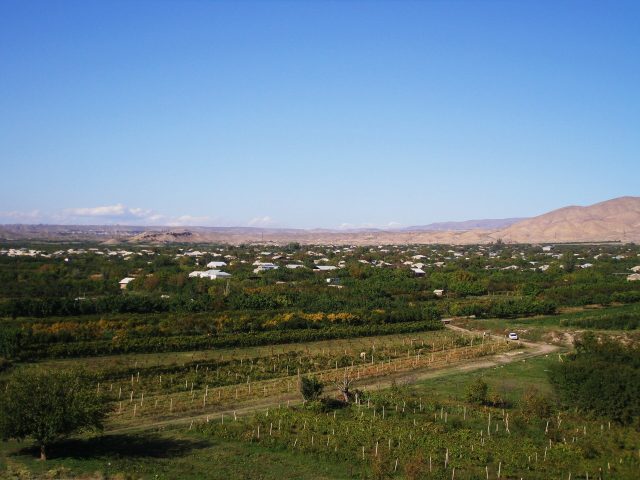


Places on the map
Marker colour follows the categoryClimate and weather
Detailed weather: Dvin- Average temperature
- 15 °C
- Precipitation per year
- 327 mm
Average air temperature
°C
0
3
7
16
19
25
28
29
23
15
8
3
Jan
Feb
Mar
Apr
May
Jun
Jul
Aug
Sep
Oct
Nov
Dec