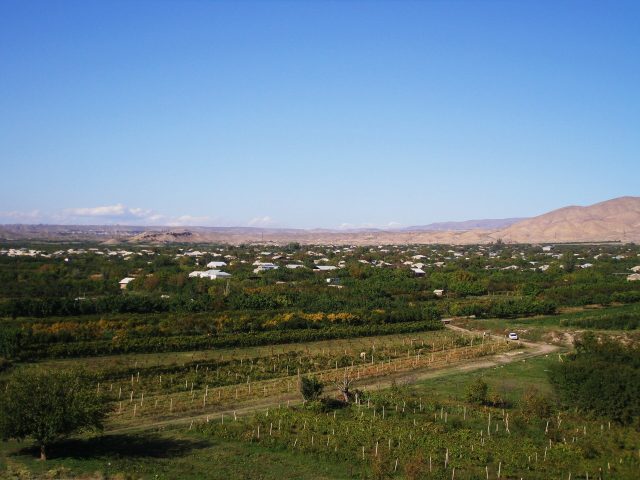
Dvin is one of those rare places where history isn’t just written in books—it’s buried beneath your feet, waiting to be uncovered. Once the thriving capital of ancient Armenia, this site now lies quiet under the open sky, its ruins stretching across the windswept plains. The Archaeological Museum of Dvin doesn’t just display artifacts; it offers a glimpse into a city that shaped an entire civilization, where every shard of pottery, every carved stone, and every fragment of mosaic tells a story of power, faith, and daily life.
Founded in the 4th century, Dvin quickly rose to prominence as the political and cultural heart of Armenia. For centuries, it was home to the royal residence and later the seat of the Catholicos, the head of the Armenian Apostolic Church. At its height, Dvin was one of the largest cities in the Near East, a bustling hub where merchants, artisans, and travelers from across the known world converged. Its streets hummed with activity until the 13th century, when Mongol invasions left the city in ruins. What remains today are the foundations of its grand structures, the remnants of its walls, and the scattered relics now preserved in the small museum on-site.
The museum itself is modest, blending seamlessly into the landscape of the archaeological site. There are no grand halls or flashy exhibits—just a handful of rooms filled with objects unearthed over decades of excavation. Here, you’ll find everyday items that once belonged to Dvin’s inhabitants: clay pots, coins, tools, and jewelry. But the real treasures are the architectural fragments—column capitals, intricately carved stones, and pieces of altars that once adorned the city’s palaces and churches. Each piece reflects the skill and artistry of people who lived here over a thousand years ago, their craftsmanship still evident despite the passage of time.
One of the most striking exhibits is a reconstructed section of a mosaic floor, discovered in what was likely a palace. The design is typical of early Christian Armenia, with geometric patterns intertwined with floral motifs, rendered in deep blues, rich reds, and shimmering gold. Nearby, fragments of frescoes depict saints and religious scenes, their faded colors and ancient Armenian inscriptions offering clues about the city’s spiritual life. These works of art weren’t just decorative; they were part of a larger narrative about faith, identity, and the role of Christianity in shaping Armenian culture.
Beyond the art and architecture, the museum also sheds light on the more practical aspects of life in Dvin. Clay storage jars hint at the city’s agricultural wealth, while tools and weapons reveal the trades and skills of its people. There are remnants of workshops where potters shaped their wares and blacksmiths forged tools, reminding visitors that Dvin wasn’t just a capital—it was a living, breathing city where ordinary people went about their daily routines. These simple objects humanize the past, making it easier to imagine the bustle of markets, the clatter of workshops, and the voices of those who once called this place home.
Christianity played a central role in Dvin’s history, and the museum dedicates significant space to artifacts from the early days of the Armenian Church. As the first country to adopt Christianity as its state religion, Armenia’s spiritual heritage is deeply tied to this city. Here, you’ll find fragments of altars, crosses, and liturgical objects, as well as remnants of ancient manuscripts. These items aren’t just relics; they’re evidence of how faith shaped the nation’s identity and how Dvin became a center of religious authority in the region.
After exploring the museum, the real magic happens outside. Walking among the ruins, it’s easy to picture Dvin as it once was—a city of broad avenues, crowded bazaars, and golden-domed churches. The landscape is stark, with low hills and scattered stones stretching toward the distant silhouette of Mount Ararat, a constant presence in Armenia’s history and mythology. The wind carries the scent of dry grass, and the silence makes it easier to imagine the sounds of the past: the murmur of prayers, the shouts of merchants, the clatter of hooves on cobblestone streets.
Today, Dvin is a quiet place, far from the usual tourist trails. There are no crowds, no souvenir stalls, just the open sky and the weight of history pressing gently against the earth. The museum and its surrounding ruins aren’t just attractions; they’re a chance to connect with the roots of Armenian civilization. For anyone curious about history, archaeology, or the quiet stories of forgotten places, Dvin offers something rare—a sense of discovery, a moment of reflection, and the quiet thrill of standing where empires once rose and fell.