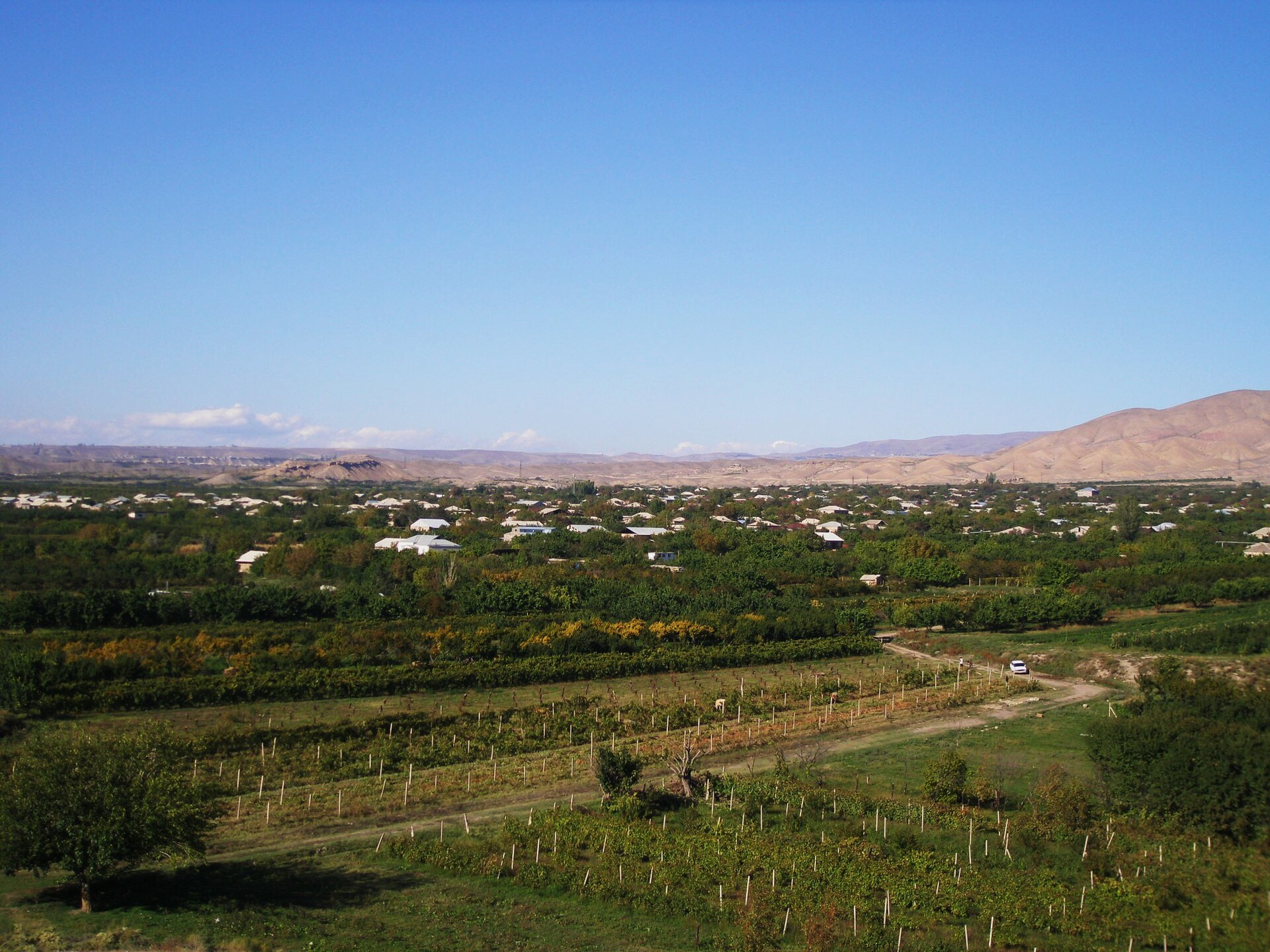
Dvin is one of those places where history isn’t just remembered—it lingers underfoot. A short drive south of Yerevan, this ancient city was once Armenia’s political and cultural capital. Today, its scattered ruins are all that remain, but they still tell the story of a city that once rivaled Constantinople and Baghdad.
Founded in the 4th century by King Khosrov III, Dvin grew quickly. Its location at the crossroads of trade routes between East and West made it an economic hub. Coins were minted here, the Armenian Catholicos held court, and decisions shaping the region were made within its walls. By the 6th and 7th centuries, Dvin had become the capital under Sassanian and later Arab rule, leaving behind layers of architecture and culture.
Excavations reveal the city’s many eras. The most striking discoveries belong to the early medieval period. Palaces, basilicas, residential quarters, and workshops show a thriving urban center. The ruins of a 7th-century cathedral stand out—its mosaic floors and fresco fragments reveal the skill of Armenian craftsmen. Nearby, the foundations of the Catholicos’s residence mark the city’s role as both a religious and political powerhouse.
Dvin’s history was violent. Earthquakes and invasions destroyed much of it, but the 9th-century quake was the worst. The city never recovered, and its role as capital faded. Yet even in decline, Dvin remained important. Church councils met here in the 11th century, and a small settlement lasted into the late medieval period.
Now, Dvin is an open-air museum. Visitors wander among foundations, columns, and fortifications, piecing together the past. Archaeologists return each season, uncovering details of daily life in this once-great city.
The silence here is striking. No crowds, no souvenir stalls—just wind and the voices of researchers. Fields and hills stretch toward Mount Ararat’s snow-capped peaks. It’s a place that feels frozen, letting you imagine history for yourself.
For Armenia, Dvin is a cornerstone. Traditions that defined Armenian culture began here. Decisions made within these ruins shaped the country’s destiny. Even now, the city reminds us of this land’s importance.
Walking through Dvin isn’t like reading a textbook. You step where coronations happened, where merchants debated, where prayers were spoken. It’s for those who want to see Armenia not just as it is, but as it was.