Dvin lets you walk through what was once Armenia’s capital for nearly a thousand years. From the 4th to the 13th century, it served as the country’s political, economic, and cultural core. Now, only scattered stones remain, but the ruins still tell of a city that once thrived as a trade hub and a center of early Christian thought. The cathedral’s remnants stand as proof of its past importance.
The cathedral was built in the 4th century, shortly after Armenia adopted Christianity as its state religion. It symbolized a new era, marking both spiritual and political change. Originally a basilica with three naves, it was later redesigned in the 7th century into a cross-domed structure—a defining feature of Armenian architecture. This was when Dvin also became an intellectual center. Scholars, theologians, and translators worked here, producing texts that shaped Armenian culture and the broader Christian world.
Today, only fragments of the cathedral remain: sections of walls, column bases, part of the apse. The stones, cut from local tuff, were chosen for their durability. Inside, mosaics and frescoes once covered the walls, and marble paved the floors. Excavations have shown multiple renovations, each reflecting shifts in the city’s religious and political life.
Dvin became the capital in the 4th century when King Khosrov III moved the royal seat from Artashat. Its location on a plateau made it easier to defend, and it sat along key trade routes, including the Silk Road. Caravans carrying silk, spices, glass, and metals passed through its gates. The cathedral hosted church councils, theological debates, and foreign envoys, underscoring Dvin’s global significance.
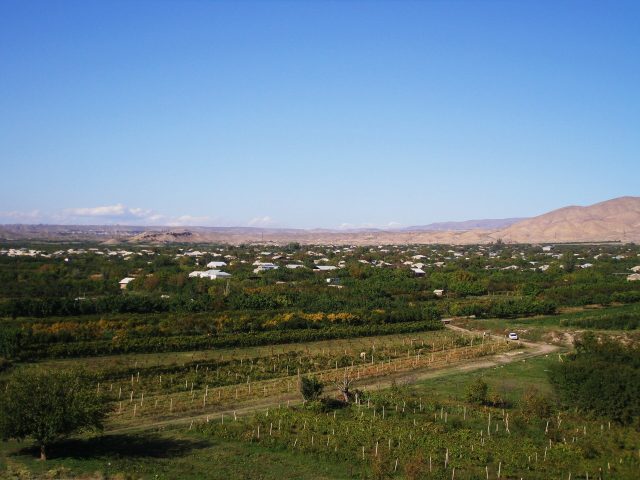
Mongol invasions in the 13th century destroyed the city, and earthquakes later eroded its structures. By the 14th century, Dvin was abandoned. Today, the site is a quiet expanse of grass and stone, with a small village nearby. Since the 19th century, archaeologists have uncovered coins, pottery, and sculpture fragments that reveal daily life here. Each discovery adds to the story, though much remains buried.
Visiting Dvin isn’t about spectacle. There are no crowds, no souvenir stalls—just wind and the weight of centuries. Standing where the cathedral once stood, you wonder about the lives that passed here: the prayers, the decisions, the generations who walked these paths. The silence feels intentional, as if the land is preserving the past.
Armenia’s history runs deep, and Dvin is part of that story. It’s not just an archaeological site but a bridge between eras. The ruins are accessible—anyone can walk among them, tracing walls that have stood for over a thousand years. It’s a short drive from Yerevan, past fields and low hills, or a detour on the way to Etchmiadzin, the spiritual heart of the Armenian Church.
Dvin doesn’t compete with Garni or Geghard in grandeur. There are no reconstructed facades, just raw history. It’s a place for those who value the quiet dignity of ruins. If you visit Armenia and want to connect with its ancient roots, Dvin offers something rare: the past feels close enough to touch. You won’t leave with postcard-perfect shots, but you might leave with a deeper sense of time’s passage and the knowledge that some stories endure.