Colonna Column
Panama · 8 places
Photo: Stan Shebs, CC BY-SA 3.0
Colón
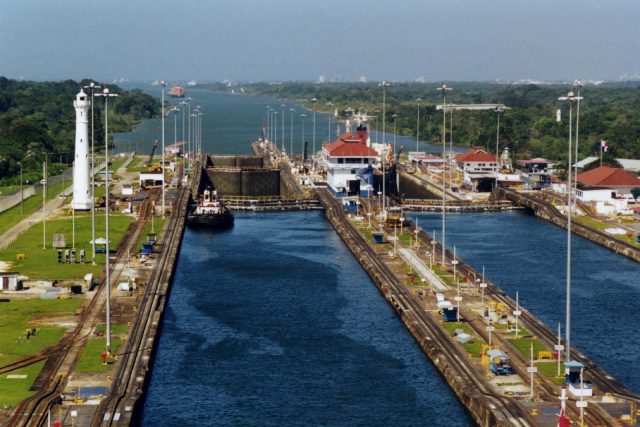
Colón guards its character like a port city should. It sits on Panama’s Caribbean coast at the Panama Canal’s entrance, a world apart from the capital’s polished streets or the country’s postcard-perfect beaches. No luxury resorts line its shores, no manicured promenades soften its edges. Instead, Colón thrives on the raw mechanics of trade—saltwater and diesel thick in the air, markets clattering with voices, goods and people passing through in a constant exchange.
In the mid-19th century, it began as the Atlantic terminus of the Panama Railroad, drawing fortune-seekers during the California Gold Rush. Later, the canal turned it into one of the world’s busiest transport hubs. Today, the port operates around the clock: container ships tower over docks, cranes pivot overhead, and cargo from every continent moves through in an unbroken chain. You don’t need to care about logistics to feel the pull of this place. Where else can you stand on land and watch the world’s goods shift between two oceans?
Beyond the port, Colón’s older streets hold fragments of its past. The Cathedral of the Immaculate Conception, built in the late 1800s, still stands, its worn facade a rare piece of history in a city that looks ahead. Nearby, Santa Ana Market spills into the streets—vendors sell fish pulled from the sea that morning, mangoes piled high, electronics still in their factory wrap, and clothes worn by someone else’s life. You don’t come here for souvenirs. You come to hear the rhythm of bargaining, to watch hands exchange money for goods, to see the stories unfold in real time.
Most travelers skip Colón, and that’s why it works. No crowds, no staged performances—just Panama as it is. The city’s people carry its history in their voices: Afro-Panamanian communities, descendants of Caribbean, Indian, and Chinese immigrants, all shaping a place that refuses to be simple. Small eateries and street stalls serve the food of the region—fried fish with coconut rice, seafood stews thick with spices, hot sauces that sting just enough, juices from fruits you can’t name. The local *sancocho*, a chicken and vegetable soup, tastes like it’s been simmered for generations.
If you want quiet, the San Blas Islands or Portobelo’s ruins are close. But Colón doesn’t need you to leave to prove its worth. There’s no checklist here, no script to follow. Just walk. Let reggae from an open window pull you one way, the smell of grilled corn another. The city doesn’t perform for visitors, and that’s why it stays with you. It exists for itself, and that’s enough.
See & Do
8 places

Places on the map
Marker colour follows the categoryClimate and weather
Detailed weather: Colonna Column- Average temperature
- 27 °C
- Precipitation per year
- 1900 mm
Average air temperature
°C
27
28
28
28
28
27
27
27
27
27
26
27
Jan
Feb
Mar
Apr
May
Jun
Jul
Aug
Sep
Oct
Nov
Dec