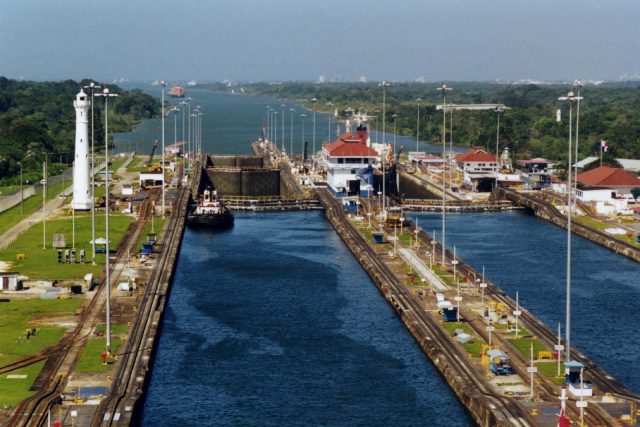
Colón’s port is where Panama’s history and modern life collide in the most tangible way. Perched on the Caribbean coast at the entrance to the Panama Canal, it’s far more than a transit point for cargo—it’s a place where the world’s trade routes converge, where ships from every continent queue up to pass through one of the planet’s most critical waterways. The air hums with the constant motion of cranes, the rumble of trucks, and the distant horns of vessels waiting their turn. Yet beneath the industrial rhythm lies something deeper: a sense of place shaped by centuries of movement, labor, and the quiet persistence of those who keep it all running.
The story of Colón didn’t begin with the canal. In the 19th century, it was little more than a settlement that grew almost overnight when the Panama Railroad—the first transcontinental line in the Western Hemisphere—was built. The railroad turned Colón into a gateway for workers arriving from Europe, Asia, and the Caribbean, all drawn by the promise of work. They laid the tracks, then later dug the canal, leaving behind not just an engineering marvel but a cultural imprint that still lingers. The port became the heart of a city where languages, cuisines, and traditions blended, a place where the world arrived by sea and stayed.
Today, the port is one of Latin America’s busiest container hubs, handling a significant share of global trade. Ships under dozens of flags—massive container vessels, rust-streaked freighters, and small fishing boats—move in and out of its docks, connecting the Atlantic to the Pacific. The port’s importance goes beyond economics; it’s a strategic linchpin, its operations rippling through supply chains worldwide. For locals, though, it’s simply part of life—a place of work, a source of income, and, for some, a point of pride in a city that doesn’t always get its due.
The architecture here tells its own story. Modern terminals stand alongside buildings that have survived since the canal’s construction, their weathered facades bearing the marks of time. Some structures hint at the colonial era, while others reflect the boom of the early 20th century. There are no grand monuments or tourist-friendly plazas—just raw, functional spaces designed for efficiency. The port’s unpolished character is part of its appeal. It doesn’t try to impress; it just works, and that’s enough.
Life around the port is just as compelling. Colón is a city of contrasts, where luxury hotels for sailors and business travelers sit blocks away from modest neighborhoods, and the clatter of cargo trucks mixes with the music spilling from street-side eateries. The port area is always alive with activity: dockworkers hurrying to their shifts, sailors killing time before their next voyage, vendors hawking fresh fish or tropical fruit. When the day’s work winds down, the bars fill up with workers unwinding over cold beers, swapping stories in a mix of Spanish, English, and Creole.
For those curious about the mechanics of global trade, the port offers a rare glimpse behind the scenes. It’s where the abstract concept of supply chains becomes real—where you can watch containers being loaded onto ships bound for distant ports, or see the intricate ballet of tugboats guiding massive vessels through narrow channels. Tourists rarely come here, and that’s part of the draw. Those who do visit find a side of Panama that most never see: not the postcard-perfect beaches or colonial charm, but the raw, unfiltered pulse of a place that keeps the world moving.
Still, Colón isn’t just about the port. The city has a complicated reputation, and visitors should approach it with caution. But for those willing to look beyond the headlines, there’s more to discover than just an industrial hub. The port is where history and modernity intersect, where the invisible forces of global commerce take physical form. It’s a place where the past isn’t just preserved—it’s still being written, one ship at a time.