Colón’s Christopher Columbus Park is where the city’s past and present quietly intersect. Tucked away in the port district, far from the grand monuments dedicated to explorers, it feels more like a neighborhood gathering spot than a historical landmark. There are no towering statues or dramatic inscriptions here—just old trees casting shade over benches where locals take their lunch breaks or unwind after work.
The name Columbus carries weight in this part of Panama, not as a figure of conquest, but as a reminder of how the region became a crossroads of global trade. Colón itself was born from this legacy, founded in the mid-19th century as the terminus of the Panama Railroad. Almost overnight, it transformed into one of the Western Hemisphere’s most vital ports, a gateway where goods flowed between Europe and the Americas. The city thrived on the rhythm of loading cranes and dockworkers’ shouts, its streets humming with the energy of commerce.
The park came later, long after Colón had established itself as a commercial hub. It wasn’t built to glorify the explorer, but to offer a respite for the people who kept the city running—dockworkers, clerks, and warehouse laborers. Its design is unassuming: straight gravel paths, manicured lawns, and a handful of mature trees. At its center stands a modest bronze statue of Columbus on a low pedestal, surrounded by flowerbeds. The monument doesn’t draw crowds, but for locals, it’s as much a part of the scenery as the colonial buildings nearby.
Life around the park never pauses. On one side, market stalls sell everything from tropical fruit to electronics. On the other, the faded facades of old buildings hint at a time when Colón was wealthier, their high ceilings and intricate balconies a testament to past prosperity. Some structures have crumbled with age, but their presence adds layers to the city’s story.
This isn’t the kind of place tourists flock to. There are no guided tours or souvenir stands, no signs pointing visitors toward its entrance. And that’s precisely what makes it special. In the mornings, retirees gather to play dominoes under the trees. During the day, office workers stop by for a quick break. By evening, teenagers might set up impromptu concerts or simply linger on the benches, watching the city wind down.
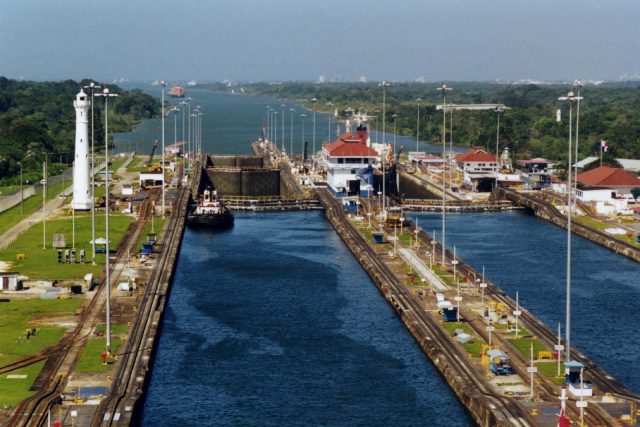
Colón’s history is inseparable from the Panama Canal. When construction began in the early 20th century, the city became a magnet for laborers from across Latin America, the Caribbean, and Europe. Many stayed, shaping Colón into a melting pot of cultures and languages. The park has witnessed this evolution—the way Spanish, English, and Creole blended in the streets, how neighborhoods rose and fell, how the city’s identity shifted with each new wave of arrivals.
Today, Colón remains a working port and a center of trade. In recent decades, there have been efforts to boost tourism, but they haven’t altered the city’s core. The park endures as a quiet corner where time moves at its own pace. There are no crowds, no hawkers, no scripted experiences—just the rustle of leaves, the distant horn of a ship in the harbor, and the sense that life here unfolds without pretense.
For travelers who venture beyond Colón’s shopping districts, the park offers an unexpected glimpse into the city’s soul. It doesn’t demand attention, but it lingers in memory. Here, history isn’t packaged for visitors; it simply exists alongside the everyday. You might not find it in guidebooks, but that’s the point. This is a place where Colón reveals itself on its own terms.