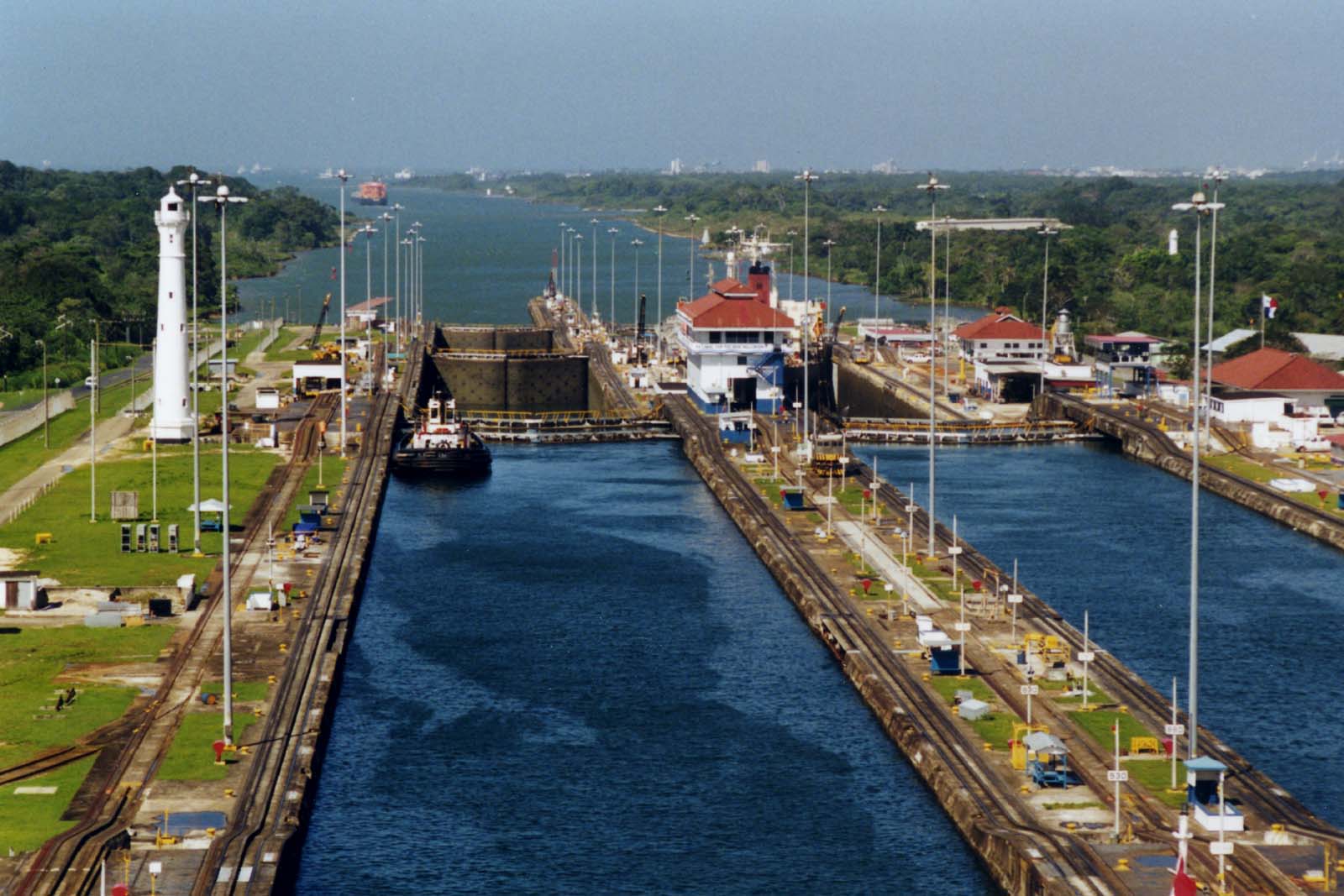
The Panama Canal is one of those rare places where human ingenuity and nature intersect in a way that reshapes the world. The Atlantic Locks, near the city of Colón, are more than just an engineering marvel—they mark the point where continents, oceans, and countless human stories converge. Here, at the canal’s northern entrance, ships begin their journey across an isthmus that once stood as an impassable barrier for centuries. From the observation decks, you can watch massive vessels rise and fall in the lock chambers like toys in a bathtub, water levels shifting with precision as physics and human determination work in tandem.
The canal’s history is a tale of ambition, failure, and eventual triumph. The idea of cutting a path between the Atlantic and Pacific first took root in the 16th century, when Spanish explorers dreamed of a shortcut to Asia. But it wasn’t until the late 1800s that the project gained real momentum. The French, riding high on their success with the Suez Canal, took up the challenge under Ferdinand de Lesseps. Yet Panama’s unforgiving climate, rampant disease, and financial scandals brought the effort to its knees. By the turn of the 20th century, the endeavor had collapsed, leaving thousands dead from malaria and yellow fever. It took the strategic vision of the United States to revive and complete the canal, which finally opened in 1914—a moment that literally shrank the world.
The Atlantic Locks, also known as the Gatun Locks, are the first stop for ships entering the canal from the Caribbean. The three-step system lifts vessels nearly 27 meters in total, a process that takes hours to complete. Watching it unfold, you notice the details: the colossal steel gates, each weighing hundreds of tons yet moving almost silently, or the intricate water drainage system that controls the flow without a single pump. The locks rely entirely on gravity, drawing water from Gatun Lake, an artificial reservoir spanning over 400 square kilometers. The lake itself has become an unexpected ecological haven, home to monkeys, crocodiles, and hundreds of bird species, blending human engineering with natural life.
The canal’s impact on Panama and global trade is impossible to overstate. Before its construction, ships sailing from the Atlantic to the Pacific had to navigate the treacherous waters around Cape Horn, adding weeks to their journey. The canal slashed that distance, revolutionizing maritime trade by making it faster and far more efficient. Today, it handles roughly five percent of the world’s shipping, generating hundreds of millions in annual revenue for Panama. But its significance goes beyond economics. For Panamanians, the canal is a point of national pride, a symbol of what a small country can achieve. It’s woven into the fabric of their identity, a testament to perseverance and vision.
Visiting the Atlantic Locks isn’t just a tour—it’s a chance to witness one of humanity’s greatest engineering feats in action. Observation decks offer a clear view of the locks and the ships passing through, sometimes so large they seem to barely fit. Tugboats dart around them, guiding the vessels with practiced ease. The sight is mesmerizing, a perfect balance of raw power and precision. Nearby, a modest museum delves into the canal’s construction, mechanics, and global role. The exhibits are straightforward but thorough enough to convey the sheer scale of the project, leaving visitors with a deeper appreciation for what it took to build.
The atmosphere around the canal is unlike anywhere else. Colón, the port city at its gates, isn’t a polished tourist destination but a working hub with a gritty, lived-in feel. There are no luxury resorts or fine-dining restaurants, just the everyday rhythm of a place where the canal is part of the landscape. Locals see the ships pass daily, yet the awe never fades. For visitors, it’s a rare opportunity to witness something truly monumental, a reminder of what human determination can accomplish. Unlike the more crowded Pacific locks, the Atlantic side offers a quieter experience, where you can watch the process unfold without distraction.
The canal never sleeps. Even at night, when the locks are illuminated against the dark water, ships continue their journey. It’s a system that constantly evolves—most recently with the 2016 expansion, which added larger locks to accommodate modern mega-ships. Yet the original locks, over a century old, still function as they always have, a living piece of history. They’re preserved not just for their practical use but as a monument to engineering, a bridge between past and present.
Standing at the Atlantic Locks, you can’t help but feel connected to something larger than yourself. It’s a place where nature and technology coexist, where local and global histories intertwine. The canal isn’t just a waterway—it’s a testament to human resilience, a physical link between continents and cultures. Even if you’re not drawn to engineering, watching the locks in action is a humbling experience, a reminder of how far ingenuity can take us. It’s a sight that stays with you long after you’ve left.