
Grodno
Belarus · 8 places
Photo: Liashko, CC BY-SA 4.0
Grodno is the kind of city that doesn’t give up its secrets all at once. It sits along the Neman River, where the water curves gently around the old streets, as if cradling them in its flow. Walking through the cobbled lanes, you can almost hear the clatter of horse hooves from centuries past, while the carved wooden window frames of the houses seem to watch passersby with quiet curiosity. The city doesn’t shout about its history, but it lingers in every stone, every narrow alley where time feels suspended, as if caught between one era and the next.
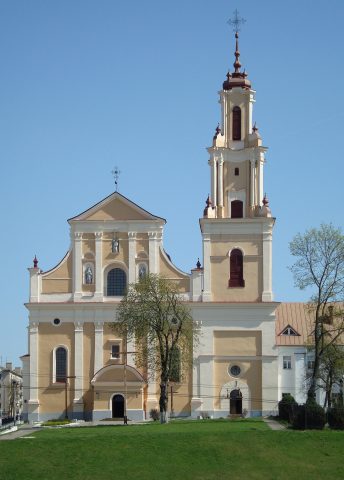
Though not large, Grodno holds layers of history so dense it often feels like wandering through a living museum. The Old Castle, once a residence of Lithuanian grand dukes, overlooks the river from its hilltop perch, its walls bearing witness to sieges and treaties long forgotten. Nearby stands the Fara Vitautas, one of Belarus’s oldest active churches, where services have been held for over six hundred years. Step off the main streets, and you might stumble upon an old synagogue, once the heart of the city’s Jewish community, or a church where the sound of an organ still fills the air during services. The past isn’t locked away here—it’s woven into the fabric of everyday life.
There’s something distinctly European about Grodno, from its architecture to the unhurried way people move through the streets. Perhaps it’s because the city spent centuries as part of the Polish-Lithuanian Commonwealth and later the Russian Empire, each era leaving its mark. The old town’s winding lanes and narrow houses, with their steep roofs and wrought-iron balconies, hint at a time when Grodno was a bustling trade hub. And then there’s the coffee—small cafés along the main streets are always lively, the scent of freshly brewed cups mingling with the buttery aroma of pastries from nearby bakeries. Locals take their time here, savoring the moment as much as the drink.
Yet Grodno isn’t just a relic of the past. It has a quiet, steady pulse all its own. In summer, the riverbanks fill with people reading, strumming guitars, or simply sitting by the water. Winter wraps the city in snow, making the parks feel like scenes from an old postcard, with fresh powder crunching underfoot and the faint smell of woodsmoke drifting from chimneys. The people are unhurried but warm, quick to offer directions or share stories about their city if you show genuine interest.
What makes Grodno special is that it doesn’t try to be a tourist hotspot. There are no crowds, no souvenir stalls on every corner, no guides hustling for attention. Instead, you’ll find quiet courtyards where kids play soccer, pharmacies with wooden counters that have stood for generations, and markets selling homemade cheese and honey. At night, the streets glow under the soft light of old-fashioned lampposts, their reflections dancing on the Neman’s surface. The city asks nothing of its visitors except curiosity and a willingness to wander without a plan. And if you let it, Grodno will reveal itself slowly, in its own time.
See & Do
8 places


Places on the map
Marker colour follows the categoryClimate and weather
Detailed weather: Grodno- Average temperature
- 9 °C
- Precipitation per year
- 491 mm
Average air temperature
°C
-1
0
4
8
12
19
19
19
14
9
4
-0
Jan
Feb
Mar
Apr
May
Jun
Jul
Aug
Sep
Oct
Nov
Dec


