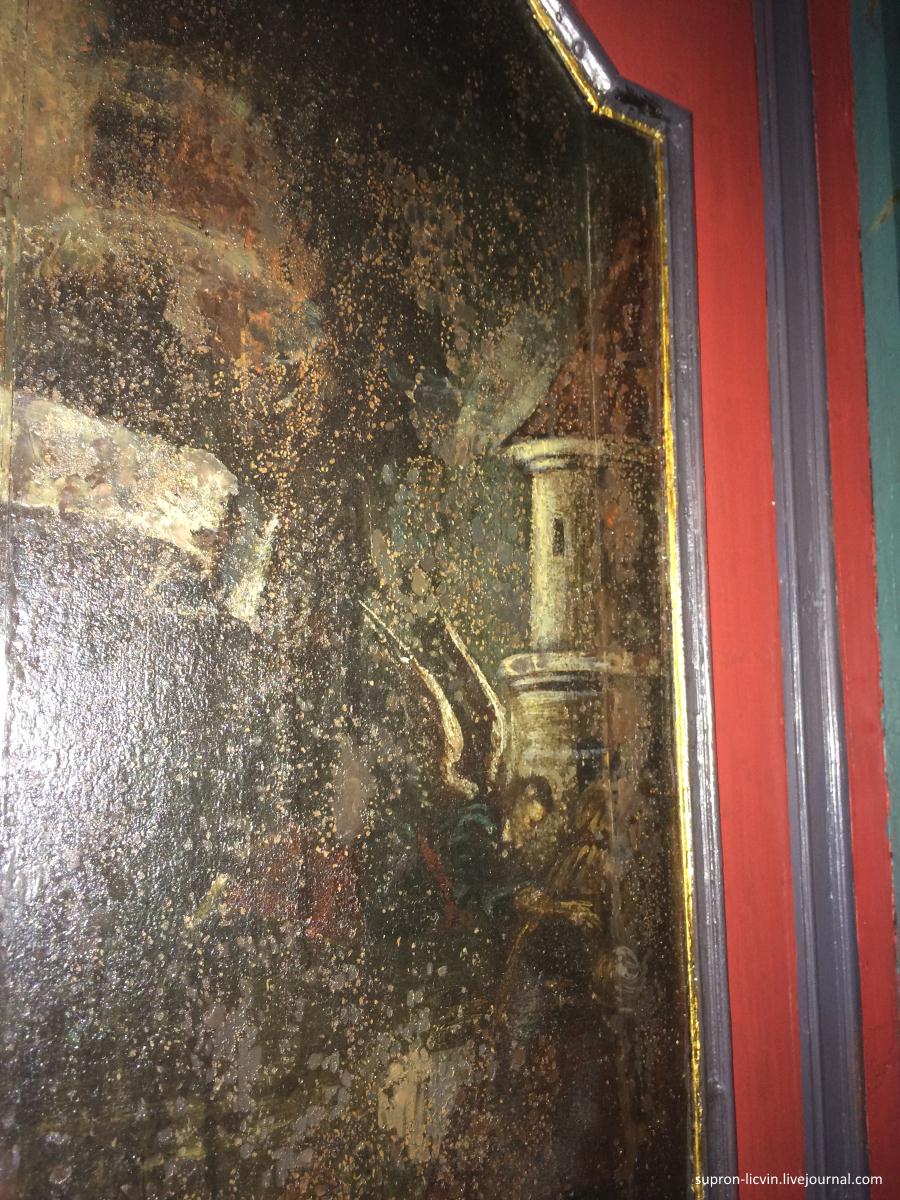
Grodno’s Church of St. Francis Xavier is one of those places where history feels almost tangible, as if the walls themselves remember the centuries they’ve witnessed. Built in the late 17th century, it stands as a testament to the city’s layered past—a time when Grodno was a thriving center of the Grand Duchy of Lithuania, later absorbed into the Polish-Lithuanian Commonwealth. The church was commissioned by the Jesuits, an order that played a significant role in the region’s religious and cultural life, and its construction reflects both the grandeur of Baroque architecture and the ambitions of the Counter-Reformation. Even today, stepping inside feels like entering a different era, where every detail, from the soaring vaults to the intricate stucco work, tells a story of faith, artistry, and power.
The exterior of the church is deceptively modest compared to the opulence within. Its façade, though elegant, doesn’t immediately reveal the scale of what lies behind the heavy wooden doors. The twin towers, once a common feature in Jesuit churches, frame the entrance, while the central pediment bears the coat of arms of the Sapieha family, one of the noble houses that patronized the church. The building’s brickwork, weathered by time, gives it a sense of permanence, as if it has always been part of Grodno’s skyline. The surrounding square, though quiet now, was once a bustling hub of activity, with markets, processions, and the comings and goings of clergy and townspeople.
Inside, the church unfolds in a way that feels almost theatrical. The high altar, a masterpiece of Baroque art, dominates the space, its gilded details catching the light that filters through the tall windows. The illusion of depth created by the perspective paintings on the ceiling draws the eye upward, making the already lofty space feel even more expansive. The side chapels, each dedicated to different saints, are adorned with altarpieces that blend sculpture and painting, a hallmark of the period. The overall effect is one of harmony—every element, from the marble columns to the delicate frescoes, works together to create an atmosphere of reverence and awe.
What makes St. Francis Xavier’s Church particularly interesting is its role in the broader history of the region. The Jesuits, who founded it, were not just religious figures but also educators and intellectuals. Their college, which once stood adjacent to the church, was a center of learning, attracting students from across the Commonwealth. The order’s influence waned after its suppression in the 18th century, but the church remained a place of worship, adapting to the changing political and religious landscape. When the Russian Empire absorbed Grodno in the late 18th century, the church was repurposed as a parish church, and later, under Soviet rule, it faced the threat of closure like many other religious sites. Yet it endured, a quiet symbol of resilience in a city that has seen empires rise and fall.
The church’s interior also holds clues to its past in the form of memorial plaques and inscriptions. Some commemorate the noble families who funded its construction, while others honor the clergy who served here over the centuries. One of the most striking features is the crypt beneath the main altar, where members of the Sapieha family were laid to rest. Though not always open to the public, the crypt adds another layer of history to the church, connecting it to the personal stories of those who shaped Grodno’s destiny. The building’s acoustics, too, hint at its former life—during services, the voices of the choir and the organ’s deep tones fill the space in a way that must have been just as moving centuries ago.
Beyond its religious significance, the church is a reminder of Grodno’s multicultural heritage. The city has long been a crossroads of different cultures—Polish, Lithuanian, Belarusian, Jewish, and Russian—and St. Francis Xavier’s Church reflects that diversity. The Baroque style itself is a fusion of influences, blending Italian grandeur with local traditions. Even the language of the inscriptions, a mix of Latin and Polish, speaks to the region’s complex identity. Today, the church continues to serve as an active place of worship, but it also attracts visitors who come to admire its architecture or simply to sit in the quiet of its nave, away from the noise of the modern city.
Walking through Grodno, it’s easy to overlook the smaller details that make the city feel alive. But places like St. Francis Xavier’s Church offer a pause, a moment to step back and consider the layers of history beneath the surface. The church isn’t just a relic of the past; it’s a living part of the city, still shaping its character in subtle ways. Whether you’re drawn by its architectural beauty, its historical significance, or the sense of continuity it represents, the church invites you to look beyond the present and imagine the lives that have unfolded within its walls. In a city that has seen so much change, it remains a steady presence, a quiet witness to the passage of time.