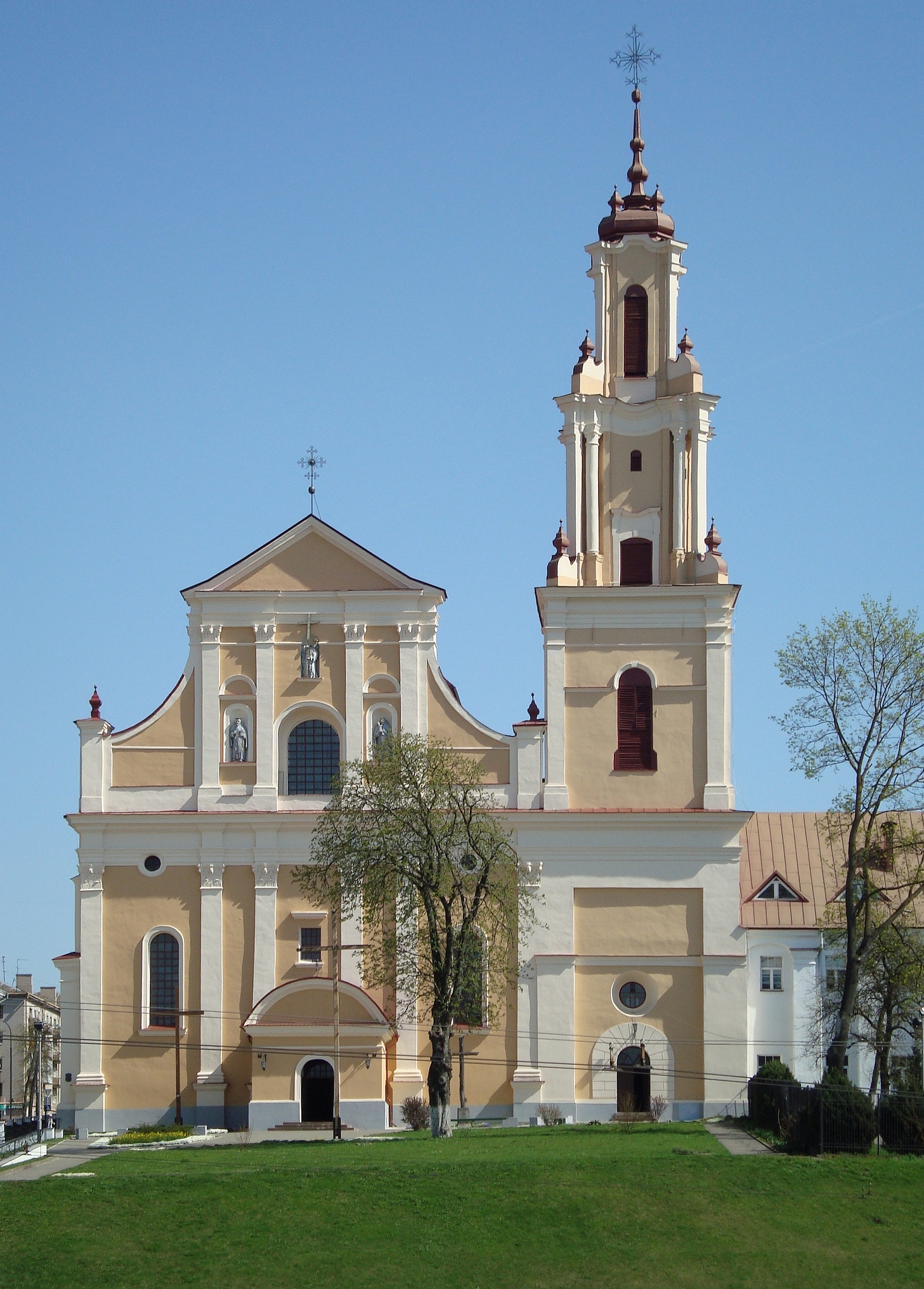
Grodno’s Yanka Kupala Drama Theatre, better known by its former name honoring Evstigney Mirovich, is one of those places where the city’s quiet charm and its cultural depth come together almost unnoticed. It stands on Sovetskaya Square, not far from the old town, in a building that has seen more than a century of performances, political gatherings, and everyday life. The theatre doesn’t dominate the square with grandiosity, but its presence is steady, like a familiar face in a crowd—recognizable, but not demanding attention.
The building itself is a mix of styles, though not in the way that draws gasps from architecture enthusiasts. It was constructed in the late 19th century, originally as a club for the local nobility, and over time, it absorbed the tastes of different eras. The façade is modest, with a few classical elements—pilasters, arched windows, a pediment—that hint at its past without overstating it. Inside, the auditorium retains a certain intimacy, with a horseshoe-shaped balcony and walls that seem to have absorbed decades of applause. The stage isn’t vast, but it’s enough to hold the stories that have unfolded here, from pre-revolutionary comedies to Soviet-era dramas and modern Belarusian plays.
The theatre’s history is closely tied to the city’s own. Grodno has always been a place where different cultures and languages intersected—Polish, Russian, Belarusian, Jewish—and the theatre reflected that. In the early 20th century, it was a hub for Polish-language performances, a reminder of the time when Grodno was part of the Polish-Lithuanian Commonwealth. Later, under Soviet rule, it became a venue for state-approved productions, though even then, it managed to carve out a space for Belarusian identity. The name Evstigney Mirovich, a Belarusian playwright and director, was given to the theatre in the 1960s, a nod to the country’s cultural revival during the Khrushchev thaw.
What makes this theatre different from many others in the region isn’t just its age or its architecture, but the way it has adapted without losing its essence. It’s not a museum piece, frozen in time, nor is it a flashy modern venue chasing trends. Instead, it feels like a living part of the city, where the past and present coexist without much fuss. The repertoire is a mix of classics and contemporary works, often with a focus on Belarusian playwrights. There’s no grand mission statement here, no attempt to be the most avant-garde or the most traditional—just a quiet commitment to telling stories that matter to the people who live in Grodno.
The audience, too, is unpretentious. You won’t find crowds of tourists here, nor the kind of scene that turns theatregoing into a social event. Mostly, it’s locals—students, older couples, families—who come because they’ve always come, or because someone recommended a play. The tickets are affordable, the atmosphere is relaxed, and there’s none of the stiffness that sometimes comes with more formal venues. If you’re lucky, you might catch a performance in Belarusian, a language that still carries a sense of resilience in a country where Russian often dominates public life.
The theatre’s significance goes beyond its walls. In a city where history is layered like sediment—Polish castles, Soviet apartment blocks, Baroque churches—it serves as a reminder that culture isn’t just about monuments. It’s about the everyday: the way people gather, the stories they tell, the way they laugh or sigh in the dark. Grodno isn’t a city that shouts about its importance, and neither does this theatre. It doesn’t need to. Its value lies in its persistence, in the fact that it has been here, quietly, for generations, offering a space where the city can see itself reflected.
If you visit, don’t expect a grand spectacle. The building won’t wow you with its size or its design, and the performances might not be in a language you understand. But that’s not really the point. What you’ll find instead is a sense of continuity, a place where the act of sitting in a darkened auditorium, watching actors bring words to life, feels like a small but meaningful ritual. It’s the kind of place that doesn’t try to impress, but somehow, in its unassuming way, leaves an impression all the same.