Weather overview
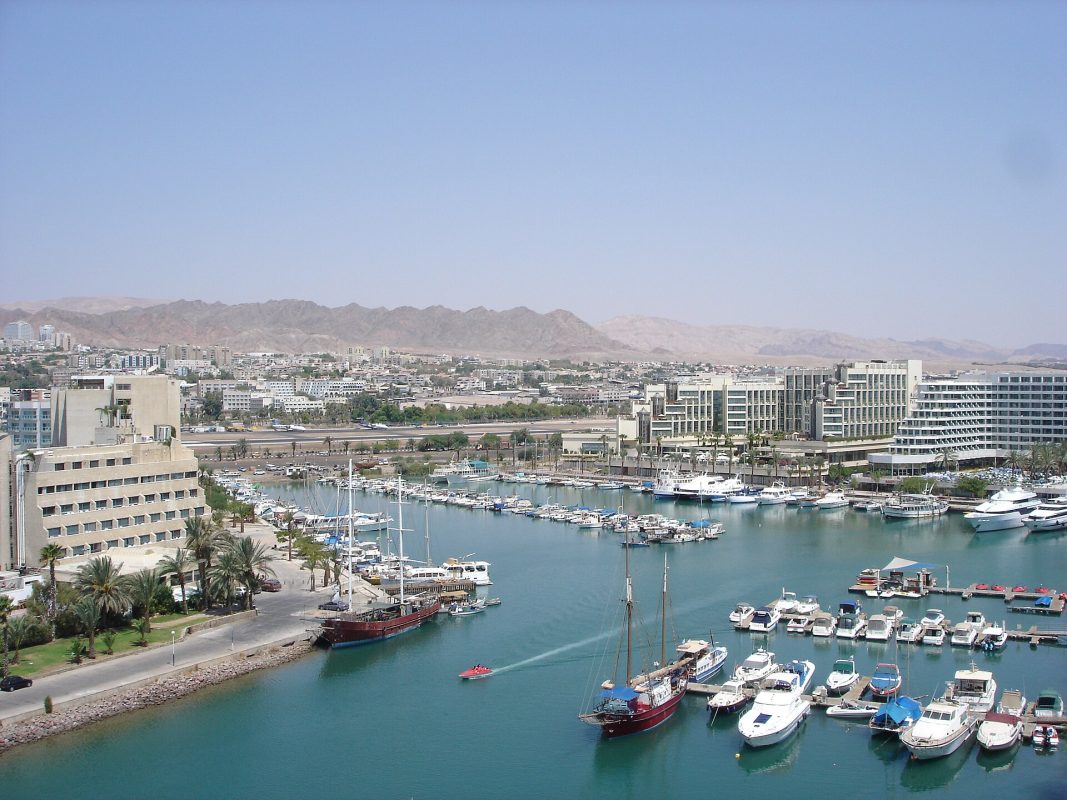
Эйлат sits at the southern tip of Israel, where the Negev Desert meets the Red Sea. The weather in Эйлате is defined by its arid climate, with almost no rainfall for most of the year. Days are consistently warm, even in winter, while nights can cool down noticeably, especially from November to March.
Visitors to Эйлату can expect plenty of sunshine year-round, with the hottest period stretching from June to September. During these months, daytime temperatures often exceed +35 °C, making early mornings and evenings the most comfortable times for outdoor activities. The mildest weather arrives in January and February, when temperatures hover around +18 °C during the day and drop to +12 °C at night.
Temperature
The temperature in Эйлате follows a predictable pattern, with a gradual rise from January to August and a slow decline afterward. In January, the coolest month, daytime highs reach +22 °C, while nights can feel chilly at +11.7 °C. By April, the heat becomes more intense, with afternoons often climbing to +32 °C.
From June to August, Эйлат experiences its peak temperatures, with daily highs frequently surpassing +40 °C. Even the nights remain warm, rarely dipping below +28 °C. The heat begins to ease in September, though afternoons still reach +38 °C. By November, temperatures become far more comfortable, averaging +23 °C during the day and +18 °C at night.
| Month | Minimum | Maximum |
|---|---|---|
| January | 11.7 | 22.3 |
| February | 12.4 | 23.6 |
| March | 15.3 | 26.7 |
| April | 19.6 | 32.1 |
| May | 23.3 | 36.7 |
| June | 26.5 | 39.8 |
| July | 28.4 | 41.3 |
| August | 28.4 | 40.7 |
| September | 26.9 | 38.4 |
| October | 23.3 | 34.1 |
| November | 18.1 | 29 |
| December | 13.6 | 24.3 |
Precipitation
Rainfall in Эйлате is a rare event, with most months recording less than 4 mm of precipitation. The driest period spans from June to September, when rain is virtually nonexistent. Even during the slightly wetter months, such as December and March, showers are brief and light, often amounting to just a few millimeters.
The most notable rainfall occurs in December, when Эйлат receives around 6.6 mm on average. However, these showers are infrequent and do little to disrupt travel plans. The rest of the year remains dry, reinforcing Эйлат’s reputation as a desert destination where sunshine dominates.
| Month | Precipitation |
|---|---|
| January | 1 |
| February | 2.4 |
| March | 3.2 |
| April | 1.3 |
| May | 1 |
| June | 0 |
| July | 0 |
| August | 0 |
| September | 0 |
| October | 0.9 |
| November | 3.1 |
| December | 6.6 |
What to pack
Packing for Эйлат depends largely on the season. From June to September, lightweight, breathable clothing is essential to cope with the intense heat. A wide-brimmed hat, sunglasses, and high-SPF sunscreen are must-haves, as the sun is strong even in the early morning. A light scarf or shawl can also help shield against the sun during the hottest hours.
For visits between November and March, layers are key. While daytime temperatures remain pleasant, evenings can be cool, especially in January and February. A light jacket or sweater will keep you comfortable after sunset. If you plan to swim, a quick-drying swimsuit is useful year-round, as the Red Sea’s water temperature stays warm, ranging from +21.5 °C in March to +29.3 °C in August.
| Month | Wind speed |
|---|---|
| January | 2.7 |
| February | 2.9 |
| March | — |
| April | 3.1 |
| May | 3 |
| June | 3.2 |
| July | 3 |
| August | 3.2 |
| September | 3.7 |
| October | 3.4 |
| November | 2.9 |
| December | 2.7 |