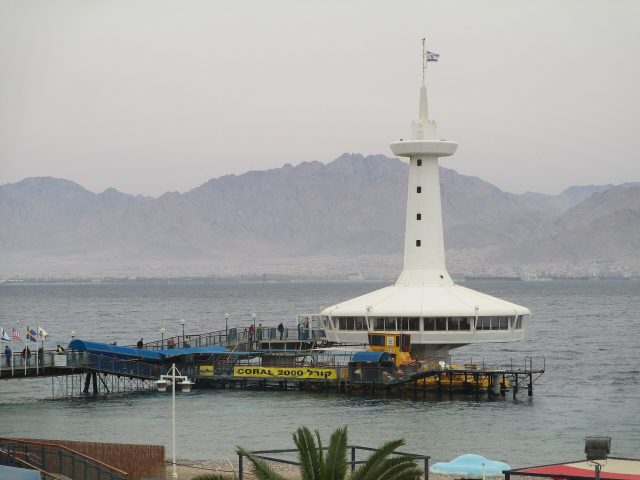
Mount Tzfahot rises above Eilat like a quiet guardian of time, its rugged slopes blending the stark beauty of the desert with the stillness of the mountains. From here, the view stretches across the bay where the Red Sea meets the horizon, and the city below appears small against the vastness of the landscape. This isn’t a place designed for tourists—it’s a natural vantage point, one that draws those who want to see Eilat not from the beach or the promenade, but from a height where the air is clearer and the world feels wider.
The climb up Tzfahot isn’t difficult in a technical sense, but it’s not an easy stroll either. The trail begins almost at the edge of the city, winding over rocky terrain that dips into the shade of scattered acacia trees before emerging onto sunbaked stretches where the heat presses down. Locals recommend starting early in the morning or in the late afternoon, when the light softens and the contours of the mountains and sea become more pronounced. Even during the day, though, you can find shelter under stone overhangs—some built long ago by Bedouins, others by travelers who came here before marked paths existed.
The history of Tzfahot is woven into the story of Eilat itself. In ancient times, this land was part of vital trade routes connecting Africa and Asia, and the mountain, like others in the region, served as a landmark for caravans. Its slopes may have hidden temporary camps or small settlements, though no grand ruins remain. Later, as Eilat grew into a modern city, the mountain became a retreat for those seeking solitude—a place to step away from the noise and crowds. Today, there are no museums or plaques here, just the land itself, holding the memory of those who walked these paths centuries ago.
There’s little in the way of architecture on Tzfahot; nature dominates. But traces of human presence remain. At the summit, you might stumble upon the remnants of old military fortifications from the mid-20th century, when the region was a tense border zone. These crumbling concrete structures feel out of place against the wild landscape, yet they serve as a reminder that even in such a remote spot, history never stood still. Now abandoned, they stand empty, the wind whistling through their gaps like a strange, quiet melody.
For many in Eilat, Tzfahot isn’t just a mountain—it’s part of daily life. Some come here to run in the mornings, others for weekend picnics, and some simply to sit on a rock, watching the sea and trying to make out the distant outlines of neighboring countries. Unlike the crowded beaches or shopping centers, this place offers space. You can spend hours on the slopes without seeing another soul, or you might join a group of locals sharing stories and tea from a thermos.
The mountain is especially striking at night. When the sun sets and the city below lights up, Tzfahot becomes an ideal spot for stargazing. Far from the glow of urban lights, the sky here feels deeper, the Milky Way so bright it seems to reflect in the dark waters of the bay. On clear nights, amateur astronomers set up telescopes, but even without one, the view is mesmerizing. It’s easy to feel as though you could reach out and touch the stars.
Getting to Tzfahot is simple. From central Eilat, the trailhead is a short taxi ride or a half-hour walk away, with views of the bay and mountains unfolding along the way. Even if you don’t make it to the summit, a walk at the base leaves a lasting impression. The key is to take your time, to let the rhythm of the desert—set by the wind, the stones, the sea—guide you.
Tzfahot isn’t a place you can “see” in an hour or even a day. It’s a place to experience, to let unfold at its own pace. Here, the lines between nature and human presence, past and present, blur. The mountain exists on its own terms, and the only thing a visitor can do is adjust to its rhythm—listening to the whisper of the wind, watching the shifting colors of the sky and sea. Maybe that’s why those who come here once often return.