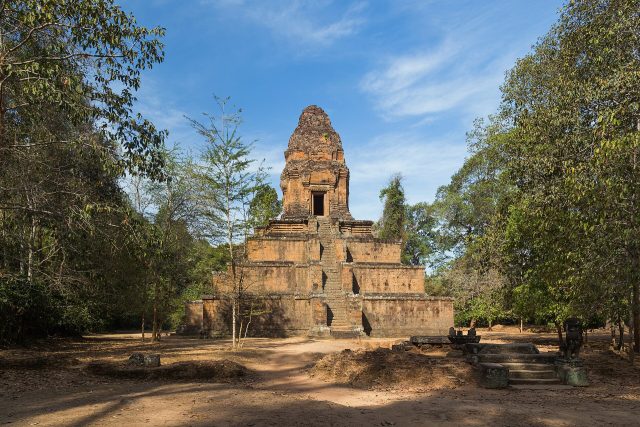
Weather overview
The climate in Angkor is tropical, with distinct dry and wet seasons shaping the experience for visitors. From November to April, the weather in Angkor is mostly dry, offering warm days and cooler nights. This period is often considered the most comfortable for exploring the temples and surrounding areas.
Starting in May, the rainy season begins, bringing higher humidity and frequent downpours. While the rain can be heavy at times, it usually doesn’t last all day, leaving plenty of opportunities to enjoy Angkor’s lush landscapes. The wettest months are September and October, when short but intense showers are common.
Despite the rain, the wet season has its own charm, with fewer crowds and vibrant greenery. If you prefer drier conditions, plan your visit to Angkor between December and February, when temperatures are milder and rainfall is minimal.
Temperature
Temperatures in Angkor remain warm year-round, with little variation between seasons. The hottest months are March and April, when daytime highs can reach +34.9 °C and +35.9 °C, respectively. Nights offer slight relief, with lows around +24.6 °C to +26.2 °C.
From May to October, temperatures ease slightly, averaging +28.2 °C to +29.7 °C. The coolest months are December and January, when daytime highs hover around +30.7 °C to +31.2 °C, and nights dip to +21.1 °C to +21.9 °C. Even in these months, the warmth is consistent, making layers unnecessary for most travelers.
The transition between seasons is gradual, with no extreme shifts. Whether you visit Angkor in the dry or wet season, expect warm conditions, though the humidity in June through September can make the heat feel more intense.
| Month | Minimum | Maximum |
|---|---|---|
| January | 21.1 | 31.2 |
| February | 23 | 32.9 |
| March | 24.6 | 34.9 |
| April | 26.2 | 35.9 |
| May | 25.9 | 34.8 |
| June | 25.8 | 33.7 |
| July | 25.3 | 32.7 |
| August | 25.4 | 32.2 |
| September | 25.2 | 31.2 |
| October | 24.9 | 31.1 |
| November | 24 | 31.3 |
| December | 21.9 | 30.7 |
Precipitation
Rainfall in Angkor is highly seasonal, with the dry months from November to April seeing very little precipitation. January and February are the driest, with just 8.3 mm to 15.6 mm of rain, making them ideal for outdoor exploration.
The rainy season starts in May, with rainfall increasing sharply to 176.5 mm. The heaviest downpours occur from July to September, peaking in September at 266 mm. These months bring short but intense showers, often in the late afternoon or evening, leaving mornings clear for sightseeing.
By November, the rains taper off, and Angkor returns to its drier state. While the wet season can disrupt travel plans, it also transforms the landscape, filling moats and reflecting the temples in still waters. If you don’t mind occasional rain, this time of year offers a quieter, more atmospheric visit.
| Month | Precipitation |
|---|---|
| January | 15.6 |
| February | 8.3 |
| March | 13.1 |
| April | 33.9 |
| May | 176.5 |
| June | 148.7 |
| July | 207 |
| August | 194.8 |
| September | 266 |
| October | 200.2 |
| November | 70 |
| December | 29.7 |
What to pack
For a trip to Angkor during the dry season, pack lightweight, breathable clothing to stay comfortable in the heat. A wide-brimmed hat, sunglasses, and sunscreen are essential, as the sun can be strong even in December and January. A light scarf or shawl can help with dust or cooler evenings.
If you’re visiting Angkor in the wet season, waterproof gear is a must. A compact umbrella or a rain jacket will keep you dry during sudden downpours, while quick-drying clothes will make the humidity more manageable. Sturdy sandals or waterproof shoes are useful for navigating wet paths around the temples.
Regardless of the season, comfortable walking shoes are key for exploring Angkor’s vast temple complexes. A reusable water bottle will help you stay hydrated, and insect repellent can be useful year-round, especially in the evenings. If you plan to visit during the cooler months, a light sweater may come in handy for early mornings.
| Month | Wind speed |
|---|---|
| January | 1.6 |
| February | 1.7 |
| March | 1.6 |
| April | 2 |
| May | 1.8 |
| June | 2.2 |
| July | 2.3 |
| August | 2.4 |
| September | 2 |
| October | 1.8 |
| November | 1.6 |
| December | 1.6 |