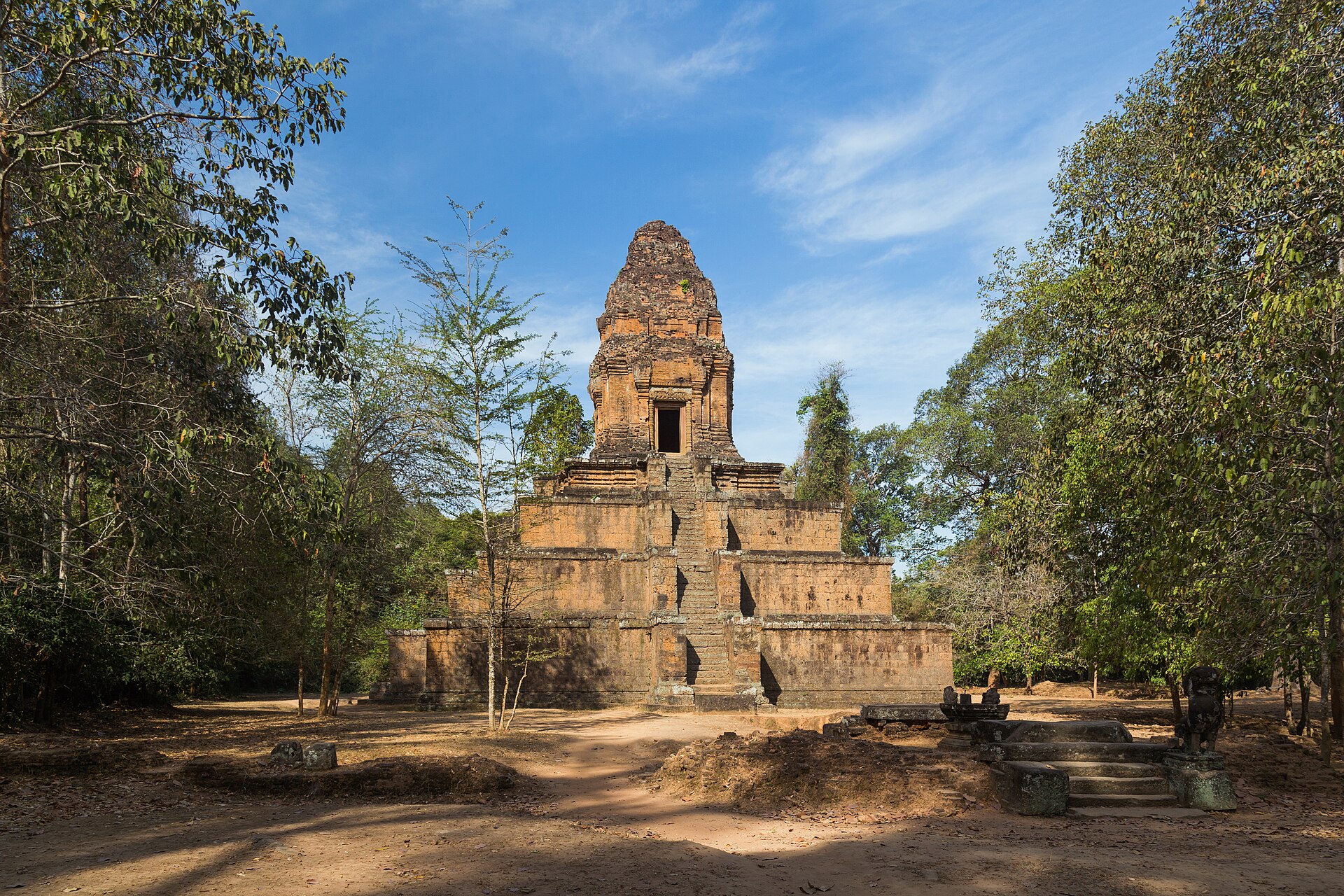
Baksei Chamkrong is one of those quiet corners of Angkor that most visitors overlook, overshadowed by its more famous neighbors. Yet it holds its own story, one that speaks of the early days of Khmer architecture before the grand masterpieces like Angkor Wat took shape. Perched on a small hill near the heart of the archaeological park, the temple is almost hidden by dense vegetation, as if nature is slowly reclaiming what was once its own. It’s modest in size, but that very simplicity makes it a fascinating stop for anyone curious about how Khmer design evolved—less a spectacle, more a whisper from the past.
Built in the first half of the 10th century, Baksei Chamkrong was dedicated to the Hindu god Shiva and commissioned during the reign of King Harshavarman I. This was a time when Angkor was still finding its footing, long before it became the sprawling city we recognize today. The temple reflects an era of experimentation, when architects were still refining the forms that would later define Khmer civilization. Its stepped pyramid, constructed from brick, is a hallmark of early Angkorian structures. Over the centuries, the brick has darkened, cracked, and gathered moss, giving the temple an air of quiet authenticity that’s harder to find in more meticulously restored sites.
The architecture of Baksei Chamkrong is understated but deliberate. The four tiers of the pyramid narrow as they rise, symbolizing Mount Meru, the sacred center of the universe in Hindu cosmology. At the summit once stood the main sanctuary, though today only fragments remain. The staircases leading upward are steep and narrow, as if designed to remind visitors that the path to the divine was never meant to be easy. Around the temple, the ruins of galleries and small pavilions hint at the rituals and prayers that once took place here. Though time has worn them down, they still offer a glimpse into daily life a thousand years ago.
What makes Baksei Chamkrong special is its sense of solitude. Unlike Angkor Wat or the Bayon, it rarely draws crowds, and that’s part of its charm. You can wander its grounds in near silence, the only sounds the rustling of leaves and the occasional call of a bird. There’s no jostling for space, no need to wait your turn for a photograph. Instead, you can simply stand, touch the stones, and feel the weight of centuries pressing down. It’s in these quiet moments that Angkor’s true magic reveals itself—not just as a place of power, but as a space for reflection.
The temple’s history is woven into the broader shifts of Cambodia’s past. After Harshavarman I, Angkor saw periods of rise and decline, dynastic changes, and religious transformations. Like many other temples, Baksei Chamkrong was abandoned when the capital moved elsewhere, swallowed by the jungle until European explorers rediscovered it in the 19th century. Even then, it remained in the shadow of larger monuments, which may have been a blessing in disguise. Without heavy restoration, it retains a raw, unpolished quality that feels more honest than some of its grander counterparts.
Today, Baksei Chamkrong stands as both a monument and a testament to Angkor’s early history. It’s a reminder that great empires don’t emerge fully formed—they grow from small, deliberate beginnings. Every stone here was laid by hands that worked without modern tools, relying on skill and tradition. That alone commands respect. The temple may not dazzle with size or intricate carvings, but it invites you to consider the labor, faith, and vision that went into its creation.
The best time to visit Baksei Chamkrong is early morning or late afternoon, when the light is soft and the heat less intense. The stones glow in the angled sunlight, their textures deepened by shadow. It’s quieter then, the kind of quiet that lets you hear the place as it was meant to be heard. If you’re lucky, you might encounter locals who come not as tourists, but as pilgrims, leaving offerings of flowers or incense at the temple’s base. Their presence is a reminder that Angkor isn’t just an open-air museum—it’s a living part of Cambodian culture, still revered and still relevant.
Baksei Chamkrong won’t be the highlight of most travelers’ itineraries, and that’s precisely why it’s worth seeking out. There are no sprawling bas-reliefs or towering faces here, just a sense of unfiltered history. For those who look beyond the obvious, it offers something rare: a connection to the past that feels real, not staged. Maybe that’s why it continues to draw those who want to experience Angkor not just with their eyes, but with something deeper.