Alushta
Russia · 14 places
Photo: Evgenij Rabchuk, Public domain
A small coastal town where the Black Sea meets the Crimean mountains, Alushta feels like a place nature shaped over time. The streets wind down to the waterfront, framed by hills that rise on three sides. In summer, the appeal is clear: warm water, long sunny days, and a coastline for unhurried walks. But Alushta is more than a beach. It’s where Crimea reveals itself through shifting landscapes—whether you’re looking up at jagged peaks or watching the sea at dusk.
The town stretches along the shore for several kilometers, each part with its own character. The center, at the foot of Mount Kastel, is where most activity happens—cafés spill onto sidewalks, small hotels line the streets, and the promenade, with its low palms and old-fashioned lampposts, hints at a past when writers and artists came here. To the west, the pace slows. The so-called Professor’s Corner, once a retreat for academics, is now a quiet area of private guesthouses among trees. On the eastern edge, the town fades into smaller settlements where the sea feels closer and the crowds thinner. Here, you can walk for hours along nearly empty beaches, the only sound the waves.
The mountains dominate the view. They rise over the town, their slopes covered in sparse vegetation or terraced vineyards. Even a short walk along the waterfront means looking up. Mount Demerdzhi stands out, its rock formations resembling giant figures. A hike to the top takes a few hours, but the view—stretching from Alushta to Sudak—is worth it. The mountains are always there, shaping every view, a reminder that here, land and sea belong together.
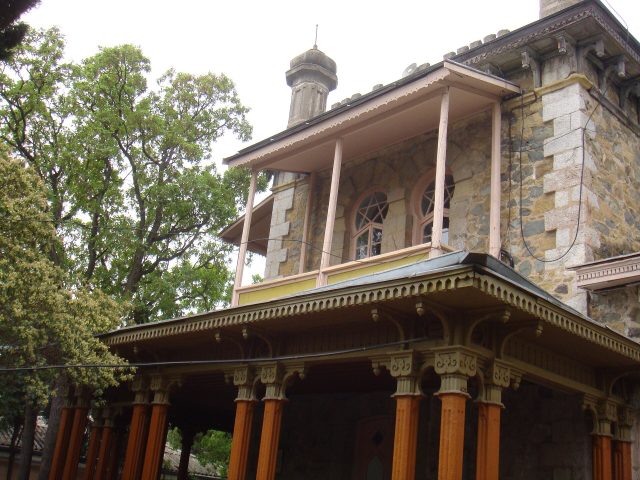
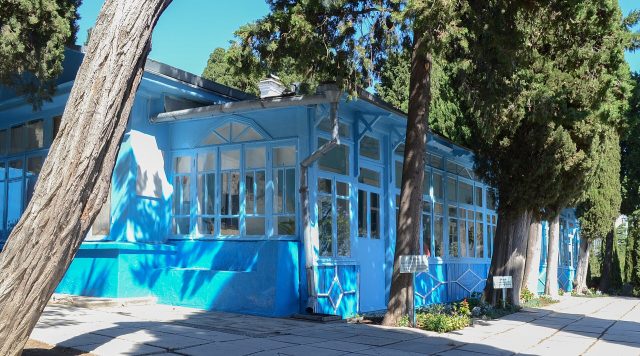
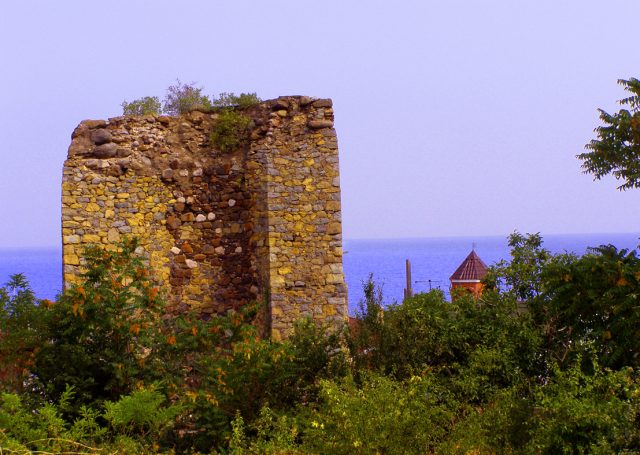
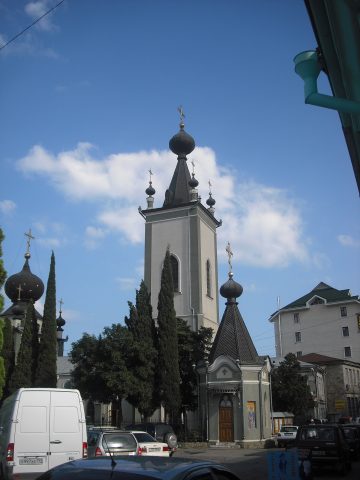
History is visible in the details. The medieval fortress of Aluston, built by the Byzantines and later reinforced by the Genoese, still stands in the center, its gray stone walls weathered but intact. Nearby, a mosque and an Orthodox church stand side by side, reflecting the layers of culture that have shaped the town. During the Soviet era, Alushta became a retreat, and traces of that time remain in the grand sanatoriums with their mosaics and columns. The past isn’t hidden—it’s part of the streets, the architecture, the way light falls on old buildings.
Summer is when the town feels most alive, but other seasons have their own appeal. In autumn, the crowds thin, and the surrounding vineyards come into their own. You can wander between rows of vines, tasting wine straight from the barrel, or follow trails to hidden waterfalls. Winter brings stillness—the mountains dusted with snow, the sea dark. It’s a time for long café mornings, watching the waves from a window seat. Spring arrives softly, with almond trees blooming and the air thick with the scent of wild herbs. The sea warms slowly, but the town feels renewed.
Alushta doesn’t try to impress. There’s no forced excitement—just a place that exists as it always has, with its own pace and landscapes that don’t need embellishment. You could spend a week here, wandering without a plan, or just a weekend, escaping the city. The key is to let the town’s rhythm take over—the way the sea meets the shore, the way the mountains watch over everything, the way time seems to slow down.
See & Do
14 places


Places on the map
Marker colour follows the categoryClimate and weather
Detailed weather: Alushta- Average temperature
- 13 °C
- Precipitation per year
- 526 mm
- Sunshine hours per day
- 7.4 h
Average air temperature
°C
2
3
6
11
16
21
24
24
19
13
8
4
Jan
Feb
Mar
Apr
May
Jun
Jul
Aug
Sep
Oct
Nov
Dec