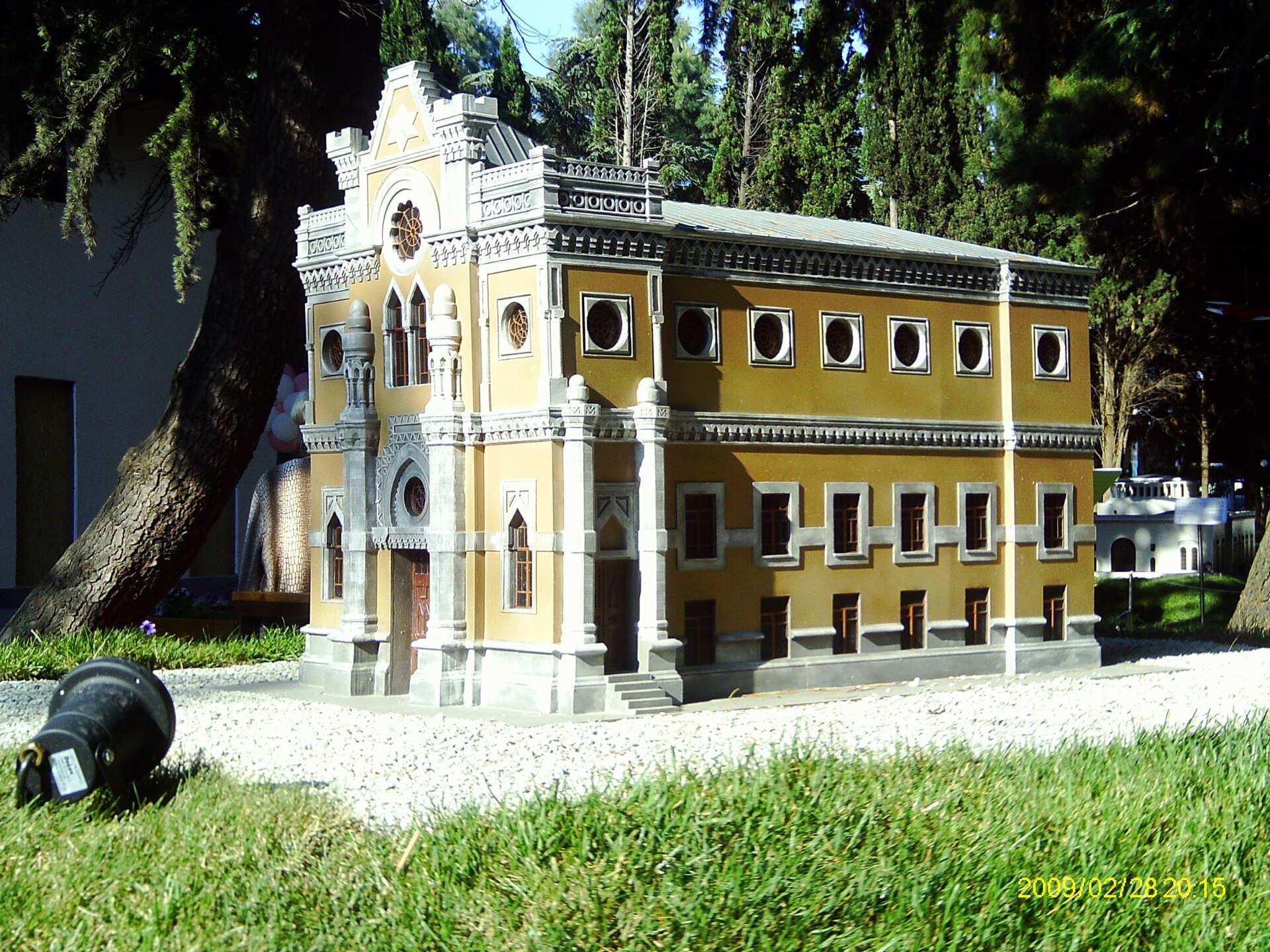
Alushta is a place where Crimea feels small enough to hold in your hands. At least, that’s the impression you get when you step into the park known as Crimea in Miniature. Tucked away on a quiet street, this compact space brings together scaled-down versions of the peninsula’s most iconic landmarks—ancient fortresses, palaces, and modern monuments—all within a short walk. It’s not just a tourist attraction; it’s a visual guide to the region’s history and architecture, offering a condensed journey through Crimea’s past and present in just a couple of hours.
The park opened in the late 1980s, a time when miniature parks were gaining popularity across the Soviet Union. The idea was straightforward: to give people, especially those who couldn’t travel far, a chance to see the beauty and diversity of their country in one place. Crimea in Miniature became one of those rare spots where you could take in everything at once—the medieval towers of Sudak, the dramatic cliffs of Swallow’s Nest, the grandeur of the Vorontsov Palace. Over the years, it evolved from a novelty into a place that draws visitors not just out of curiosity, but also for the quiet nostalgia of an era when such places were still a rarity.
What makes the park special is the care put into each model. The details are striking—whether it’s the tiled roof of the Genoese Fortress or the intricate windows of the Vorontsov Palace, every element is crafted to be instantly recognizable. Some miniatures go beyond architecture, capturing the very essence of a place. The tiny Khan’s Palace in Bakhchisarai, with its inner courtyard and fountain, feels alive, as if voices and footsteps might echo at any moment. Nearby, the Livadia Palace, where history was once shaped by world leaders, seems to carry the weight of its past in its miniature form.
But the park isn’t just about buildings. It also recreates Crimea’s natural landscapes—scaled-down mountain peaks, waterfalls, and even the famous Marble Cave. Walking through the park, you get a sense of the peninsula’s diversity: coastal cliffs give way to open steppes, dense forests transition into rocky gorges. It’s as if you’ve crossed the entire region in just a few steps, seeing how the land changes from one corner to another.
Of course, time hasn’t left the park untouched. Some models have weathered, others have been restored, but the original concept remains intact. This isn’t a museum with strict descriptions or academic precision—it’s a tribute to Crimea’s history and architecture, where the joy comes from recognition and imagination. There are no plaques to read, no guided tours to follow; just the quiet invitation to let each miniature spark the desire to see the real thing. For some, it’s a first introduction to Crimea; for others, a chance to revisit places they’ve already explored.
The atmosphere here is relaxed, free from the crowds that gather at Swallow’s Nest or the Yalta Palace. You can wander the paths at your own pace, study the details, or simply sit on a bench and take it all in. Time seems to slow down, offering a rare moment of calm in the midst of travel. The park doesn’t demand anything from its visitors—just curiosity and a willingness to let the imagination wander.
Crimea in Miniature is more than just a collection of models; it’s a way of seeing how people perceive space and time. Here, you can trace the peninsula’s evolution over centuries—from ancient settlements to modern cities. The miniatures don’t just replicate buildings; they tell stories. The Genoese Fortress stands near the ruins of ancient Chersonesus, a reminder of the many cultures that have left their mark on this land. It’s a subtle way of showing how history layers itself onto the landscape.
The park sits on the edge of Alushta, away from the bustle of the city center. Trees provide shade on hot days, and the quiet surroundings make it feel like a personal project rather than a tourist hotspot. There’s no grandiosity here, just a genuine effort to capture the beauty of Crimea in a way that feels intimate and unpretentious. That sincerity is probably why it resonates with visitors—it doesn’t try to impress, it just invites you to look closer.
Over the years, Crimea in Miniature has become part of local lore. People share stories about it, bring their children to see the diversity of the peninsula, and leave with memories that linger. It may not be the city’s most famous attraction, but for many, it’s the one that stays with them. Perhaps because here, for a little while, you can feel like something of a magician—someone who can take in the whole of Crimea with a single glance.