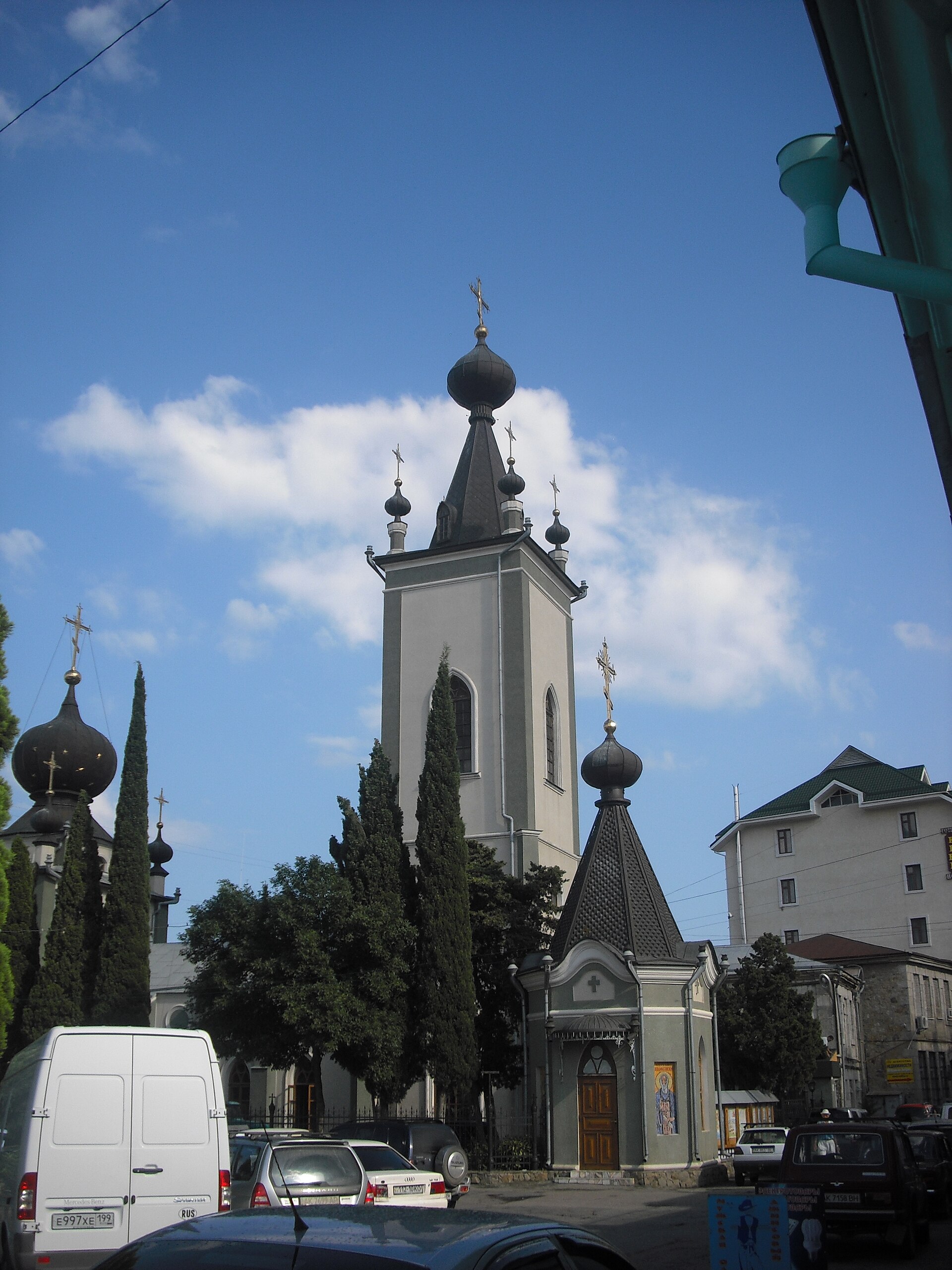
Perched on a gentle slope above Alushta, the Church of All Crimean Saints and Theodore Stratelates offers a quiet vantage point over the town and the Black Sea coast. It’s a place where the layers of Crimea’s history feel tangible, where the landscape itself seems to echo the faith that has shaped the peninsula for centuries. Built in the early 2000s, the church is relatively new, yet its design and dedication carry the weight of much older traditions, bridging the gap between the region’s ancient roots and its modern identity.
The decision to construct the church came at a time when Alushta had long been a bustling resort town, yet its deeper past remained alive in local memory. This corner of Crimea has always been a crossroads—where trade routes once intersected, where cultures mingled, and where Christianity took hold as early as the first centuries AD. The church honors not only Theodore Stratelates, a Byzantine warrior-saint, but also the countless figures who have kept the Orthodox faith alive in Crimea through conquests, migrations, and shifting borders. Its dedication is a nod to resilience, a recognition of those who carried their beliefs through turbulent times.
From the outside, the church blends familiar Byzantine elements with a restrained modern touch. Its white stone walls, domes, and arches recall the region’s architectural heritage, yet the structure avoids feeling like a pastiche. Inside, the space is uncluttered but carefully composed. Frescoes and icons follow classical styles, while high windows allow natural light to fill the interior, creating a sense of openness and calm. The iconostasis stands out, featuring images of Crimean saints—from early ascetics to 20th-century martyrs—each a thread in the broader tapestry of the peninsula’s spiritual history.
Though modest in size, the church holds a significance that extends beyond its physical dimensions. It serves as a gathering place for services tied to key moments in Crimea’s history, as well as major Orthodox feast days. During the summer, it becomes part of the tourist trail, yet even in peak season, the atmosphere remains one of quiet reflection. For many locals, the church is more than a place of worship; it’s a symbol of continuity, a reminder of the generations who have walked this land before them.
The surroundings add to the church’s appeal. From its hillside perch, visitors can climb higher for sweeping views of Alushta or descend toward the sea, winding through the town’s older streets. The air is scented with pine and cypress, and on clear evenings, the sunset paints the sky in soft golds and pinks. The church seems to exist at the edge of two worlds—the lively, sun-soaked resort below and the serene, timeless landscape above.
Crimea’s history is deeply intertwined with Orthodoxy, and this church is one of those places where that connection feels especially vivid. There are no grand cathedrals or ancient monasteries here, but there is a sense of authenticity. The Church of All Crimean Saints and Theodore Stratelates doesn’t aim to impress with scale; instead, it invites contemplation of how faith and history intersect in everyday life. For some, it’s a pilgrimage site. For others, it’s a piece of cultural heritage. And for a few, it’s simply a quiet spot to pause and reflect.
In recent years, the church has found its way onto itineraries focused on spiritual tourism in Crimea. Visitors come not only for religious reasons but also out of curiosity about the peninsula’s past. Unlike many tourist sites, there are no souvenir stalls or noisy cafés nearby, which only adds to its appeal for those seeking solitude. At the same time, it remains welcoming to anyone who wants to learn more about Orthodoxy in Crimea or simply enjoy the view of the town and sea below.
The Church of All Crimean Saints and Theodore Stratelates isn’t just a building—it’s a living testament to how faith and history continue to shape the peninsula. It doesn’t claim to be Alushta’s defining landmark, yet there’s something about it that draws people back. Perhaps it’s the way the past and present coexist so naturally here, on this hillside between the sky and the sea. Or maybe it’s the quiet assurance that some things endure, even as the world around them changes.