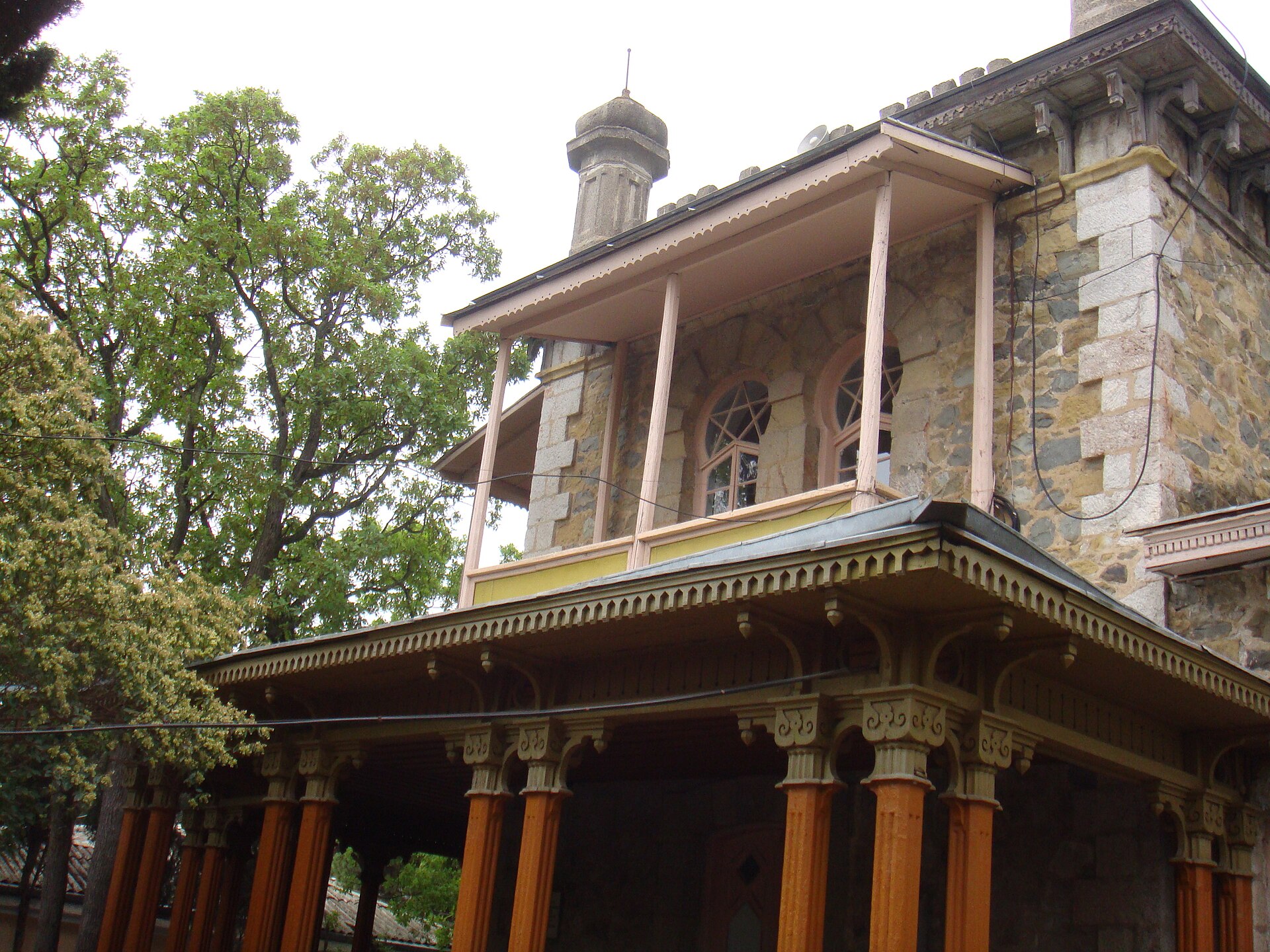
Alushta is rarely the first place that comes to mind when thinking of Russia’s great scientists and architects, yet tucked away on the southern coast of Crimea stands a quiet house that once belonged to Alexei Beketov, one of the most influential Russian architects and educators of the late 19th and early 20th centuries. This unassuming villa, nestled in a lush garden, feels less like a museum and more like a living memory of the man whose work shaped the skylines of cities like Kharkiv and Sevastopol. Inside, the air carries the weight of history—furniture, books, and personal belongings remain arranged as if Beketov had just stepped out, the sunlight streaming through tall windows seeming to hold the echo of his thoughts.
Beketov first came to Alushta in the 1890s, when Crimea was already becoming a retreat for Russia’s intellectual and artistic circles. He chose this spot deliberately, drawn by the mild climate, the proximity to the sea, and the relative seclusion from the bustle of larger cities. The house itself was his own design—a blend of simplicity and elegance, with touches of neoclassicism and Art Nouveau, styles he favored in his professional work. Unlike the grand public buildings he designed in Kharkiv, this was a private sanctuary, every detail crafted for comfort and harmony. The veranda overlooking the sea, the high-ceilinged rooms, the shaded garden—all reflected his belief in the deep connection between architecture and nature.
Today, the house serves as a museum not just to Beketov’s life but to an entire era. The exhibits include his architectural drawings, photographs of the buildings he designed—from university campuses to private estates—and personal items that offer a glimpse into his daily life. His writing desk, his collection of art and architecture books, and family photographs make the past feel tangible, as if the architect might return at any moment. This intimacy is what makes the museum special; it doesn’t just recount history but invites visitors to experience it.
Beyond his architectural achievements, Beketov was a dedicated educator who shaped generations of Russian architects. For nearly three decades, he led the architecture department at Kharkiv University, where his teaching philosophy emphasized creativity, cultural context, and the importance of history in design. His students remembered him as someone who inspired without imposing his views, always stressing that architecture should serve a deeper purpose. In Alushta, his work took on a more personal tone. Here, away from the demands of public commissions, he could focus on projects that reflected his own ideals, making this house not just a summer home but a place of true retreat.
Visiting the museum offers more than just insight into Beketov’s life—it’s a chance to imagine what Crimea was like at the turn of the 20th century. Back then, the southern coast was still a wild, untamed landscape, far from the crowded resorts of today. Beketov’s house stood on the outskirts of Alushta, surrounded by vineyards and orchards, with an unobstructed view of the sea. The city has since expanded, but within these walls, time seems to stand still. Walking through the rooms, it’s easy to picture the gatherings that must have taken place here—artists, writers, and scholars debating the future of Russian architecture, the sound of the sea drifting through open windows.
The house is surrounded by a small park that Beketov designed himself, planting pines, cypresses, and magnolias he brought from different parts of Crimea and beyond. For him, the garden was an extension of the home, a place for quiet reflection. Today, it remains as peaceful as it was a century ago, the only sounds the rustling of leaves and the distant cries of seagulls. Visitors can stroll along the paths, sit on a bench, and imagine Beketov doing the same, gazing at the sea while sketching ideas for his next project.
This museum is more than a tribute to an architect; it’s a testament to how closely his life and work were intertwined. There are no grand displays or interactive exhibits here, and that’s precisely what makes it special. What remains of Beketov is his legacy—his buildings, his ideas, and this house, built for himself and his family. It’s a reminder that great minds don’t always seek grandeur but instead surround themselves with beauty, whether in a building, a book, or the view from a window.
The museum is open to anyone who wants to step into the past and feel the atmosphere of a bygone era. Unlike many tourist sites, it’s rarely crowded, allowing visitors to fully appreciate its tranquility. If you find yourself in Alushta, it’s worth stopping by—not for a formal tour, but to sit on the veranda, look out at the sea, and reflect on how much a single house can reveal about the person who built it.