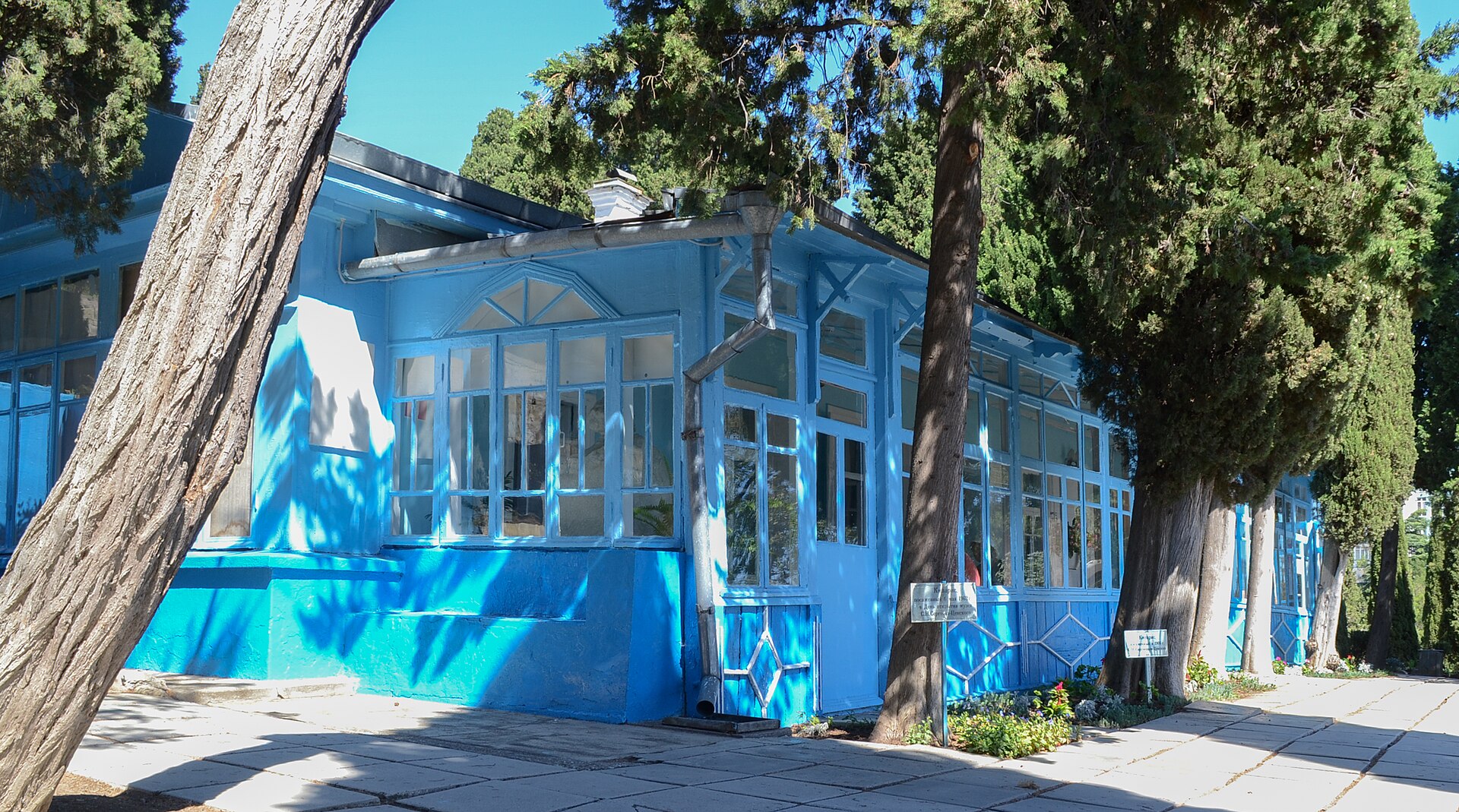
The house where Sergei Sergeev-Tsensky spent his final decades stands quietly in Alushta, its whitewashed walls and wide verandas overlooking the same sea that once filled the pages of his novels. Built in the early 1900s, the building is a classic example of Crimean coastal architecture—high ceilings, tall windows, and shaded terraces designed to catch the breeze. Inside, time seems to have paused. The furniture, the books, even the faint scent of old paper and wood polish remain as they were when the writer lived here, offering a rare glimpse into the daily life of a man who chronicled an era of upheaval.
Sergeev-Tsensky was more than a novelist; he was a witness to history. His works spanned the Russian Revolution, the Civil War, and World War II, capturing the turbulence of the 20th century through the lives of ordinary people. The museum preserves the manuscripts of his most ambitious project, *The Sevastopol Epic*, a sweeping narrative of the Crimean War that blends historical detail with human drama. His notes, letters, and drafts reveal the meticulous process behind his writing—how he shaped real events into fiction, how he wrestled with the weight of the past while living through its consequences.
The museum’s collection extends beyond literature. Sergeev-Tsensky was part of a broader cultural circle, and the exhibits include correspondence with contemporaries like Maxim Gorky, as well as books inscribed by fellow writers and artists. These artifacts paint a picture of intellectual life in early 20th-century Crimea, a place where creative minds gathered, debated, and drew inspiration from the landscape. The photographs of Alushta from that era are particularly striking—black-and-white images of a town that was still raw and untamed, far removed from the polished resort it would later become.
What makes this museum different from others is its intimacy. There are no grand displays or interactive screens, just the quiet accumulation of a life’s work. The study, where Sergeev-Tsensky wrote, feels almost untouched. His desk holds a pair of glasses resting on an open manuscript, as if he had just stepped away. The shelves are lined with his personal library, the spines of the books worn from use. Visitors often linger here, flipping through the pages of his diaries or reading the marginalia in his books, as if hoping to catch a whisper of his thoughts.
Alushta itself plays a role in the story. The town has long been a refuge for artists and writers, drawn by its dramatic coastline and the play of light on the mountains. Sergeev-Tsensky was one of many who found solace here, but he also saw the contradictions of the place—the beauty of the land alongside the struggles of those who lived on it. His writings reflect this duality, portraying Crimea not as a postcard paradise but as a living, breathing world with its own rhythms and hardships.
The museum doesn’t try to romanticize the past. Instead, it presents history as it was—messy, complicated, and deeply human. The letters from wartime, the drafts of unfinished stories, the photographs of friends and colleagues who didn’t survive the upheavals of the century all serve as reminders of how fragile life can be. Yet there’s also a sense of resilience in these rooms, a quiet testament to the power of words to endure.
For those who take the time to explore, the museum offers more than just a lesson in literature. It’s a chance to step into another era, to see the world through the eyes of someone who lived through some of the most defining moments of modern history. The views from the veranda—of the sea stretching toward the horizon, of the mountains rising in the distance—are the same ones that inspired Sergeev-Tsensky. They remind visitors that while times change, the land itself remains, a silent witness to the stories it has shaped.
A visit here is as much about the place as it is about the man. Alushta’s streets, its markets, and its shoreline still carry echoes of the past, and walking them can feel like retracing the steps of those who came before. The museum doesn’t just preserve the memory of Sergeev-Tsensky; it invites you to see Crimea as he did—not as a destination, but as a home, a muse, and a mirror of the human experience.