Aji-Koba is one of those Crimean caves that hold more than just natural beauty—they carry whispers of the distant past. Tucked into the rocky slopes of Chatyr-Dag mountain near Alushta, it feels like a secret waiting to be discovered, far from the well-trodden paths of the peninsula’s more famous sights. Unlike the crowded tourist spots along the coast, this place offers something rare: silence, solitude, and the quiet thrill of stepping into a world untouched by modern noise.
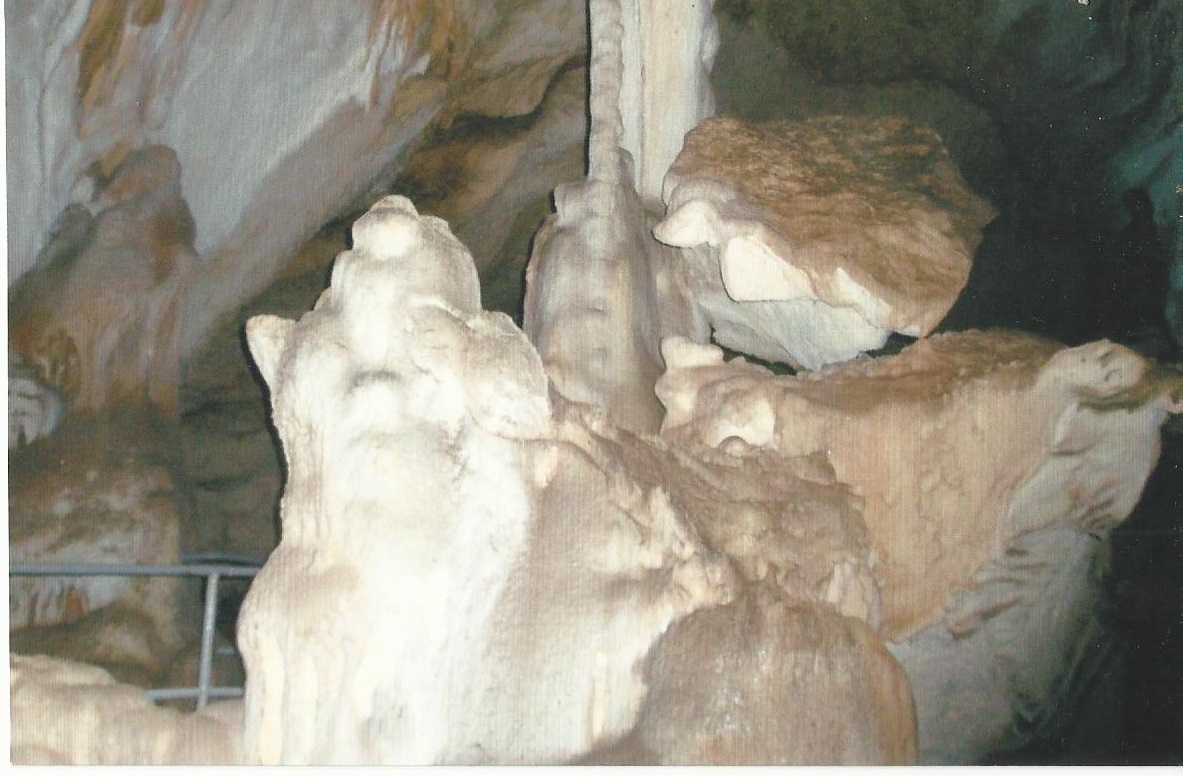
The entrance to Aji-Koba is easy to miss—a narrow crevice in the rock, half-hidden by shrubs and overgrown brush. But once you squeeze through, the space opens up into a surprisingly large chamber with high, vaulted ceilings. The cave isn’t deep, stretching only about a hundred meters, yet it has enough room to make you feel the weight of the earth above. The walls glisten with mineral formations, their shapes sculpted over millennia by slow drips of water. In some corners, delicate stalactites and stalagmites hint at the patient work of time, still growing, still changing, even if we can’t see it.
What makes Aji-Koba special isn’t just its geology, but the traces of human history buried within it. Archaeologists have found stone tools, animal bones, and fragments of pottery here, evidence that the cave was once a shelter for prehistoric hunters. Some of these artifacts date back to the Paleolithic era, meaning people sought refuge in these same chambers tens of thousands of years ago. Standing inside, it’s hard not to wonder about the lives that unfolded here—what they feared, what they hoped for, what they saw when they looked out at the same landscape.
The hike to the cave begins in the village of Luchistoye, where a trail winds upward through forested slopes. The climb isn’t steep, but it’s steady, rewarding those who make the effort with sweeping views of the surrounding valleys and peaks. On clear days, the Black Sea glints in the distance, and you can pick out Alushta’s coastline, a ribbon of civilization against the wild backdrop of the mountains. The path itself is part of the experience, lined with the kind of quiet beauty that makes you slow down and pay attention.
Inside the cave, the air is cool and damp, even in the height of summer. There’s no artificial lighting, so a flashlight is essential if you want to see the details—the way the rock glows under the beam, the faint marks on the walls that might be soot from ancient fires. These small signs of human presence are easy to overlook, but they’re a reminder that this place wasn’t always empty. Once, it was a home, a refuge, a stage for stories we’ll never fully know.
Aji-Koba isn’t the kind of place you’ll find on postcards or in travel brochures. There are no crowds, no guided tours, no souvenir stands—just the quiet hum of nature. For those who seek it out, it offers something increasingly rare: a chance to step away from the noise and feel a connection to both the land and the people who walked it long before us. It’s not a grand spectacle, but that’s part of its appeal. Here, the past doesn’t feel distant; it feels close enough to touch.
Of course, that closeness comes with responsibility. The cave’s formations are fragile, growing at a pace so slow it’s almost imperceptible. A careless touch or a knocked-over rock can undo centuries of natural work. Visitors should tread lightly, leaving no trace behind—not even a pebble taken as a keepsake. The cave doesn’t need to be preserved for its beauty alone; it’s a living record of human history, and every mark we leave behind is a mark erased from that story.
In the end, Aji-Koba isn’t about what you see, but what you feel. It’s a place where the modern world fades, and for a little while, you’re left with just the rock, the silence, and the weight of time. It doesn’t demand attention like the more famous caves of Crimea, but that’s what makes it worth finding. For those willing to look, it’s a small revelation—a reminder that even in a place as explored as this peninsula, there are still corners where the past lingers, waiting to be noticed.