Põltsamaa Castle doesn’t shout for attention. It stands in a small Estonian town, holding centuries within its walls. If you’re driving from Jõgeva, you might miss it—but those who stop find more than just an old building.
The first traces of Põltsamaa appear in the 13th century, when the Livonian Order ruled the land. Back then, it was likely a wooden fort, a strategic outpost for the knights. The stone castle we know today emerged later, between the 14th and 15th centuries, as the Order tightened its control. It sat along key trade routes, serving as a checkpoint for the surrounding lands. Thick walls, a tower, and an inner courtyard defined its military design. But as its strategic importance faded, the castle began to change, slowly becoming more manor than fortress.
By the 16th century, after the Livonian War, Põltsamaa passed to Sweden, then to the Russian Empire in the early 18th century. Each ruler left their mark. The Swedes added Renaissance touches; the Russians later softened its edges with Baroque details. By the 19th century, the castle barely resembled its medieval self. The walls were lowered, the towers lost their purpose, and the grounds became a landscaped park. It became a noble residence, home to families like the Ungern-Sternbergs, whose name remains tied to the place.
Today, what stands in Põltsamaa is less a castle and more a manor house. The medieval past lingers in fragments—remnants of old walls, parts of the cellars. The main building we see now is mostly the result of 18th and 19th-century renovations, reshaped into a grand residence. The facade has pilasters and stucco, the windows are wider, and the interiors are more spacious. Inside, high ceilings, old fireplaces, and traces of wall paintings remain, though much was lost or altered during the Soviet era.
After World War II, the building served as a school, an agricultural college, and later a cultural center. Time wore it down—some rooms fell into disrepair, the facades weathered, and the park grew wild. But restoration efforts in recent decades have begun to revive it. It’s not yet a full-fledged museum, but it hosts exhibitions, concerts, and local events. The people of Põltsamaa treat it with quiet pride, a piece of their history that doesn’t need the fame of Tallinn or Tartu.
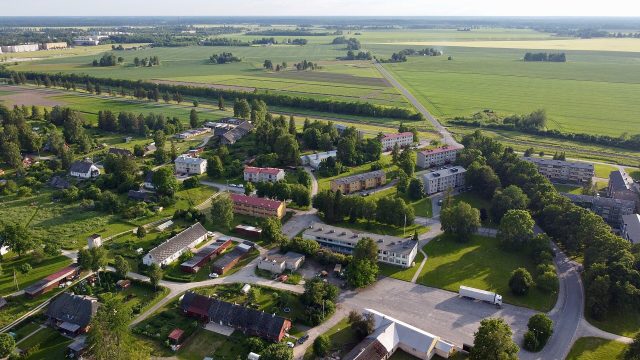
The castle sits on a gentle hill, overlooking the town and rolling fields. The park around it is small but well-kept, with winding paths, benches, and a small pond. In summer, it’s a pleasant place for a walk. In autumn, the foliage turns golden. In winter, snow dusts the rooftops, giving the scene a timeless feel.
For those interested in Estonia’s history, Põltsamaa offers a glimpse into how these lands have changed. It’s not a grand palace or an imposing fortress. That’s part of its appeal. The castle doesn’t try to impress—it simply endures, a reminder that history isn’t just battles and kings, but the lives of the people who once lived here.
If you’re in this part of the country, it’s worth stopping for an hour. The atmosphere is unhurried, a little melancholic, but peaceful.