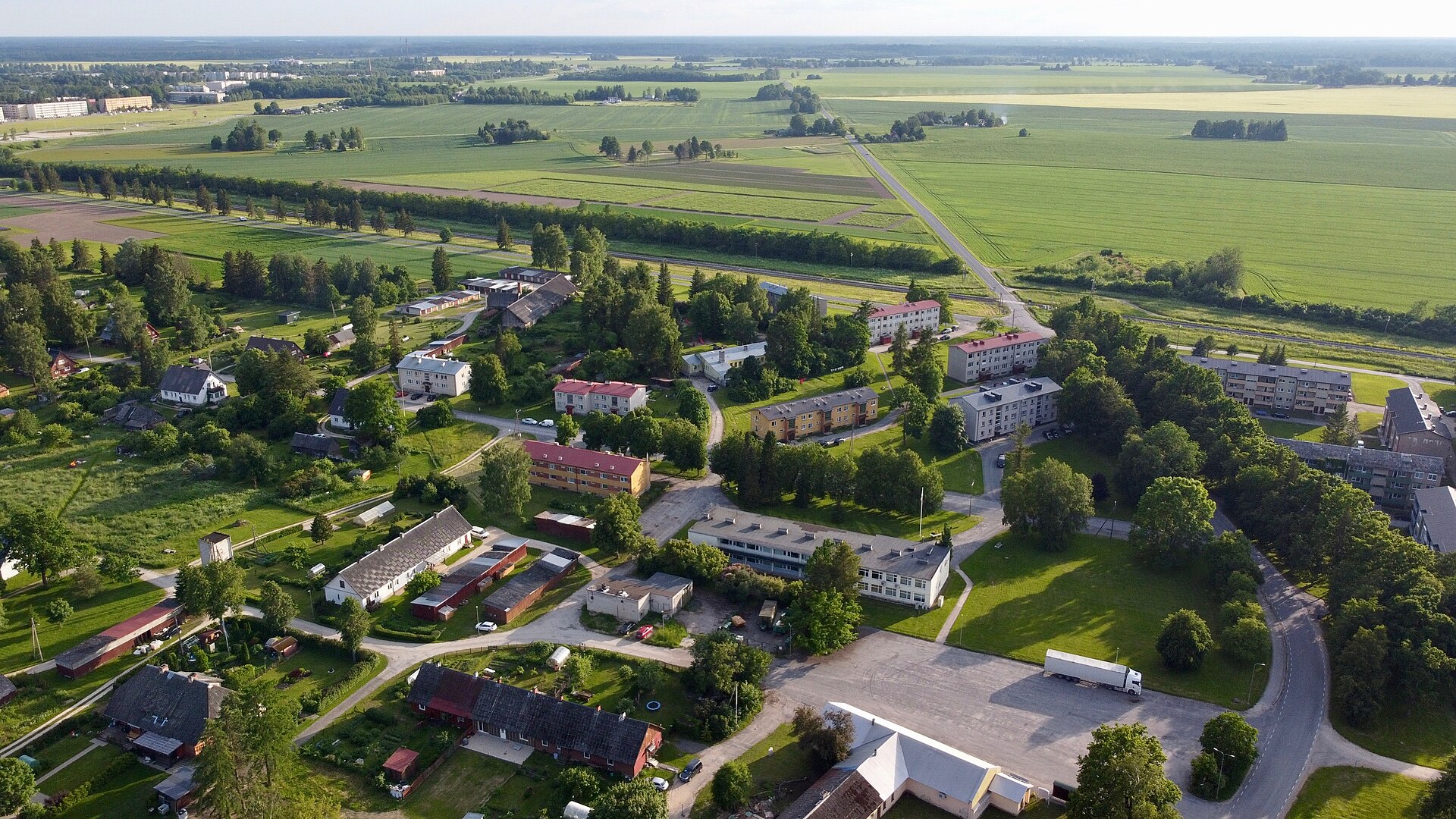
Jõgeva Park is one of those quiet, unassuming places that feels like it has always been here, as if the trees and paths grew into their shapes over generations rather than being planned. It sits in the heart of Jõgeva, a small town in eastern Estonia, where the pace of life slows just enough to notice the details—the way the light filters through the leaves in summer, the crunch of gravel underfoot, or the distant hum of the town settling into evening. The park isn’t grand or flashy, but that’s part of its charm. It’s the kind of space where locals come to walk their dogs, where children chase each other between the birches, and where the elderly sit on benches watching the seasons change.
The park’s origins trace back to the early 20th century, when Jõgeva was still a young town, shaped by the arrival of the railway in 1876. The railway brought growth, and with it, the need for public spaces where people could gather, relax, and escape the dust and noise of daily life. The land that became Jõgeva Park was likely part of this wave of urban development, though its exact beginnings are modest, like much of the town’s history. There are no grand monuments or dramatic stories here—just the quiet accumulation of time, marked by the trees that were planted decades ago and have since grown tall and sturdy.
What makes the park feel special is its layout, which blends formal design with a more natural, almost wild character. The paths curve gently, leading visitors past clusters of birch and pine, with occasional clearings that open up to small lawns or patches of wildflowers. In the warmer months, the air is filled with the scent of grass and the occasional buzz of bees drifting between clover and dandelions. The park isn’t manicured in the way some urban green spaces are; instead, it has a slightly untamed feel, as if nature is slowly reclaiming parts of it. This balance between order and wildness gives it a relaxed, lived-in atmosphere.
At the center of the park stands a small pavilion, a simple wooden structure with a pitched roof, its paint weathered by years of Estonian winters. It’s not a grand building, but it serves as a focal point—a place where people might gather for small events, or where a musician could set up on a summer evening. Nearby, a few benches are scattered under the trees, their wood worn smooth by countless visitors. These unassuming features are what make the park feel like a true public space, not just a patch of greenery but a place where the community takes shape.
Jõgeva itself is a town that doesn’t demand attention, and the park reflects that. It’s not a destination in the way Tallinn’s Old Town or the coastal cliffs of Saaremaa are, but that doesn’t make it any less meaningful to those who know it. For locals, it’s a backdrop to daily life—a place to walk after work, to meet friends, or to simply sit and watch the world go by. In winter, the park transforms, its paths dusted with snow and the trees standing stark against the pale sky. The pavilion might be used for a small Christmas market, or children could be seen dragging sleds up the gentle slopes. Even in the coldest months, the park retains its quiet warmth.
The park also holds a subtle connection to Estonia’s broader history. Jõgeva, like much of the country, has seen its share of upheaval—from the struggles of the early 20th century to the Soviet occupation and the eventual restoration of independence in 1991. Public spaces like this one often become silent witnesses to such changes, absorbing the shifts in mood and politics without fanfare. The park has likely seen generations come and go, its trees growing taller as the town around it evolved. There’s something reassuring in that continuity, in the way a place like this endures, adapting to the needs of each era without losing its essence.
For visitors passing through Jõgeva, the park offers a glimpse into the rhythm of small-town Estonian life. It’s not the kind of place you’d spend hours exploring, but that’s not the point. Instead, it invites you to slow down, to take a moment away from the road or the train station and simply be present. You might notice the way the light slants through the trees in the late afternoon, or the sound of a distant accordion playing at a nearby café. These small details are what make the park feel alive, even when it’s empty.
In many ways, Jõgeva Park is a reminder of the beauty in ordinary places. It doesn’t need to be spectacular to matter; it just needs to be there, offering a bit of green and quiet in the middle of the town. For those who live in Jõgeva, it’s a familiar comfort, a place that holds memories and promises more to come. For outsiders, it’s a chance to see Estonia beyond the usual tourist routes—a country where even the smallest towns have their own quiet corners of grace.