Himarë isn’t just another coastal town on Albania’s Ionian Sea—it’s where the mountains press so close to the water that you half-expect the cliffs to lean in and whisper secrets to the waves. The beach here isn’t merely a stretch of shore; it’s a long, sun-bleached ribbon of pebbles and sand curving around a bay where the sea shifts from pale turquoise to deep indigo, depending on the light. Behind you, the hills rise steeply, covered in olive groves and pine trees that scent the air with resin and salt. Unlike the busier resorts further north, Himarë still feels like a place where the sea sets the pace, not the tourists. Even in high season, you can find a quiet corner where the only sound is the rhythm of the waves.
The town’s history is written in the water. For centuries, this stretch of coast was a crossroads—traders passed through, and local sailors were known for their daring voyages across the Ionian. During the Middle Ages, Himarë was a stronghold of Byzantine culture, later becoming a center of resistance against Ottoman rule. The beach and the surrounding hills still carry traces of that past. If you look closely at the cliffs, you might spot the crumbling remains of old fortifications, while in nearby villages, families with Greek and Albanian roots have lived here for generations, their stories woven into the landscape. Fishermen still set out in small boats at dawn, returning with the day’s catch to sell in Vlorë or Sarandë, just as they have for centuries.
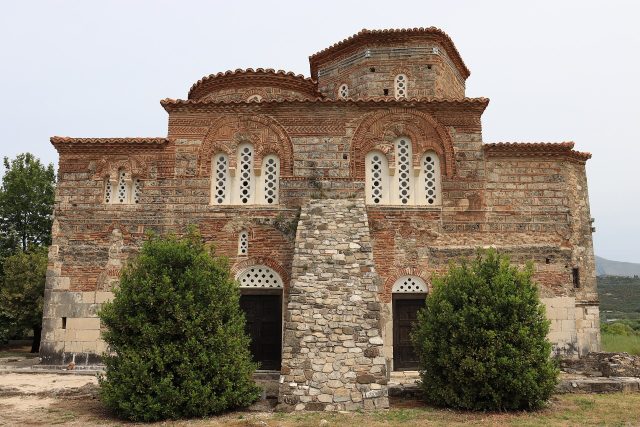
What makes Himarë unusual is its architecture. Unlike other Albanian coastal towns, where modern hotels and concrete blocks dominate, Himarë has retained its old stone houses with terracotta roofs, built in the traditional Epirote style. Some stand so close to the water that high tide laps at their foundations. Above the beach, the 18th-century Church of Saint Nicholas rises on a small promontory, its white walls and red roof visible from afar. Inside, faded frescoes and icons tell stories of faith and survival—this church has withstood earthquakes, wars, and changing rulers, yet it remains a gathering place for locals and visitors alike.
The beach itself is divided into distinct sections, each with its own character. The central part, near the promenade, is the liveliest, with open-air cafés and tavernas serving grilled fish and flaky burek, the crispy pastry filled with cheese or spinach. The water here is clear, though the pebbles can be uncomfortable underfoot if you’re used to sand. But if you walk further toward the cape, the shore becomes wilder, almost untouched. There are no sunbeds or umbrellas, just jagged rocks and the sea crashing against them with a force that makes the whole coastline feel alive. This is where snorkelers come to explore the underwater world, where fish dart between rocks and small caves hide just beneath the surface.
Himarë hasn’t been swallowed by mass tourism. There are no high-rise hotels or all-night clubs, just a quiet rhythm that follows the tides. In the early morning, fishermen return with their catch, and you can buy fresh sardines or sea bass straight from the boat. By midday, families with children appear, building castles from pebbles or wading in the shallows. In the evenings, locals gather in tavernas where live music plays—not the polished performances for tourists, but the same folk songs and Greek melodies that have been part of celebrations here for decades. The border between Albanian and Greek culture is thin in Himarë, and you can hear it in the music, taste it in the food, and see it in the way people move between languages.
If you’re curious about the area beyond the beach, Himarë is a good place to start. A short drive south leads to Livadhi Beach, a quieter cove surrounded by olive groves, while to the north, the famous beaches of Ksamil offer turquoise waters and tiny islands just offshore. But Himarë itself has its own hidden corners. Above the town, an old fortress clings to a hillside, its walls still standing after centuries of neglect. You can reach it by a steep path that begins near the beach, and from the top, the view over the bay is worth the climb. The fortress dates back to Byzantine times, though it was later rebuilt by Venetians and Ottomans. Now, only fragments remain, but the sense of history is strong, especially at sunset when the stones glow in the fading light.
What makes Himarë special is the way time seems to slow down here. There’s no rush to see everything, because the real draw isn’t the sights—it’s the atmosphere. The sea isn’t just a backdrop; it’s part of life, connecting the past to the present. The beach isn’t just a place to swim; it’s where you begin to understand the region, where every rock, every wave, and every sunset has a story. If you’re lucky, you might even become part of it, if only for a few days.