Himarë Castle stands on a hill above the town of the same name, a silent guardian overlooking the Ionian coast. Its gray stone walls rise along the slope, following the natural contours of the land, and from a distance, they give the impression of an unyielding fortress—one that history has repeatedly proven to be just that. Today, the castle is more than a relic of the past; it’s a place where the wind moves freely through its ruins, and the sea below shimmers under the sun as it has for centuries.
The origins of Himarë Castle are lost in time, though it’s known that by the 6th century, a fortification already existed here. Its purpose was clear: to protect the local population from pirate raids and invasions. Over the centuries, the castle’s strategic position made it a coveted stronghold between Byzantium and the Italian city-states. It changed hands many times—Byzantines, Venetians, and Ottomans all left their mark before the castle became a symbol of Albanian resistance in the 19th century. Each era added layers to its story, visible in the architecture and the very air of the place.
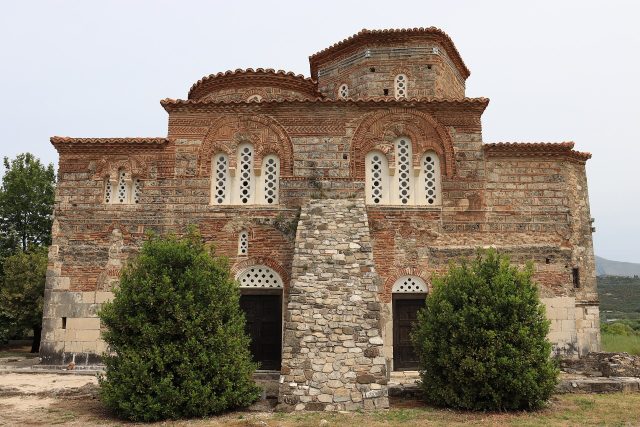
The castle’s design is a patchwork of styles, where the rough strength of medieval walls meets the finer details of later modifications. The main gate, flanked by sturdy towers, leads into a courtyard that once buzzed with the activity of a garrison. Remnants of churches, water cisterns, and living quarters still stand, though many structures have crumbled into ruins. The most striking surviving feature is the 11th-century Byzantine Church of Saint Nicholas. Its faded frescoes, though worn by time, hint at the splendor that once filled these walls. The castle’s fortifications have been rebuilt over the years, but the core remains unchanged—a rare connection to the hands that shaped it centuries ago.
The path to the castle winds upward through olive groves and wild shrubs, a climb that rewards visitors with sweeping views. From the top, Himarë unfolds below: white houses with red roofs line the coast, the turquoise waters of the bay stretch out, and the mountains fade into the distance. On clear days, the outline of Corfu is visible on the horizon. It’s easy to imagine the watchmen of old scanning the sea for sails—whether merchant ships or enemy vessels—just as they did hundreds of years ago.
There’s a quiet, almost forgotten feel to Himarë Castle. Inside its walls, the only sounds are the wind rustling through the grass and the occasional bleat of sheep grazing on the slopes. Locals rarely visit, but travelers who make the journey often linger for hours, exploring every corner. Sunset is the best time to be here, when the stone glows golden and the sea below darkens to deep blue. In those moments, the castle feels less like a historical monument and more like a place where time moves differently.
Himarë and its castle have always been tied to the sea. In the Middle Ages, the town was a vital port, a hub for trade between the Balkans and Italy. The castle protected not just the people but the trade routes, its garrison keeping watch over the strait between the mainland and Corfu. Today, the sea still defines the town’s rhythm—fishing boats set out at dawn, and beaches draw visitors seeking a slower pace. The castle, meanwhile, stands as a silent witness to these changes, a reminder of how closely human lives and the elements have always been intertwined here.
Unlike many historical sites, Himarë Castle hasn’t been turned into a polished open-air museum. There are no signs, no guided tours, no neatly labeled exhibits. It’s a place for those who prefer to discover things on their own, piecing together the past from the fragments that remain. The ruins of churches, the remnants of towers, the worn steps—each tells a story, but the narrative is left for visitors to interpret. Some come looking for echoes of ancient battles; others simply seek solitude. What’s certain is that the castle leaves no one indifferent.
Modern Himarë is a quiet coastal town where life moves at an unhurried pace. In summer, tourists arrive to enjoy the beaches and local cuisine, while winter brings a quieter, more introspective mood. The castle, however, remains unchanged, as it has for centuries. It doesn’t need restoration to retain its charm; its beauty lies in its authenticity, in the fact that it has endured through so many eras and yet remains itself. Standing on its walls, you can feel a connection to the past, an understanding of why this place matters to Albanians and why it continues to draw travelers from afar.