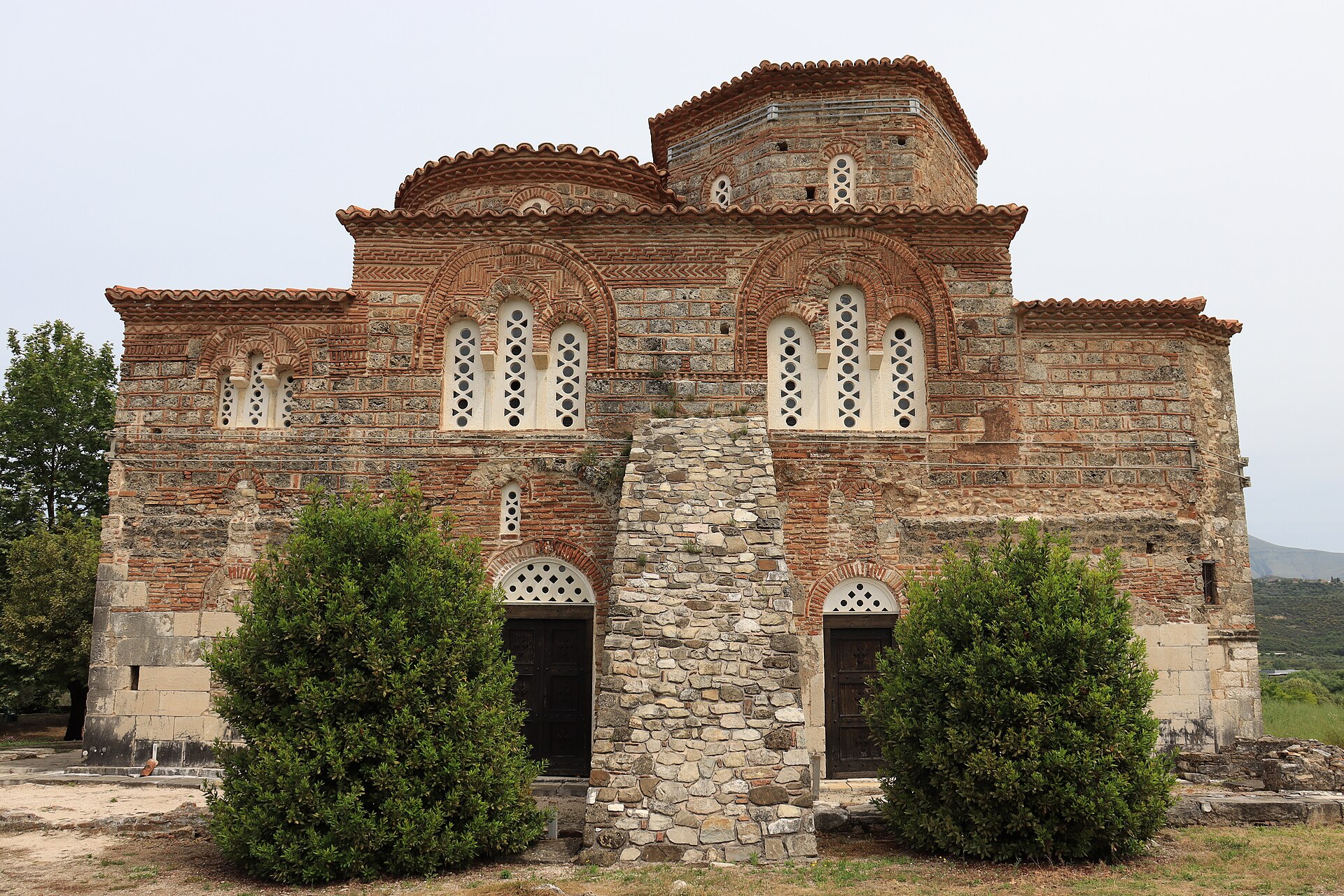
Perched on a gentle hill overlooking the Ionian Sea, the Church of Saint Nicholas in Himarë feels like a quiet guardian of time. This small coastal town in southern Albania has long been a crossroads of cultures, and the church stands as a testament to that layered history. Built in the 18th century, it emerged during a period when Orthodox Christianity was experiencing a revival along this stretch of the Albanian coast. Unlike the grand cathedrals of more famous cities, this church is unassuming—whitewashed walls, a modest bell tower, and a simple dome. There’s no ornate decoration here, just a sense of authenticity that often gets lost in more polished historical sites.
Inside, the church holds faded frescoes painted by local artisans. They’re not as vivid or intricate as those in renowned Byzantine churches, but that’s part of their charm. The colors have softened with age, the plaster is worn in places, and the scenes they depict—saints, biblical stories, even glimpses of daily life like fishermen and farmers—feel deeply connected to the people who once gathered here. Not all the paintings have survived intact, but what remains offers a glimpse into a time when the church was the heart of the community’s spiritual life.
Himarë itself has always been a stronghold of Orthodox tradition in Albania. During the Ottoman era, when many churches in the region were destroyed or converted into mosques, Saint Nicholas endured. Locals protected it, passing down their faith and customs through generations. Even under Albania’s communist regime, when religion was banned, the church was closed but not forgotten. After the fall of communism, it reopened, and while it no longer sees the same level of activity as in the past, it remains a place of worship and reflection.
The hill where the church stands is as much a part of its story as the building itself. From here, the view stretches across Himarë and the shimmering sea, especially striking at sunset. Olive trees dot the landscape, and the air carries the scent of salt and wild herbs. Locals sometimes come just to sit, soaking in the quiet and the view. In the summer, the church becomes a focal point for celebrations—services, processions, and the feast day of Saint Nicholas, the patron saint of sailors. Fishermen bring their catch to be blessed, and children play on the slopes, their laughter mingling with the sound of the waves below.
What makes the Church of Saint Nicholas special is its lack of pretension. There’s no grand narrative here, no attempt to impress visitors with spectacle. Instead, it offers something rarer: a sense of continuity. The church has witnessed centuries of change—empires rising and falling, faith suppressed and revived, communities evolving—but it has remained a constant. The worn stone steps, the creaking wooden doors, the way the light filters through the small windows—all of it feels like a quiet conversation with the past.
If you visit Himarë, the church is worth seeking out. There’s no guarantee it will be open when you arrive, but if you’re lucky, you’ll step inside to find a cool, dim space that smells of beeswax and old paper. The walls bear the marks of time, and beyond them, the sea stretches out as it has for hundreds of years. This isn’t a place that demands attention or grand gestures. It simply exists, a humble yet enduring presence in a landscape shaped by history and the rhythms of the sea. Sometimes, the quietest places leave the deepest impression.