Perched on the gentle slopes of the hills near Borobudur, the Karangtanjung Museum feels like a place where time moves at its own unhurried pace. There are no crowds here, no tourists rushing to snap the perfect photo, and even locals rarely pass through. The museum occupies an old colonial building that carries its own quiet history—thick wooden beams, high ceilings, and wide verandas that overlook the surrounding landscape. Inside, the collection speaks of Central Java’s Buddhist heritage, but not in the way one might expect. Instead of artifacts displayed behind glass with neat labels, the objects here seem to exist as they always have: ancient Buddha statues worn smooth by centuries, fragments of reliefs with half-erased divine faces, and yellowed manuscripts inscribed on palm leaves.
The museum wasn’t created to be a tourist attraction. It began as a repository of memory, a place where the less celebrated remnants of the past could find refuge. In the mid-20th century, as archaeological excavations in the region intensified, many discoveries required careful preservation. Not every artifact was destined for the grand museums of Jakarta or Yogyakarta—some were too fragile, too ordinary, or simply didn’t fit the official narratives. Karangtanjung became a home for these overlooked pieces: broken sculptures unearthed during road construction, fragments of ceramics from private collections, and everyday items used by monks who once lived in nearby monasteries. There’s no strict chronology or scholarly organization here, just a gathering of stories, each with the potential to unfold into something deeper.
The building itself has its own layered past. Once a Dutch plantation house, it was used for growing coffee and tea before Indonesia gained independence. For years, the estate stood abandoned until the 1970s, when it was restored and repurposed as a museum. Yet much of its original character remains—the wooden floors creak underfoot, and in some rooms, unused fireplaces stand as reminders of a climate too warm for such luxuries. The walls are adorned with old photographs: black-and-white images of plantations, portraits of workers, and groups of Europeans in pith helmets. These snapshots hint at another history, one of colonial life that existed long before the museum took shape.
The collection is modest but compelling in its fragments. There are no world-famous masterpieces here, nothing that would draw visitors from across the globe. Instead, the artifacts invite quiet reflection on the lives of people who lived a thousand years ago. A small Buddha statue, carved from volcanic stone, bears the marks of ancient tools. Simple clay lamps, once lit in temple rituals, speak of daily devotion without ornamentation. A few inscriptions in Sanskrit, etched into stone, still puzzle scholars today. These objects aren’t grand, but they carry the weight of real lives.
Among the most intriguing items are those tied to the everyday existence of Buddhist monks. Beyond religious relics, the museum holds objects that reveal the practical side of monastic life: wooden alms bowls, scraps of fabric used to wrap sacred texts, and plain clay pots for cooking. A small bronze bell, once rung during meditation, sits in a display case. Its sound would have been faint, barely audible beyond the monastery walls, yet for a monk, it might have marked the beginning or end of a long day of contemplation. These unassuming items don’t gleam like gold, but they make the past feel tangible.
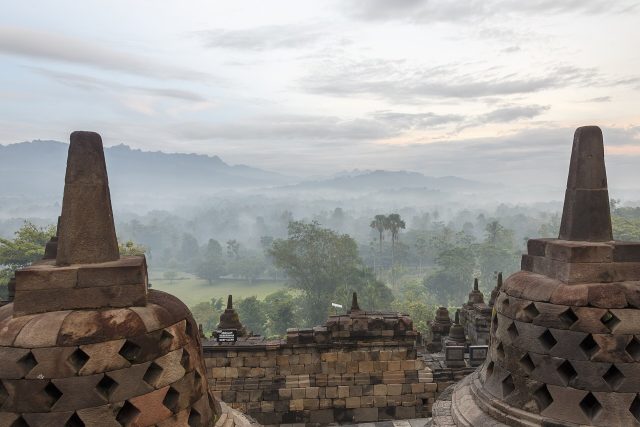
Karangtanjung isn’t the kind of place you’d visit on a whirlwind day trip to Borobudur. But if you have time to wander beyond the usual tourist paths, it offers something rare—a sense of stillness and authenticity. There are no crowds, no souvenir stalls, no guides shouting over one another. Just the quiet hum of history, the scent of aged wood, and the feeling that you’ve stumbled upon something real. The surrounding landscape of rice fields and small villages moves at its own rhythm, and from the museum’s veranda, the distant silhouette of Borobudur serves as a reminder that these artifacts are just one thread in Java’s vast cultural tapestry.
A visit here won’t take long—an hour or two at most. But for those who appreciate places where they can simply stand, think, and absorb the atmosphere, Karangtanjung is ideal. There’s no prescribed route through the exhibits, no pressure to move along. You can sit on a bench in the courtyard, gaze at the distant mountains, and imagine monks walking these same hills centuries ago in search of enlightenment. Or you might browse the museum’s small library, where rare books on Javanese history and archaeology offer insights not found in guidebooks.
More than just a window into the past, Karangtanjung is a reflection on what cultural heritage can be. It doesn’t rely on grandeur or spectacle. Instead, it values authenticity—the unpolished, the overlooked, the fragments that tell a story. There are no reconstructions or interactive displays here, just the objects that have survived and the people who preserved them. That might be why the museum remains off the beaten path. But for those seeking more than just entertainment, Karangtanjung is a quiet revelation.