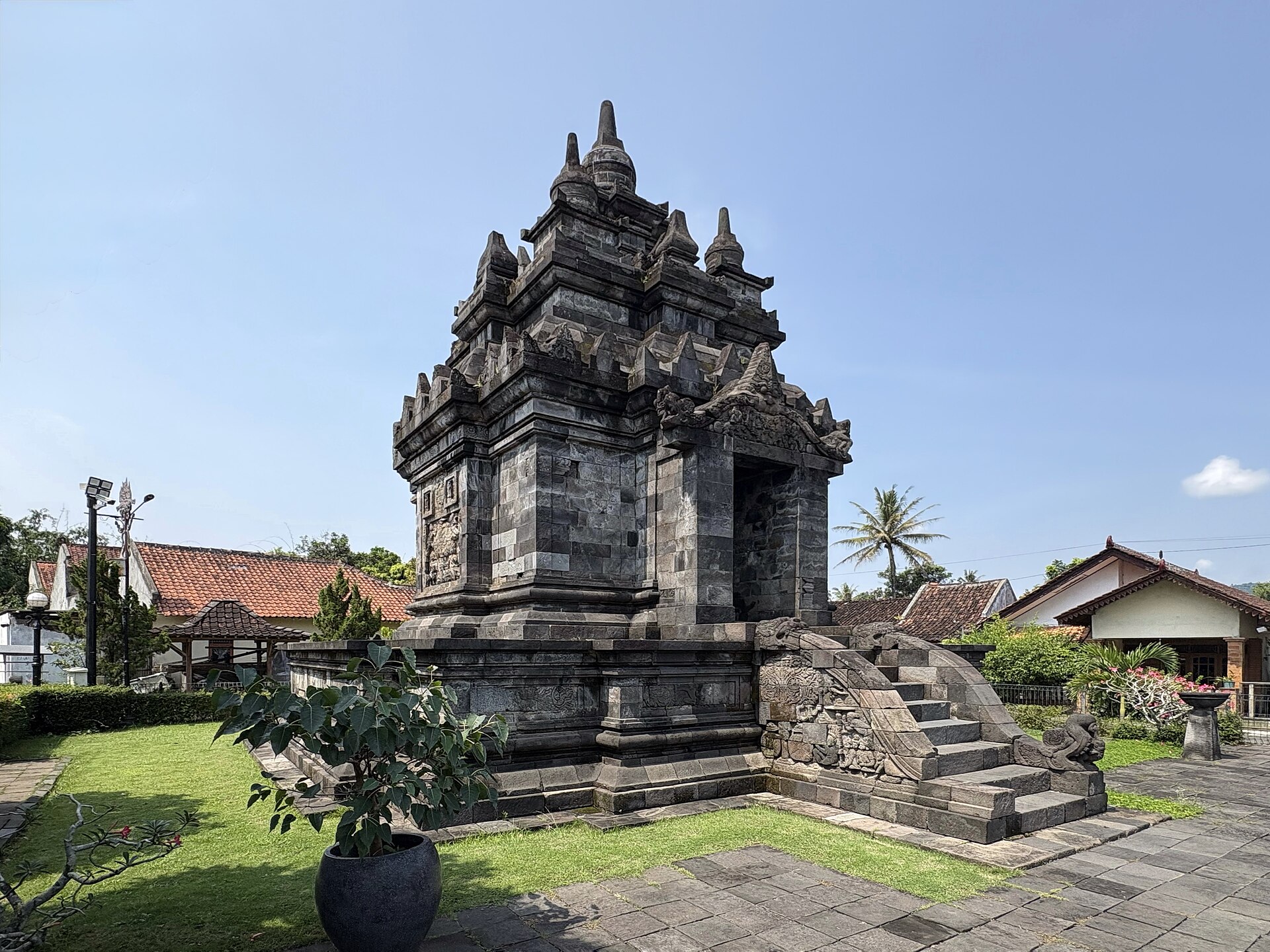
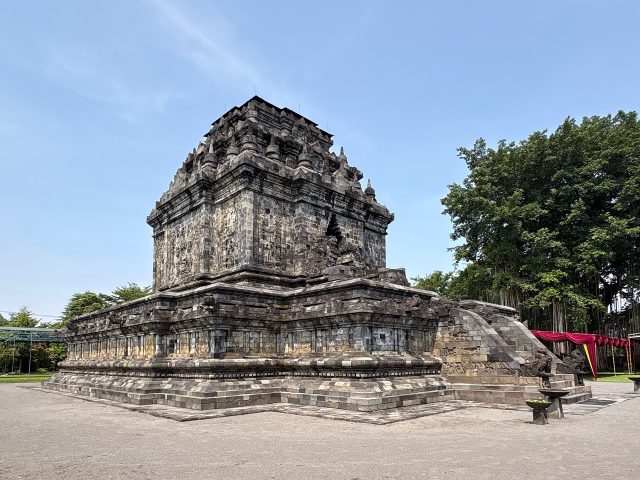
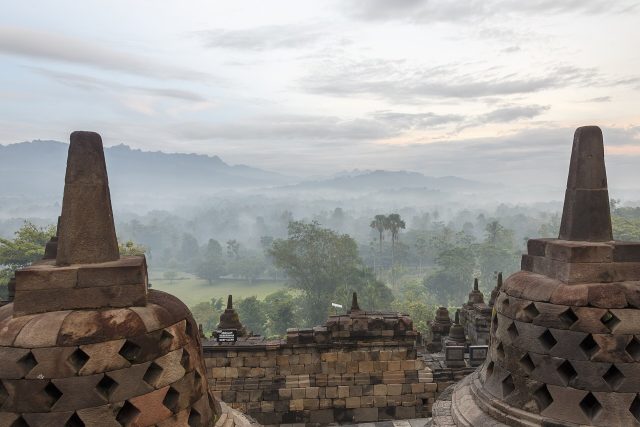
Pawon is one of those quiet places that often gets overlooked, tucked between two of Java’s most famous landmarks. While Borobudur and Mendut draw crowds with their grandeur, Pawon offers something different—a moment of stillness, a pause in the journey. It’s a small Buddhist temple, unassuming in size but perfectly proportioned, as if designed not to impress with scale but to remind visitors of something simpler. The way it sits in the landscape, almost blending into the surroundings, makes it feel like a natural part of the earth rather than a monument built upon it.
The temple dates back to the 8th or 9th century, a time when Buddhism flourished under the Sailendra and Mataram dynasties. Back then, Pawon was likely part of a sacred route, a stopping point for pilgrims making their way from Mendut to Borobudur. It may have been a place for meditation or rituals, a brief respite before the final ascent to the great stupa. Like many ancient structures in this region, Pawon was buried under volcanic ash and forgotten for centuries until European explorers rediscovered it in the 19th century. The passage of time has left its mark, but the temple still stands, a silent witness to the past.
Architecturally, Pawon follows the style of other Javanese Buddhist temples from its era, though it has its own subtle details. The structure rests on a low base, with steps leading up to it from two sides. Above the entrance, a small tower rises, its niches once holding statues of deities, though most are now empty. The walls are adorned with reliefs depicting scenes from Buddhist lore, though many have faded beyond recognition. One of the most striking features is the depiction of Kala-Makara on the eastern side—a mythical creature symbolizing protection, its intricate carvings still visible despite the wear of centuries. Inside, the temple once housed a Buddha statue, though only the pedestal remains today.
What makes Pawon special isn’t its size or the number of visitors it attracts. Unlike Borobudur, where the sheer scale of the monument can be overwhelming, Pawon invites quiet contemplation. There are no crowds here, no rush to move on to the next sight. The air is still, broken only by the rustling of leaves or the occasional call of a bird. The temple is surrounded by rice fields and palm groves, a landscape that hasn’t changed much over the centuries. It doesn’t feel like a relic of the past so much as a living part of the land, something that has always been here and always will be.
For locals, Pawon isn’t a major pilgrimage site, but it’s treated with respect. It’s part of their history, woven into the fabric of daily life in ways that aren’t always obvious. Sometimes, you might see monks performing rituals or farmers leaving offerings of flowers and fruit as a nod to tradition. During Buddhist festivals like Vesak, the temple comes alive briefly, with people gathering to light incense and pray. But even on ordinary days, Pawon retains a sense of timelessness, as if it’s waiting patiently for those who take the time to notice it.
The easiest way to visit Pawon is on the way to Borobudur. The drive between the two takes about half an hour, passing through villages and quiet countryside where life moves at a slower pace. If you go early in the morning, you might catch the temple in the soft light of dawn, when mist still lingers over the fields. In those moments, Pawon feels almost otherworldly, as if it’s floating in a sea of fog, its secrets just out of reach. It’s a place that doesn’t demand attention but rewards those who give it.
In the broader context of Java’s Buddhist heritage, Pawon plays a small but meaningful role. It’s a reminder that spiritual traditions aren’t always about grand gestures or towering monuments. Sometimes, a modest temple is enough to convey the idea of harmony—between people and nature, between the past and the present. Pawon doesn’t shout its history; it simply stands where it has for over a thousand years, waiting for those who are willing to listen. And perhaps that’s its greatest strength—the quiet persistence of something that has endured, unchanged, through the centuries.