Jakarta
Indonesia · 9 places
Photo: Wikimedia Commons, Copyrighted free use
JakartaJakarta is a city that never lets you settle into complacency. It moves at a relentless pace, where traffic jams stretch for miles, skyscrapers rise beside makeshift slums, and centuries-old traditions coexist with the frenzy of modern life. As Indonesia’s capital, it’s a sprawling metropolis of over ten million people, each seemingly rushing toward their own destination. Jakarta doesn’t resemble other Asian capitals—it’s louder, messier, and perhaps more honest. There’s no polished exoticism here for tourists, just raw, unfiltered life, with all its contradictions and unexpected revelations.
The city sprawls along the northwest coast of Java, its history tracing back to the fourth century, when a small port settlement stood in its place. Later known as Sunda Kelapa, it became a trade hub, drawing merchants from China, India, and Europe. The Dutch, who established Batavia in the seventeenth century, turned Jakarta into a cornerstone of their colonial empire. Remnants of that era linger in the narrow canals reminiscent of Amsterdam, the old warehouses by the port, and a handful of preserved mansions in the city center. Yet beneath the colonial veneer, traces of older times remain—ancient mosques, traditional stilt houses, and the faint echoes of a past that refuses to fade entirely.
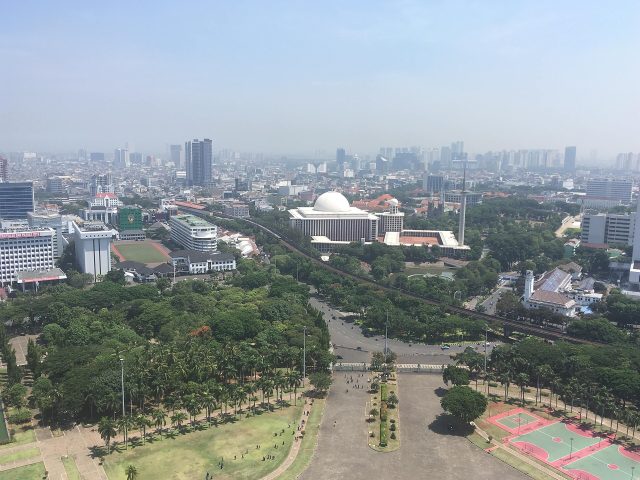
Modern Jakarta is a city of stark contrasts. In the business district, glass towers dominate the skyline, and life hums from nine to five, with office workers spilling into bars and restaurants by evening. But step off the main roads, and the city reveals a different side: narrow alleys lined with street food stalls serving satay and gado-gado, markets where everything from spices to secondhand phones changes hands, and neighborhoods where houses crowd together, connected by rickety bridges over murky canals.
Jakarta doesn’t hide its flaws—floods are frequent, and traffic jams are legendary. Yet that’s what makes it feel alive. It doesn’t strive for perfection; it simply exists, breathes, and transforms before your eyes.
For travelers, Jakarta is a challenge. There are no well-trodden tourist paths here, and everyone finds their own way. Some come for the museums, which tell the story of Indonesia’s past, while others seek out nightclubs or the vast shopping malls. A few escape to quiet corners like Taman Mini, a park where miniature replicas of the archipelago’s islands offer a moment of respite, or head to the Thousand Islands to trade the city’s chaos for the rhythm of the sea. And then there are those who wander the streets, watching life unfold: elderly men playing chess by the roadside, children kicking a ball on a dusty patch of ground, women selling fruit from their carts.
Jakarta doesn’t let you grow bored—it forces you to feel, to think, and to marvel, even if that wonder is sometimes tinged with bewilderment.
This isn’t a city for those seeking tranquility. The air smells of exhaust, spices, and the sea, while the sky is often hazy with smog. But if you give Jakarta a chance, it might surprise you. Perhaps it’s a conversation with a taxi driver who shares stories of his village in Sulawesi, or a sudden downpour that transforms the streets, making strangers smile as if the rush of daily life has momentarily paused. Jakarta defies simple definitions—it’s too vast, too varied, too alive. And in that chaos, perhaps, lies its greatest charm.
See & Do
All of them


Places on the map
Marker colour follows the categoryClimate and weather
Detailed weather: Jakarta- Average temperature
- 29 °C
- Precipitation per year
- 2250 mm
- Sunshine hours per day
- 4.7 h
Average air temperature
°C
28
28
28
29
29
29
29
29
29
29
29
28
Jan
Feb
Mar
Apr
May
Jun
Jul
Aug
Sep
Oct
Nov
Dec