Mendut sits a short distance from Borobudur. Most travelers hurry past it on their way to the larger stupa. Built in the ninth century, it predates its neighbor by nearly a hundred years. When Hinduism and Buddhism still blended on Java, the Sailendra dynasty shaped this sanctuary. Their rulers used faith to unify the island.
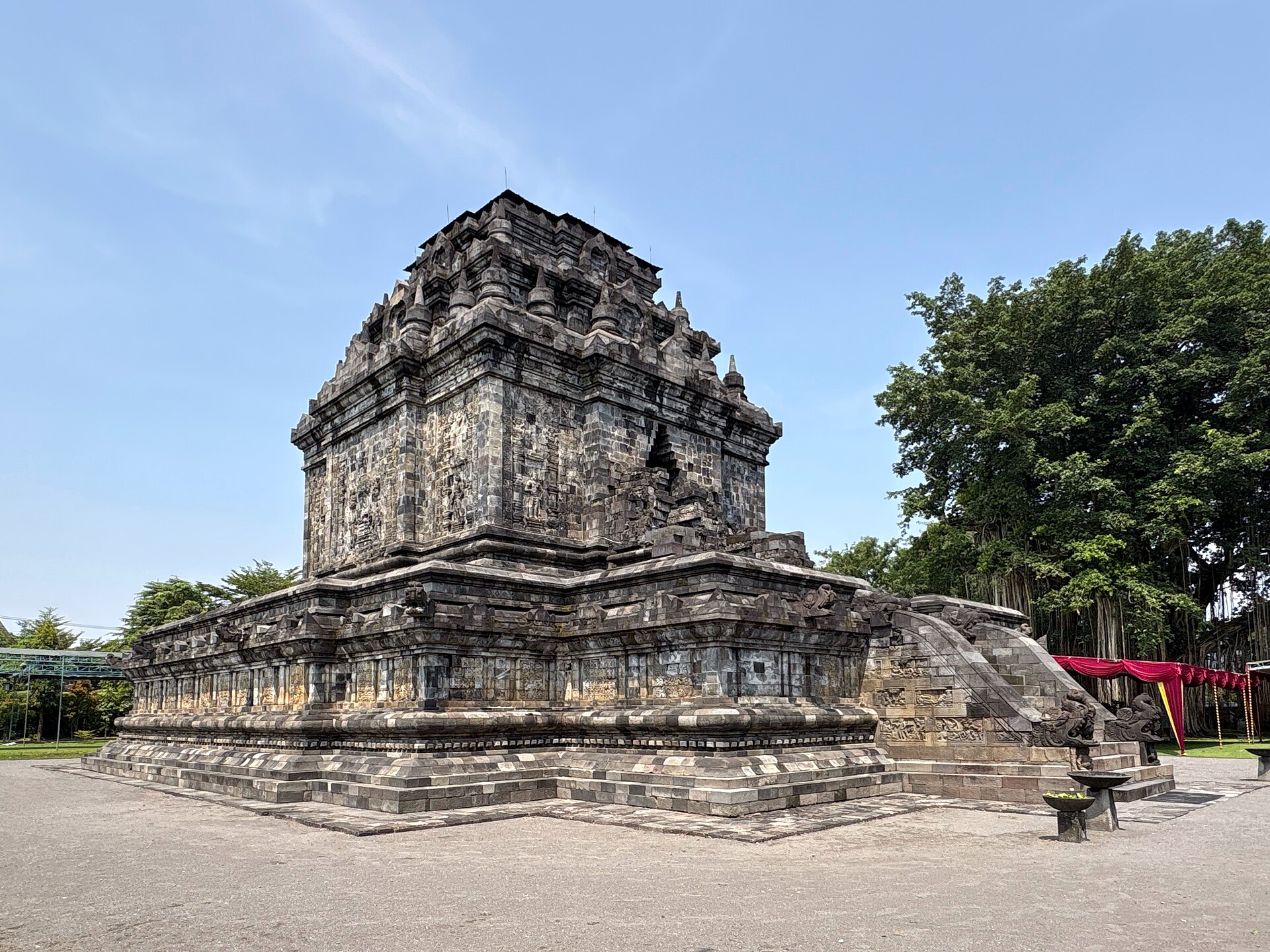
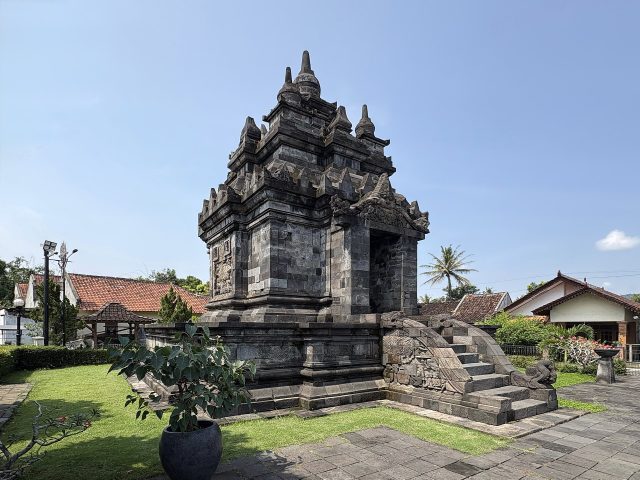
The temple’s design is simple: a square base topped by a single stupa. Carved guardians stand at the entrance, their faces softened by time. Inside, three stone Buddhas fill the dim chamber. The central figure, Dhyani Buddha Vairocana, is flanked by Avalokiteshvara and Vajrapani. Their stillness fills the space without crowding it.
No one knows for certain why Mendut was built here. A legend says King Indravarman dreamed of the spot where the Elo and Progo rivers meet. He ordered the temple to protect his kingdom from spirits. Historians suggest a different reason: the Sailendra dynasty used it to strengthen their rule by embracing Buddhism. Along with Borobudur and Pawon, Mendut was part of a pilgrimage route. Devotees walked this path as a journey toward enlightenment.
Every May, during the full moon, Mendut becomes the starting point for Vesak. Thousands gather here before walking to Pawon and Borobudur. They release lanterns into the night sky. Outside of Vesak, the temple stays quiet. Incense lingers in the air. Oil lamps flicker, casting shadows on the ancient statues. Visitors often stay longer than they planned.
Borobudur draws crowds. Mendut does not. Its stone steps invite you to sit. Watch sunlight move across the Buddhas’ faces. Listen to leaves rustling in the trees. Locals come to pray or escape the heat. The air smells of flowers. Life here moves slowly.
Mendut has survived centuries. By the 1800s, it lay in ruins, swallowed by jungle. Dutch archaeologists restored it in the early 1900s. Some reliefs depicting Buddhist parables remain on the walls. Many are gone. The temple looks much as it did a thousand years ago, though time has worn its edges.
The road to Mendut passes through villages. Farmers work in rice paddies and coffee fields. Stalls sell fruit and sweets. Sometimes a small market appears, offering batik, wooden masks, and carved figurines. There are no resorts here. Just the quiet rhythm of daily life.
Mendut is not grand. It is quiet. It has endured. That’s why some visitors return. The temple doesn’t ask for attention. It offers stillness. A chance to step into history that still lives in its stones.