Borobudur isn’t just a temple—it’s a vast stone chronicle carved into the heart of Java over a thousand years ago. Climbing its steps feels like stepping outside of time. The sun moves slowly across the reliefs, casting shadows over thousands of Buddhist scenes, while the wind rustles through the sal trees as if carrying whispers from those who built this place. The temple rises on a hill in the Kedu Plain, surrounded by volcanoes once believed to be the dwelling of spirits. Today, they stand silent, but their towering silhouettes remind us that Borobudur was never just a place of worship—it was meant to bridge the earthly and the divine.
The origins of Borobudur are shrouded in mystery. Built between the 8th and 9th centuries during the height of the Sailendra dynasty’s rule over Central Java, the temple flourished alongside Mahayana Buddhism, which coexisted with Hinduism on the island. The name Borobudur likely comes from the Sanskrit *Vihara Buddha Uhr*, meaning "Buddhist monastery on a hill," though no written records of its construction survive. The stones themselves, arranged in a perfect mandala, are the only storytellers left.
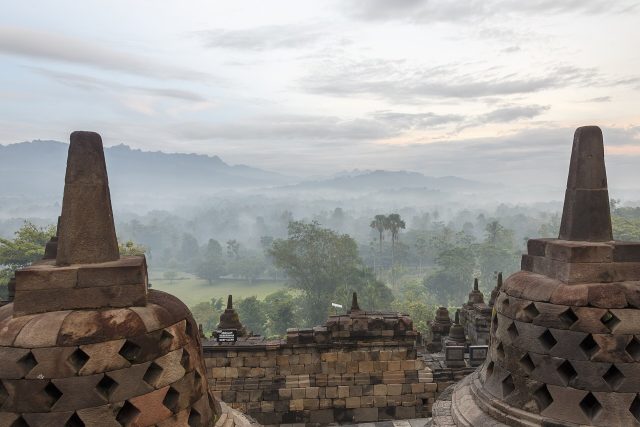
What makes Borobudur’s architecture extraordinary isn’t just its scale but its symbolism. The temple is a stepped pyramid of nine tiers, each representing a stage on the path to enlightenment. The three lower levels depict the world of desire, their walls carved with scenes from the Buddha’s life and the Jataka tales of his past incarnations. The next five tiers belong to the world of form, lined with hundreds of stupas—bell-shaped niches housing Buddha statues. At the summit lies the formless realm: an open space dominated by a central stupa, encircled by seventy-two smaller ones. Many of these once held Buddha figures, though time and looters have left some empty.
Walking the galleries in a slow spiral, you can’t help but wonder how many hands shaped these stones. The reliefs stretch over two kilometers, a carved encyclopedia of Buddhist teachings. Here, you’ll find the story of Prince Siddhartha—his sheltered youth, his renunciation of palace life, his search for truth, and his eventual enlightenment. But the carvings also offer glimpses of daily life in 9th-century Java: ships, palaces, musicians, and dancers all appear, suggesting that the reliefs weren’t just sacred illustrations but perhaps a guide for pilgrims circling the temple clockwise.
Borobudur hasn’t always looked as it does today. By the 11th century, after the eruption of Mount Merapi and the decline of the Sailendra dynasty, the temple was abandoned. The jungle swallowed it whole, burying it under layers of ash and earth. Europeans only learned of its existence in the early 19th century, when British governor Thomas Stamford Raffles sent an expedition to uncover it. Restoration took decades, with stones painstakingly reassembled like a giant puzzle. Some pieces were never recovered, and even now, conservation work continues, ensuring the temple remains as close as possible to its rediscovered state.
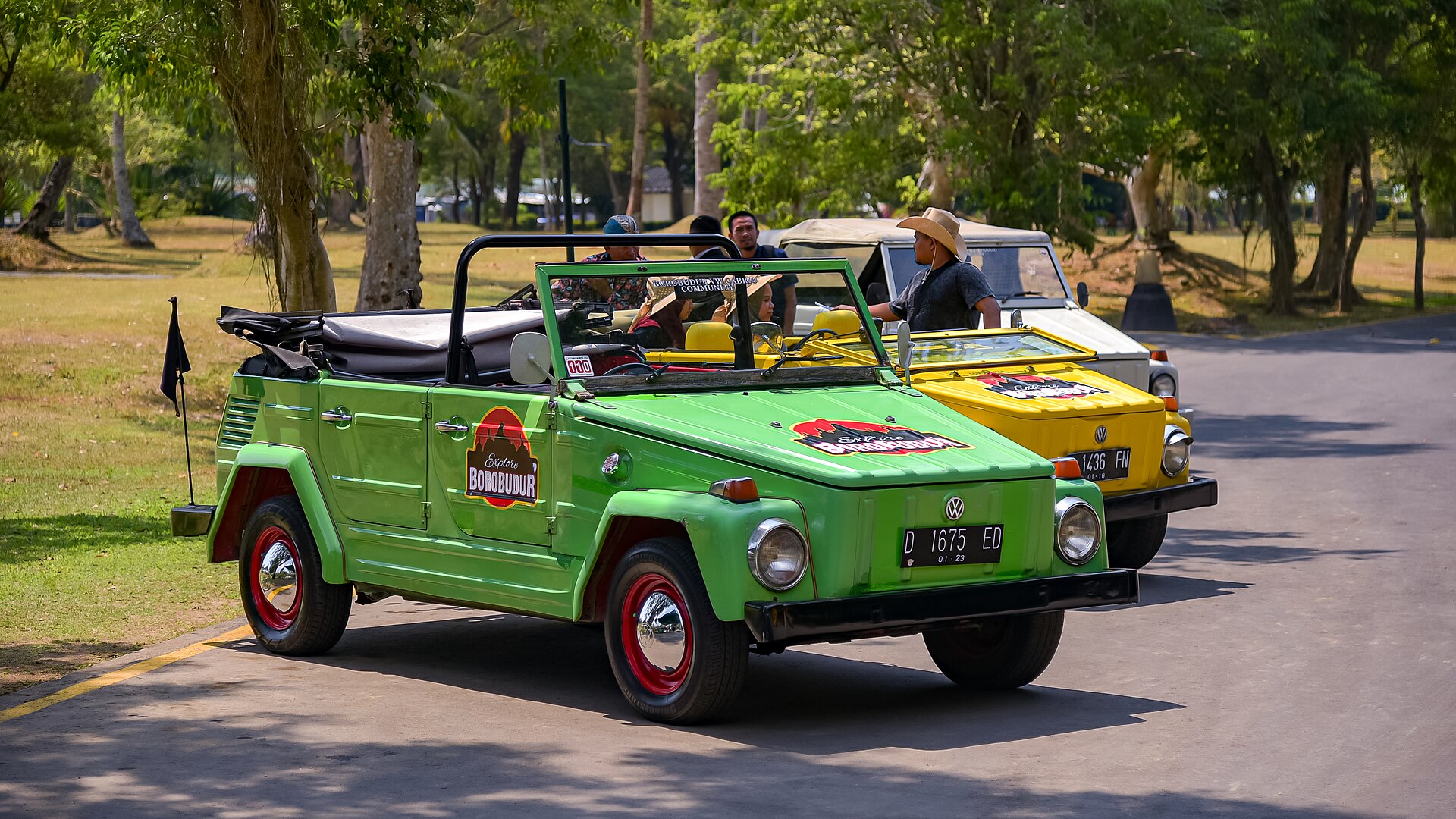
Visiting Borobudur is as much a ritual as it is a sightseeing experience. The best time to come is at dawn, when the first light gilds the stupas and mist still lingers over the plain. The crowds are thin then, leaving the terraces quiet enough to hear the wind. Touching the cool stone, you might try to imagine the chants that once filled this space a thousand years ago. The moment when the sun rises over the central stupa is particularly striking—it seems to glow from within, as if lit by something beyond the morning light. Even now, pilgrims arrive to meditate, leaving offerings of flowers and incense, keeping the temple’s spiritual purpose alive.
Yet Borobudur is more than a religious site—it’s where history and nature intersect. The surrounding landscape is a patchwork of rice fields and villages where life moves at the same unhurried pace it has for centuries. For locals, the temple is part of everyday existence, as familiar as the volcanoes on the horizon or the changing seasons. Nearby, artisans still practice traditional crafts like batik-making and woodcarving, their techniques passed down from the same era that gave birth to Borobudur.
Today, the temple is a symbol of Indonesia, but its significance reaches far beyond national borders. It’s one of those rare places that remind us how fragile—and yet how enduring—human culture can be. Borobudur has survived volcanic eruptions, centuries of neglect, and war, yet it remains more than a museum piece. It’s a living testament to faith and craftsmanship, a place that doesn’t just show you the past but lets you feel its presence. And when you descend the final steps, the temple doesn’t let go. It stays with you, a quiet echo of something greater than any journey.