Red Square in Chernihiv is one of those places where time seems to slow down just enough to let you breathe. It isn’t the kind of grand, bustling plaza you’d find in a capital city, and that’s precisely what makes it special. For centuries, this was where the life of the town unfolded—merchants haggling at fairs, craftsmen displaying their wares, children darting around the fountain. Today, it remains the heart of Chernihiv, a place where the past and present coexist without fuss.
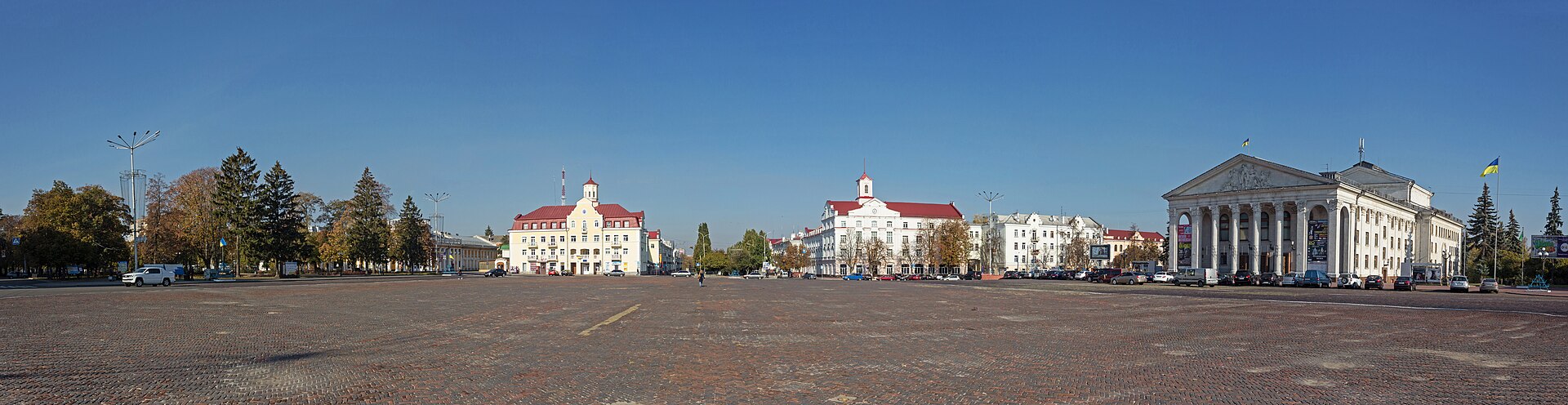
The architecture here tells its own quiet story. At the center stands the Chernihiv Regional State Administration building, a sturdy example of Stalinist neoclassicism, its imposing columns and symmetrical lines a reminder of mid-20th-century grandeur. Nearby, a small park shelters a statue of Taras Shevchenko, the national poet, where old trees offer shade to those who pause beneath them. Just steps away, the former Noble Assembly—now the regional philharmonic—still bears the marks of its aristocratic past, its columns and ornate facade hinting at the gatherings of Chernihiv’s elite in another era.
The square is framed by low-rise buildings that once belonged to merchants and well-to-do townspeople. Their facades, softened by time, blend elements of Art Nouveau and neoclassicism. One of the most notable is the former home of the Lizohub family, now a museum, its walls holding more history than they let on. These buildings have seen generations come and go, their faded elegance a testament to the city’s layered past.
The name Red Square wasn’t always attached to this place. Over the years, it has been known as Market Square, Cathedral Square, and even Revolution Square, depending on the era. In the 19th century, it was the site of lively fairs, public celebrations, and fireworks displays. The Soviet period gave it its current name, but the square’s role as a gathering place never changed. Today, it’s where people meet for coffee, families stroll with their children, and young couples linger in the evenings.
Throughout the year, the square adapts to the seasons. In winter, it transforms into an ice rink, its surface glinting under strings of lights. Come summer, outdoor cafes spill onto the pavement, and the air fills with music from festivals and open-air concerts. Local musicians often perform here, their melodies blending with the murmur of conversation. Craft fairs and workshops draw crowds, turning the square into a temporary hub of creativity. On warm evenings, when the streetlights cast a golden glow over the buildings, the place takes on a dreamlike quality, as if time itself has softened.
What strikes visitors most about Red Square is its unhurried atmosphere. There’s no rush, no sense of being swept along by a crowd. You can sit on a bench and watch the light play across the facades, or step into a small café for a cup of coffee and a slice of homemade pastry. For locals, the square is woven into the fabric of daily life—where birthdays are celebrated, friends catch up after work, and first dates begin. Those who leave Chernihiv often carry fond memories of this place, and even newcomers quickly sense its quiet charm.
A walk around the square is like flipping through the pages of a history book, each building offering a glimpse into a different chapter. You might start at the Shevchenko monument, then wander past the philharmonic, pausing in the park before turning down a side street lined with old merchant houses. There’s no set route; you simply follow your curiosity, noticing the small details—the worn steps of a staircase, the intricate molding above a doorway, the way the sunlight catches the leaves of the trees.
Over the years, the square has seen subtle changes. New cafes open, facades are restored, and the occasional festival brings a burst of energy. Yet the essence of the place remains unchanged. It’s a spot where you can slow down, where the weight of history feels present but not overwhelming. In a world that often demands speed, Red Square offers something rare: the chance to simply be, to let the rhythm of the city settle around you.