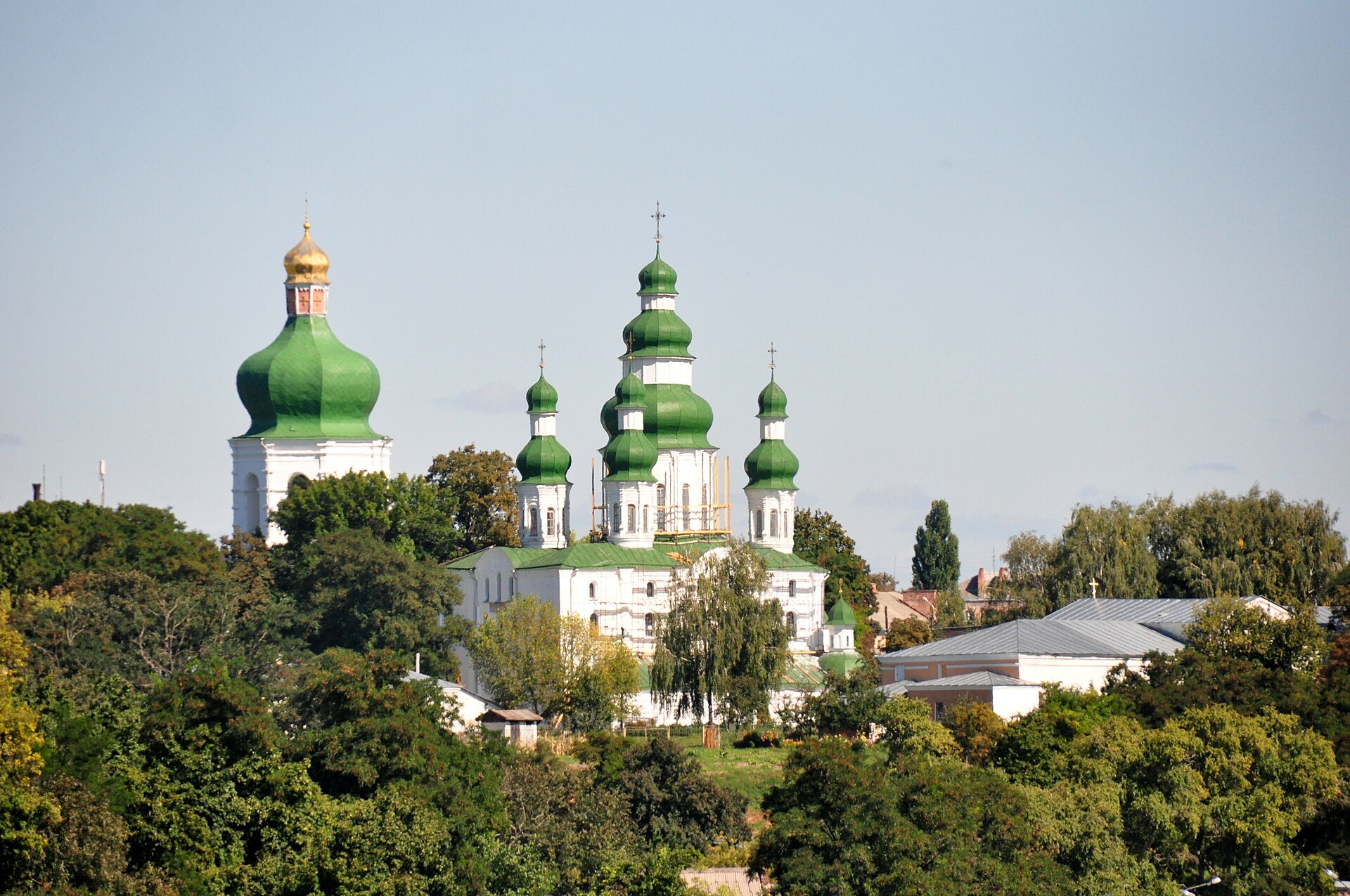
Perched on a high bluff overlooking the Desna River, the Yeletsky Assumption Monastery is one of those rare places where the weight of history feels almost tangible. Founded in the 11th century, its white-stone walls rise from the surrounding greenery like a silent witness to the centuries that have passed. The monastery has seen its share of upheaval—princes prayed within its walls, pilgrims sought solace here, and in darker times, it served as a fortress. Today, it remains an active monastery, though its gates are open to anyone drawn to its quiet grandeur or the chance to step back in time.
The architecture of the monastery is a chronicle carved in stone, with the Assumption Cathedral as its oldest and most striking chapter. Built in the 1060s under the patronage of Prince Sviatoslav Yaroslavich of Chernihiv, the cathedral has endured fires, invasions, and restorations, yet its austere, towering presence still dominates the skyline. The domes, visible from across the city, are a reminder of Chernihiv’s significance during the era of Kyivan Rus. Inside, fragments of 12th-century frescoes cling to the walls, their faded colors hinting at the artistry of a long-gone era. Even without knowing the history, the sense of age is inescapable—every corner, every worn step seems to whisper of the past.
Beside the cathedral stands the 18th-century bell tower, a later addition but no less iconic. Tall and graceful, with arched openings that frame the sky, it invites visitors to climb its heights. From the top, the view stretches across the Desna, the old city, and the rolling hills beyond. On clear days, the panorama is vast, making it easy to understand why this spot was chosen for the monastery—high above the river, with the land unfolding in all directions, it feels like a place where earth and sky meet.
The monastery complex is more than just its cathedral and bell tower. The refectory church, with its understated elegance, and the monks’ cells, now mostly restored, offer glimpses into the daily life of the monastery over the centuries. During the Soviet era, the buildings were repurposed as warehouses and workshops, their spiritual purpose erased. But in the late 20th century, the monastery was returned to the church, and today, the sound of prayers once again fills its halls. The restoration has been careful, respectful of the past, and it shows in the way the old stones and new repairs coexist.
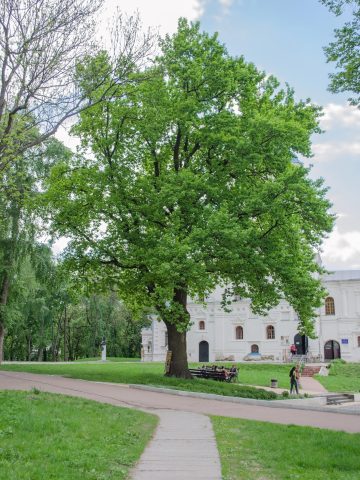
There’s a quiet solemnity to the Yeletsky Monastery, a sense of timelessness that lingers in the air. The grounds are peaceful, free from the bustle of tourists, where the only sounds are the occasional chime of bells or the rustle of leaves in the wind. In summer, the courtyard is lush with greenery, while winter transforms the ancient walls into a stark, snow-dusted silhouette. Even for those who aren’t religious, the monastery has a way of slowing time, of making the outside world feel distant. It’s a place to stand still, to watch the light play across the domes, or to listen to the wind as it moves through the courtyard.
The monastery’s history is deeply intertwined with that of Chernihiv itself. In the 11th century, it was not just a spiritual center but a hub of culture and learning. Manuscripts were copied here, education was offered, and the monastery’s library held ancient texts. When the Mongols invaded, the monastery was looted but survived, later becoming a stronghold of Orthodoxy in the region. In the 17th century, as Chernihiv came under Polish rule, the monastery resisted attempts to impose the Uniate Church, standing firm in its traditions. Its walls have seen Polish kings, Cossack hetmans, and Russian emperors pass through, each leaving their mark on the land.
Today, the Yeletsky Monastery is more than a pilgrimage site—it’s a living part of the city. Locals come here to light candles, to pray, or simply to find a moment of quiet in their day. The monastery blends seamlessly into modern Chernihiv, offering a refuge from the noise and pace of urban life. There are no flashy signs or crowds, just the steady presence of old stone, ancient trees, and the sense that here, time moves differently.
Visiting the monastery isn’t just about admiring its architecture or learning its history. It’s about feeling the spirit of the place—the way the past lingers in the air, the way the light falls just so on the worn steps, the way the silence feels like a conversation with something older than words. This isn’t an open-air museum; it’s a living monastery, where every stone holds a memory. You can attend a service, light a candle, or just sit on a bench and watch the cathedral’s domes gleam in the sunlight. The monastery asks nothing of its visitors except respect—for its silence, its traditions, and the weight of the centuries it carries. That’s why it remains one of the most genuine and welcoming places in Chernihiv.