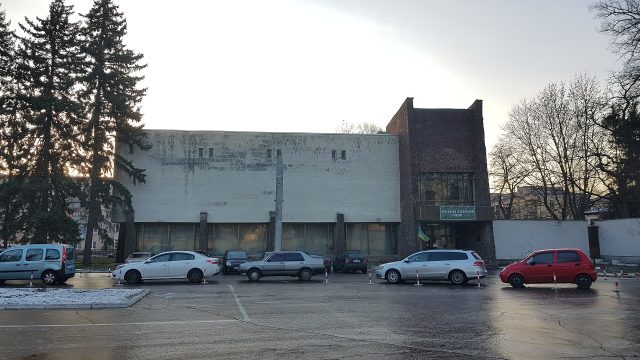
Chernihiv is a city where history isn’t locked away in museums but lingers in the stones beneath your feet and the quiet turns of its streets. One of the clearest reminders of this is the building that now houses the regional state administration, standing solidly on Kypnos Street. It’s not the kind of place that draws crowds, but that’s part of its quiet appeal—here, the layers of time feel tangible, where architecture speaks of the past while the present carries on around it.
Built in the late 19th century, the structure rose during a period of transformation for Chernihiv. The city was expanding, new public and administrative buildings were going up, and this one became a symbol of the era. Originally constructed as the Noble Assembly House, it was where the local gentry gathered for balls, meetings, and decisions that shaped the region. The design reflects the spirit of the time—classical symmetry, high ceilings, and large windows that once flooded grand halls with light.
It’s hard to imagine now, but these same halls once echoed with music and the rustle of silk gowns, where men in formal attire debated provincial affairs. Yet if you look closely, traces of that past remain: the intricate plasterwork on the ceilings, the heavy doors with their carved handles, the wide staircases with wrought-iron railings. The building has survived wars and upheavals, and though it was badly damaged during World War II, restoration brought it back to something close to its original state.
After the revolution, the Noble Assembly House lost its aristocratic purpose. It became home to various institutions, including Soviet party offices, and continued to serve as an administrative hub. Today, it houses the regional government, where officials work on modern-day concerns, but the building itself hasn’t shed its historical weight. Occasionally, its doors open to the public for exhibitions or cultural events, offering a rare glimpse inside.
The architecture blends classical and neo-Renaissance elements, a style common in public buildings of the period. The facade features pilasters and a central risalit crowned with a pediment, while inside, the spacious halls with their soaring ceilings still hint at their former grandeur. The main staircase is particularly striking—wide, with marble steps and ornate railings, as if inviting visitors to ascend and take in the view.
Chernihiv is a city where history isn’t hidden behind modern facades but stands alongside them. The regional administration building is one such place, a quiet witness to the passage of time. It doesn’t demand attention, but for those who pause, it offers a sense of continuity—a reminder that the city has been lived in, shaped, and reshaped long before the present day.
This isn’t a destination for those seeking spectacle or entertainment. But if you’re curious about how people lived a century ago, how a city evolves, or how architecture can tell a story, it’s worth a visit. The building doesn’t pretend to be anything other than what it is—a working government office—but it also carries the weight of cultural heritage. It doesn’t shout its history; it simply exists, a silent testament to the past that still breathes in the present.
There’s something about places like this that goes beyond mere memory. They seem to hold the atmosphere of their time—the voices of people who once walked these halls, the murmur of conversations, the decisions that shaped lives. It’s not a museum, nor is it just another office block. It’s a place where history didn’t end but simply took on a new form.