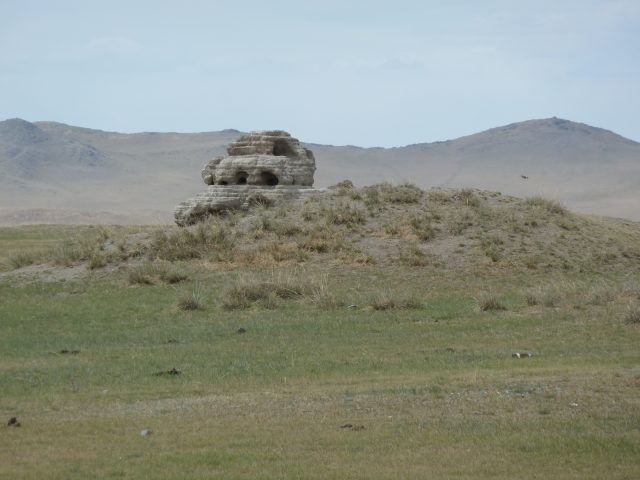
Karakorum is where Mongolia’s history takes tangible form. Tucked away in the vast steppes, this place was once the beating heart of an empire that stretched across half the known world. Today, only ruins remain, but they carry the weight of an era when horsemen thundered across these lands and the tents of khans and foreign envoys dotted the horizon. Unlike cities with dense streets and constant noise, Karakorum feels more like a monument—a quiet reminder of how swiftly power can fade, leaving behind only stones and stories.
Founded in the early 13th century, Karakorum became the first true city of the Mongols. Before this, nomadic tribes had no need for permanent settlements, but Genghis Khan understood that an empire required a capital—a place to collect tribute, receive ambassadors, and project strength. The city grew slowly, shaped by the hands of Chinese craftsmen, Persian architects, and European artisans who found their way here after the conquests. It wasn’t just an administrative hub; it was a symbol of unity, where cultures and religions coexisted under one rule.
The architecture reflected this diversity. Buddhist temples stood alongside Christian churches, mosques, and even Daoist shrines. The centerpiece was the palace of Ögedei, Genghis Khan’s son, built in the style of Chinese imperial residences. Surrounded by walls and towers, it housed audience halls, living quarters, and gardens. Little remains of it now—just foundations and scattered stones—but even these fragments hint at the city’s former grandeur.
Karakorum’s time as a capital was brief. By the late 13th century, the Mongol Empire had moved its seat to Khanbaliq, modern-day Beijing, and the city began its decline. Earthquakes, fires, and raids finished what neglect had started. By the 17th century, Karakorum was little more than a memory, its ruins eventually giving way to the Erdene Zuu Monastery, which still stands today. The monastery became a new symbol of the land, bridging the legacy of empire with the Buddhist traditions that followed.
Now, Karakorum is primarily an archaeological site. Excavations, ongoing since the early 20th century, have uncovered pottery shards, coins, jewelry, and weapons. More revealing are the remnants of urban infrastructure—sewer systems, wells, and workshops—that show Karakorum was more than a military outpost. It was a city with a thriving economy, where glass was blown, metal was forged, and silk was woven. Trade flowed along the Silk Road, connecting East and West.
Visiting Karakorum demands imagination. The steppe stretches endlessly, the wind carrying the scent of wormwood and dry earth. It’s easy to picture caravans moving along these roads, or sentries watching the horizon from the hills. The ruins aren’t grand like Roman forums or Egyptian pyramids, but that’s part of their charm. This isn’t a museum; it’s a place where history lingers in the air, where every stone holds the memory of people who lived here eight centuries ago.
Nearby, the Erdene Zuu Monastery offers a striking contrast. Its white walls and golden roofs stand out against the gray stones of the ancient city, as if time here moves differently. Founded in the 16th century on the site of Karakorum, the monastery was meant to revive the land’s former glory. Today, it remains active, with monks living and conducting ceremonies. Its library holds ancient manuscripts, and its temples display statues of Buddhas and intricate thangka paintings.
Karakorum isn’t for those seeking excitement or modern comforts. There are no bustling markets, restaurants, or hotels. It’s a place for travelers who want to understand Mongolia beyond its nomadic image—to see it as a chapter in global history. The journey here requires patience; to truly feel the city’s atmosphere, you must wander the steppe, examine the stones, and listen to the stories of locals. That’s the beauty of it—Karakorum doesn’t offer easy answers, only hints of what it once was, leaving room for reflection.
Now, Karakorum is a quiet place, rarely visited by tourists. You can spend a day walking among the ruins, stepping into the monastery, and watching herders tend their flocks nearby. As evening falls, the steppe turns golden, the sky so low it feels within reach. In those moments, it’s clear why this spot, at the heart of Asia, became the center of one of history’s greatest empires. Karakorum isn’t just a city; it’s where past and present meet, where nomadic freedom and settled civilization once collided.