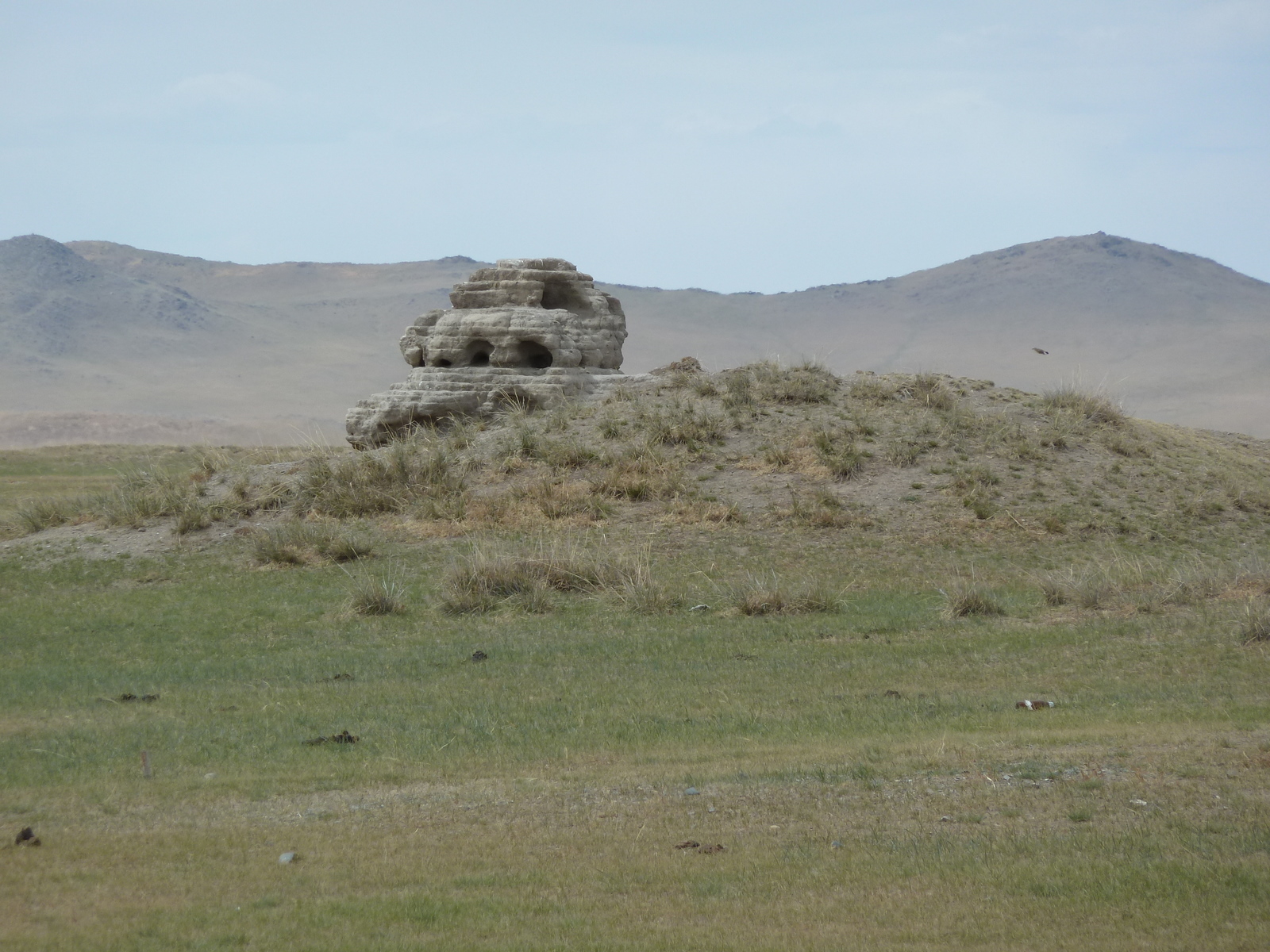
Khar Balgas is one of those rare places where Mongolia’s distant past feels almost tangible. The ruins here once formed the heart of the Uyghur Khaganate, a powerful empire that thrived centuries before Genghis Khan’s rise. Today, little remains beyond scattered stone foundations, crumbling walls, and fragments of what was once a vast city. Yet even in its silence, the site carries the weight of history—whispering of a time when this valley was a crossroads of trade, culture, and ambition.
The city took shape in the 8th century, when the Uyghurs, a Turkic nomadic people, established their capital in the Orkhon Valley. At its height, Khar Balgas sprawled across several square kilometers, enclosed by towering walls that protected palaces, temples, and bustling workshops. The Uyghurs were skilled builders, blending the practicality of nomadic life with the permanence of settled architecture. Inside the city, yurts stood alongside stone structures adorned with intricate carvings, reflecting a society that had mastered both mobility and stability.
But prosperity here was fleeting. In the 9th century, the Yenisei Kyrgyz swept through the region, crushing the Uyghur Khaganate and leaving Khar Balgas in ruins. The city never recovered. For centuries, its remains lay forgotten in the steppe, until the Mongols arrived in the 13th century. Genghis Khan, recognizing the strategic value of the Orkhon Valley, established his own encampment nearby. Yet Khar Balgas, once a thriving metropolis, had already faded into the past. Still, its legacy endured—its trade routes, cultural exchanges, and early urban experiments would later shape the Mongol Empire.
Now, Khar Balgas is an open-air archive of Central Asian history. Archaeologists have uncovered remnants of the city’s defenses, including gates and sections of the outer walls, as well as the foundations of what were once grand buildings. Among the most striking discoveries are the ruins of a Buddhist temple, a testament to the Uyghurs’ early adoption of the faith, long before it became central to Mongolian culture. Walking through the site, it’s easy to imagine the city as it once was—alive with merchants, artisans, and scholars.
The Orkhon Valley itself is part of the experience. The river winds through rolling hills and open steppe, with the distant peaks of the Khangai Mountains framing the horizon. The landscape is quiet, broken only by the wind rustling through the grass and the occasional cry of a bird. In this solitude, the past feels close enough to touch. It’s not hard to picture the Uyghur horsemen riding across these plains or the caravans that once passed through, carrying silk, spices, and ideas between China and the West.
Unlike more polished tourist sites, Khar Balgas offers no guided tours, no souvenir stalls, no neatly packaged history. It’s a place for those willing to explore on their own, piecing together the past from the fragments left behind. Visitors often stay in nearby ger camps, where local families share stories passed down through generations—tales of the city’s rise and fall, of battles fought and empires lost. The ruins become more than just stones; they’re a canvas for imagination, a puzzle waiting to be solved.
The Uyghurs left a lasting mark on the region. Their innovations in writing, governance, and craftsmanship influenced the cultures that followed, including the Mongols. The script they developed became a foundation for later Mongolian writing, and many of the trade networks they established remained vital for centuries. Even today, echoes of their world can be found in the traditions of the Orkhon Valley—from the way herders move across the land to the designs woven into textiles.
Khar Balgas is a reminder of how empires rise and fall, how cities are built and abandoned, how the past lingers in the land itself. For those drawn to Central Asia’s history, it’s a place that demands attention—not because it’s grand or well-preserved, but because it offers something rarer: a direct connection to the people who shaped this part of the world long before the Mongols. Standing among the ruins, it’s impossible not to wonder about the lives that unfolded here, the ambitions that drove them, and the quiet resilience of a place that has outlasted the civilizations that once called it home.