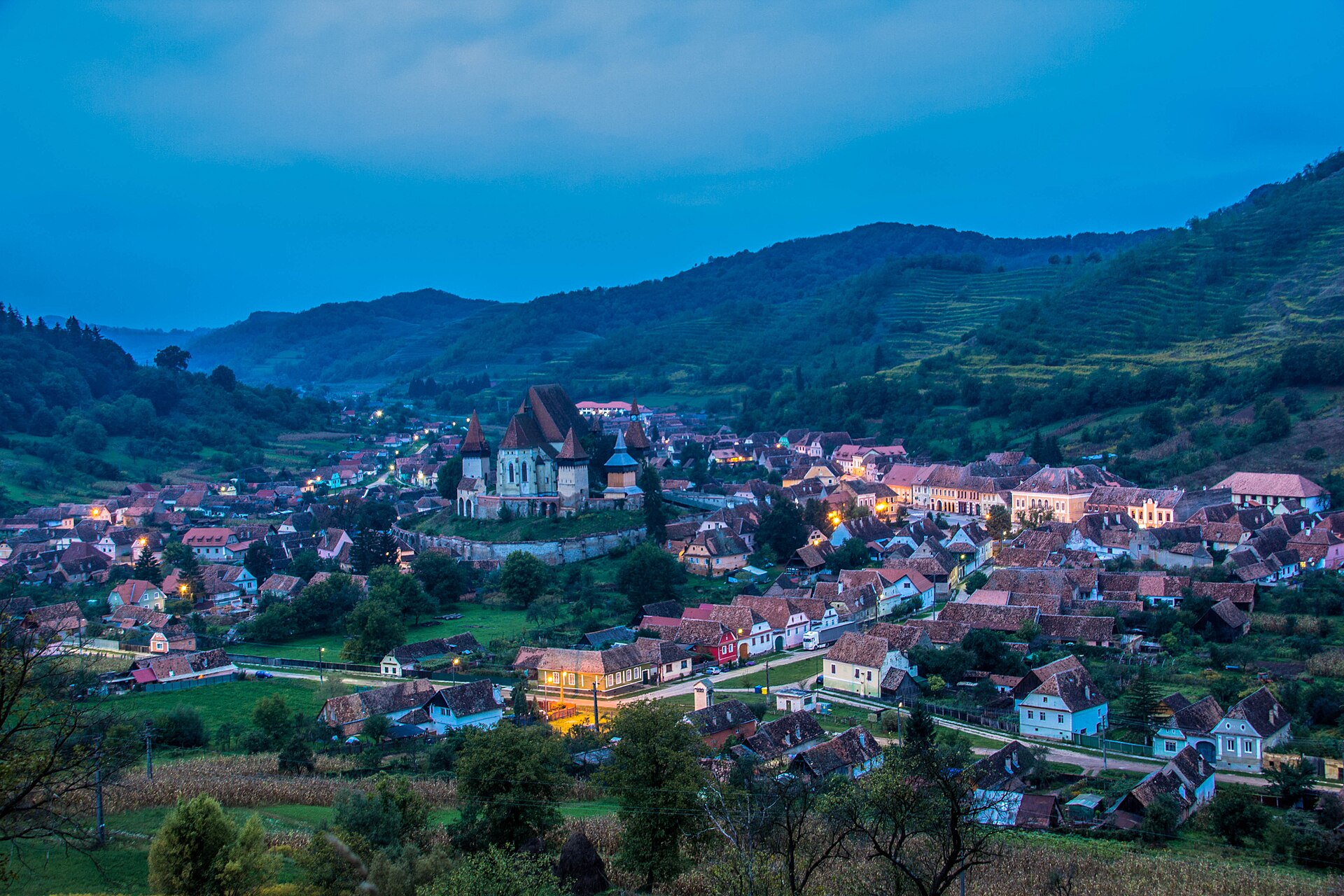
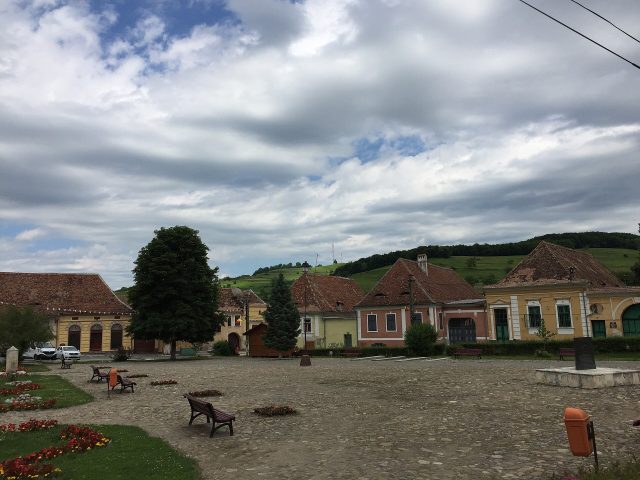
Biertan is one of those rare places where time seems to have paused, leaving behind a quiet village that feels untouched by the centuries. Nestled in the rolling hills of Transylvania, its narrow cobblestone streets wind between old stone houses with red-tiled roofs, their weathered facades telling stories of generations past. The only sounds that break the stillness are the occasional chime of church bells and the distant murmur of villagers going about their day. But what draws visitors here isn’t just the timeless charm of the village itself—it’s the fortified Evangelical church that stands sentinel on a hill above the settlement, a silent witness to centuries of history.
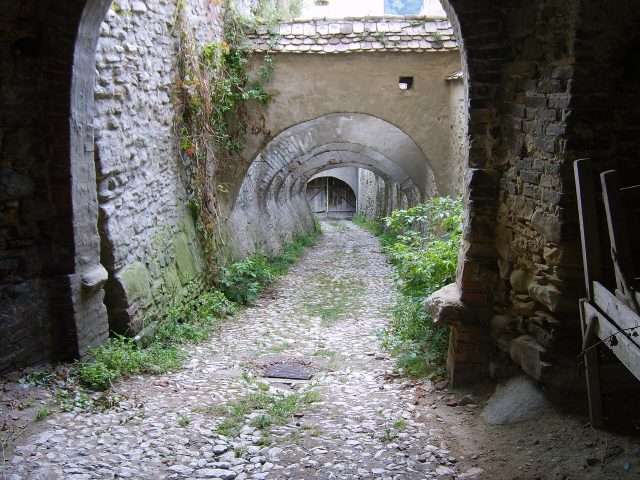
Built in the late 15th century on the site of an earlier wooden structure, the church was more than a place of worship for the Saxon settlers who called this land home. It was a fortress, a refuge, and a symbol of resilience. The Saxons, invited to Transylvania by Hungarian kings in the 12th and 13th centuries, built their churches to withstand the constant threats of invasion. The region was a battleground for empires—Ottoman, Hungarian, and local principalities—all vying for control. Fortified churches like this one were common, but Biertan’s stands out for its ingenious defenses: three concentric rings of walls, watchtowers, and hidden underground passages designed to protect the villagers during sieges.
The architecture of the church reflects the transition between Gothic and Renaissance styles, a blend of strength and elegance. The soaring pointed arches, sturdy buttresses, and intricate stone carvings on the portal are unmistakably Gothic, yet there’s a lightness to the design that hints at the coming Renaissance. Inside, the space feels surprisingly airy despite the thick walls, with sunlight filtering through tall stained-glass windows. The nave is adorned with 16th-century frescoes, their faded colors still vivid in places, while the altar—a masterpiece created in 1520 by an artist from Sibiu—is considered one of the finest examples of Transylvanian religious art. But perhaps the most striking feature is the pulpit, carved from a single block of stone, a testament to the skill of local craftsmen.
One of the church’s most unusual features is the so-called "reconciliation room." In medieval times, when a married couple found themselves at an impasse, they were locked inside this small chamber for two weeks. The room contained only one bed, one chair, one plate, and one set of cutlery—enough to force them to either resolve their differences or face the consequences. According to local lore, only one couple in three centuries failed to reconcile. Today, the room is preserved as a museum piece, offering a glimpse into the social customs of the past.
For the Saxon community, the church was the heart of village life. It wasn’t just a religious center but a place where documents were stored, community decisions were made, and, in times of danger, the entire population could seek shelter. The Saxons brought with them a culture of hard work and discipline, turning Biertan into a prosperous settlement known for its vineyards and skilled artisans. Even after the threat of invasions faded in the 19th century, the church remained a symbol of unity, a physical reminder of the community’s roots. When most Saxons left Romania in the 20th century, the church stayed behind, a quiet guardian of their legacy.
Today, Biertan is a place where history feels tangible. Unlike the more tourist-heavy towns of Transylvania, it retains an air of authenticity, untouched by crowds or commercialization. Walking up the hill to the church, you can spend hours exploring the fortifications, gazing out at the patchwork of vineyards, orchards, and red-roofed houses stretching into the distance. Inside the church, the dim light and the scent of old wood create an atmosphere of reverence. It’s easy to imagine the generations of villagers who once gathered here, their voices echoing under the vaulted ceiling.
The church has seen wars, shifting borders, and the slow decline of the Saxon community, yet it endures. Restoration efforts have carefully preserved its character, ensuring that the past isn’t lost to time. For the few Saxons who remain, it’s still a place of worship, where weddings and baptisms are celebrated much as they have been for centuries. For visitors, it’s a rare opportunity to step into a world that feels both familiar and distant—a place where the past isn’t just remembered but still alive.
A visit to Biertan is a chance to slow down and savor the quiet rhythms of rural Transylvania. There are no grand attractions here, no guided tours urging you to hurry along. Instead, there’s the simple pleasure of wandering the village’s winding streets, stopping in a small shop to browse handmade crafts, or sitting on a bench outside the church, watching the light change over the hills. In the evening, as the sun dips below the horizon, the village takes on a golden glow, and the sense of timelessness deepens. It’s a place where history isn’t just something you read about—it’s something you can feel in the cool stone of the church walls, in the rustle of leaves, in the quiet hum of life going on as it always has.