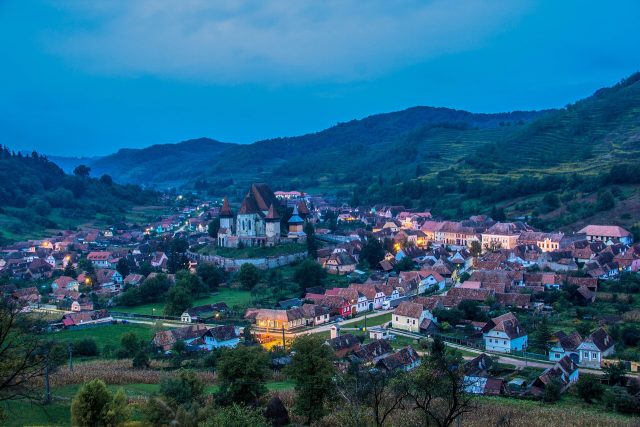
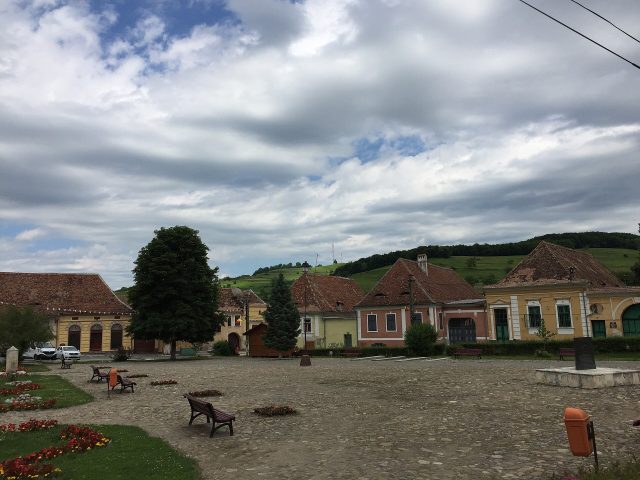
Biertan’s central square feels like a place where time has learned to take its time. Tucked away in the heart of a Transylvanian village that still wears its medieval face, the square holds onto the quiet rhythms of centuries past. The cobblestones, the carved window frames, the timber-framed houses leaning slightly with age—each detail seems to whisper stories of the people who once walked here, traded here, lived here. Founded in the 13th century by Saxon settlers, Biertan was for a long time a hub of trade and faith in the region, and the square was always its beating heart. Today, it looks much as it did hundreds of years ago, and that sense of continuity makes a stroll across its stones feel like stepping into a living postcard.
The architecture here tells a story of layers—how different cultures and eras have left their mark on a small patch of land. The houses around the square are classic Saxon: tall, narrow, with heavy wooden gates and tiled roofs that slope almost to the ground. Many of their facades are adorned with intricate carvings, and the windows are framed by stonework that has endured since the days when these homes were more than just dwellings—they were miniature fortresses. The old town hall stands out, with its arched ground floor and watchtower, once used to keep an eye on the surrounding countryside. Now it houses a small museum, but even without that, it remains one of Biertan’s most recognizable landmarks.
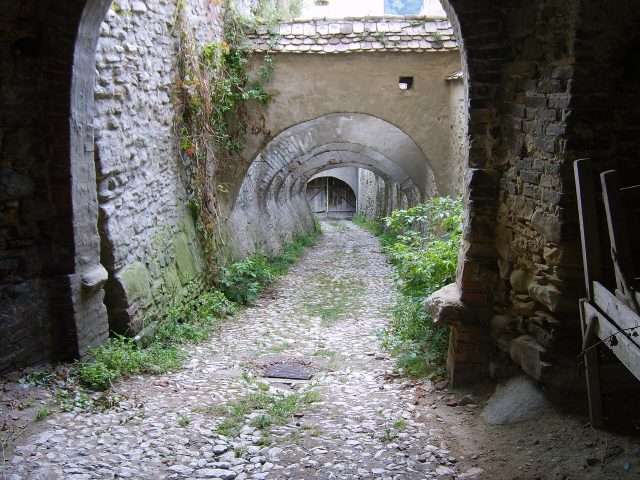
Dominating the square is the Evangelical church, built in the 15th century and later rebuilt in the Gothic style. It’s not just a place of worship but a testament to the engineering of its time. The church is encircled by a triple defensive wall with towers and arrow slits, a reminder that in the Middle Ages, safety was everything. Inside, you’ll find a beautifully preserved altar by a Viennese master, a pulpit carved with saints, and an organ that has filled the space with music for over four hundred years. But the most unusual feature is the so-called "reconciliation room," where couples on the verge of divorce were once locked together. Legend has it that in three hundred years, no pair ever left the room still at odds—everyone made up.
Life on the square moves at its own unhurried pace. In the summer, small fairs pop up, with local artisans selling pottery, embroidered linens, and traditional Saxon gingerbread. Winter turns the place into something out of a storybook: snow dusts the rooftops, and the air smells of roasted chestnuts and mulled wine. On days like that, it’s hard to resist sitting in one of the cafés on the ground floor of an old house, watching people pass by and listening to the crunch of snow underfoot. Unlike more famous Transylvanian towns, Biertan doesn’t draw crowds, and that’s part of its charm—it feels like a secret you’ve stumbled upon.
What makes the square truly special are the small details that don’t immediately catch the eye. The old wells scattered around, once the only source of water for the village. The wooden balconies lined with flowerpots in the warmer months. The elderly locals who sit on benches, chatting about the day’s news—they know the square’s stories and sometimes share them with those who take the time to listen. Their voices bring the place to life, turning it from a pretty corner of the world into something with character and memory.
Biertan’s square isn’t just about the past; it’s a place where tradition and the present coexist in an easy balance. Some of the descendants of the original Saxon settlers still live here, though many have since moved to Germany. They return for holidays, bringing new customs with them while carefully preserving the old ones. Every June, for example, the square hosts a medieval festival, filling the air with the sounds of lutes, the smell of grilled meat, and the laughter of people in period costumes. It’s not a tourist spectacle but a living tradition passed down through generations.
Walking across Biertan’s central square feels like time travel. There are no flashy signs, no billboards, no rush—just the quiet hum of history. The only sounds are the occasional chime of church bells, the creak of an old door, or the murmur of voices. It’s a place where you can feel the weight of the past without distractions, where the modern world fades into the background. Maybe that’s why it appeals to those who are tired of the relentless pace of life—a spot to pause, breathe, and simply be.
Biertan wasn’t always this quiet. In the Middle Ages, it was a bustling trading post on the route between Transylvania and Wallachia. Caravans passed through the square, deals were struck, and in the evenings, locals gathered to catch up on the news. Today, that hustle and bustle is just a memory, but it lingers in the air, especially if you listen to the stories of the old-timers. Sometimes, it’s easy to imagine turning a corner and finding yourself back in the 13th century, when Biertan was just beginning its story.
The square isn’t trying to impress anyone. It doesn’t need to be trendy or polished—it just is, with all its scars, its stories, and its unshakable character. That’s what makes it special. It’s not a place that changes to suit visitors; it’s a place that exists on its own terms, quietly enduring, quietly beautiful. And perhaps that’s the real magic of Biertan—it doesn’t ask for attention, but once you find it, it’s hard to look away.