Trujillo
Peru · 5 places
Photo: Enjoyatom21, CC BY-SA 3.0
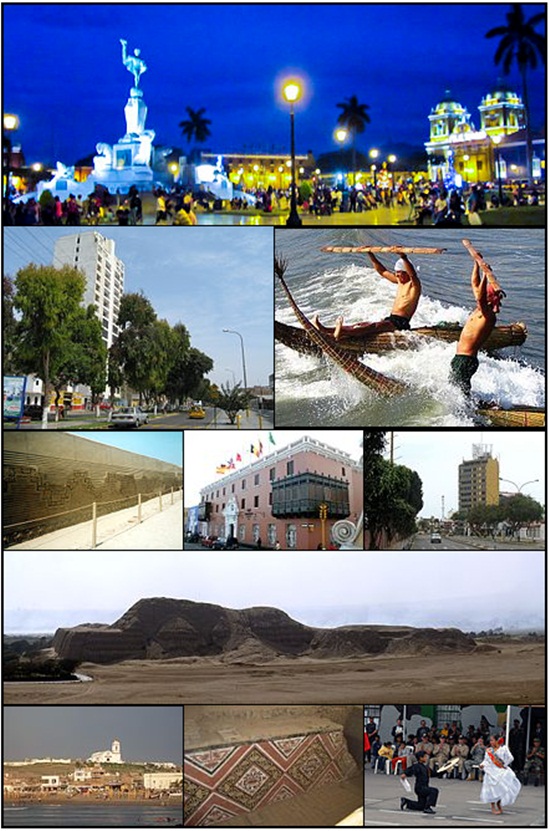
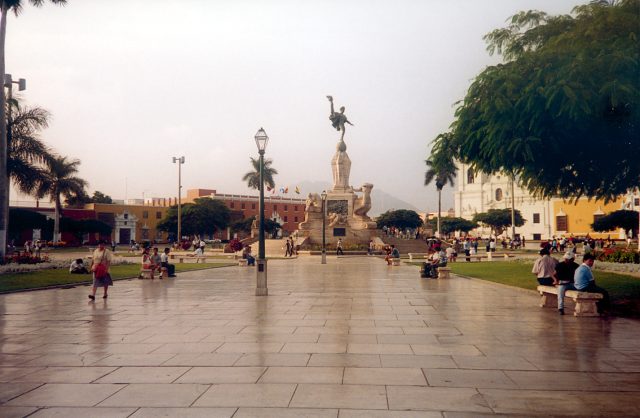
Trujillo sits in the Moche Valley on Peru’s northern coast, a city that breathes slowly. Founded by Spanish conquistadors in the 16th century, it keeps its colonial past in whitewashed houses and wooden balconies, their lived-in charm untouched. The streets lead to Plaza de Armas, where palm trees shade benches filled with locals—some chatting, others reading, a few just watching the day go.
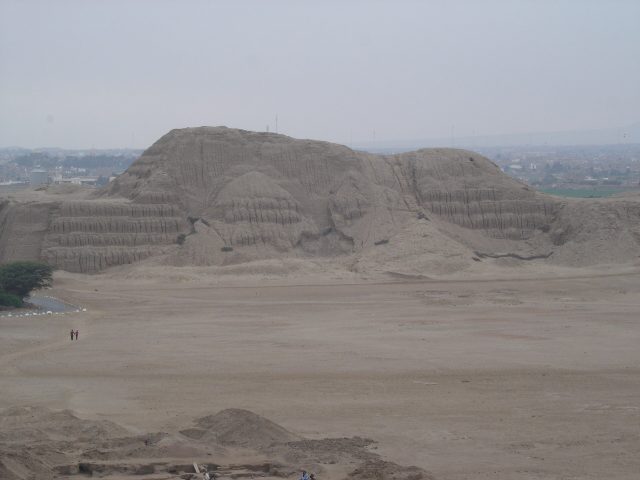
Beyond the colonial center, history runs deeper. Outside the city, the adobe ruins of Chan Chan stretch across the desert. Once the capital of the Chimú Empire, it was one of the largest pre-Columbian cities in the Americas. Its walls, carved with fish and seabirds, still hold traces of a civilization that thrived here. Nearby, the Huaca del Sol and Huaca de la Luna stand like ancient markers, built by the Moche people. Their pottery and goldwork remain some of the most striking artifacts of the region. These sites shape Trujillo’s identity, part of how its people see themselves.
Plaza de Armas is where the city gathers. Families sit in the shade, vendors sell fresh fruit, and musicians play marinera in the evenings. The air smells of grilled anticuchos, and laughter mixes with the music. Trujillo doesn’t perform for visitors. It lets you step into its rhythm, where past and present exist side by side.
Food here tells its own story. The ceviche is reason enough to visit—the fish comes straight from the Pacific. But other dishes carry history too. Shambar is a thick soup of wheat, beans, and slow-cooked pork. Seco de cabrito lets goat simmer in beer and cilantro until it falls apart. For something sweet, the market sells king kong, a layered cookie cake filled with manjar blanco. Meals here connect people, recipes passed down through generations, each bite holding memory.
Trujillo doesn’t draw crowds like Machu Picchu. There’s no rush to see everything. The locals, trujillanos, are warm, often starting conversations as if you’ve known them for years. They’ll show you hidden courtyards or recommend a small workshop where artisans make traditional hats. The city rewards those who wander—finding a mural of an ancient deity on a crumbling wall or hearing a melody that sounds timeless.
History here feels alive. A colonial balcony overlooks a street where vendors sell handmade ceramics. Marinera music blends with the clatter of market stalls. Trujillo doesn’t try to impress. It exists as it always has, where history isn’t locked behind glass but something you can touch, taste, and walk through. It’s not a place you check off a list. It’s where you let yourself get lost, where time feels less like a line and more like a circle.
See & Do
4 places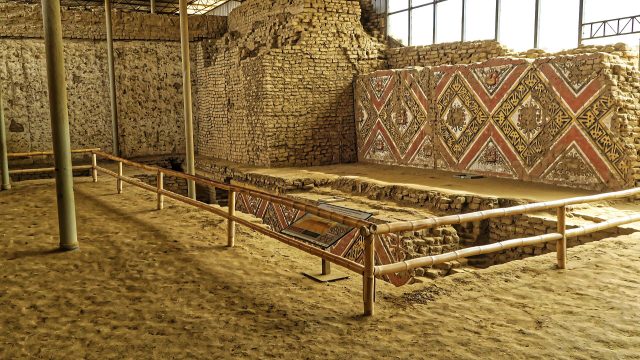
Places on the map
Marker colour follows the categoryClimate and weather
Detailed weather: Trujillo- Average temperature
- 20 °C
- Precipitation per year
- 78 mm
Average air temperature
°C
22
23
23
21
20
19
18
18
17
18
19
20
Jan
Feb
Mar
Apr
May
Jun
Jul
Aug
Sep
Oct
Nov
Dec