The Temple of the Moon rises from the desert hills just outside Trujillo, a quiet monument to a civilization that thrived long before the Inca. The Moche people, who built this complex between the first and eighth centuries, left no written records, but their legacy speaks through stone and color. Here, the past isn’t just preserved—it lingers in the wind that sweeps across the ruins, in the faded murals that still tell stories of gods and warriors.
This wasn’t a single structure but a living site, expanded over generations. The Moche molded millions of adobe bricks by hand, mixing clay, water, and straw before drying them under the sun. Each ruler added a new tier to the pyramid, stacking history upon history. What remains today is a fraction of its former scale—a thirty-meter-high ruin that once dominated the landscape. The layers of construction reveal a society that valued continuity, where every leader sought to leave their mark on something greater than themselves.
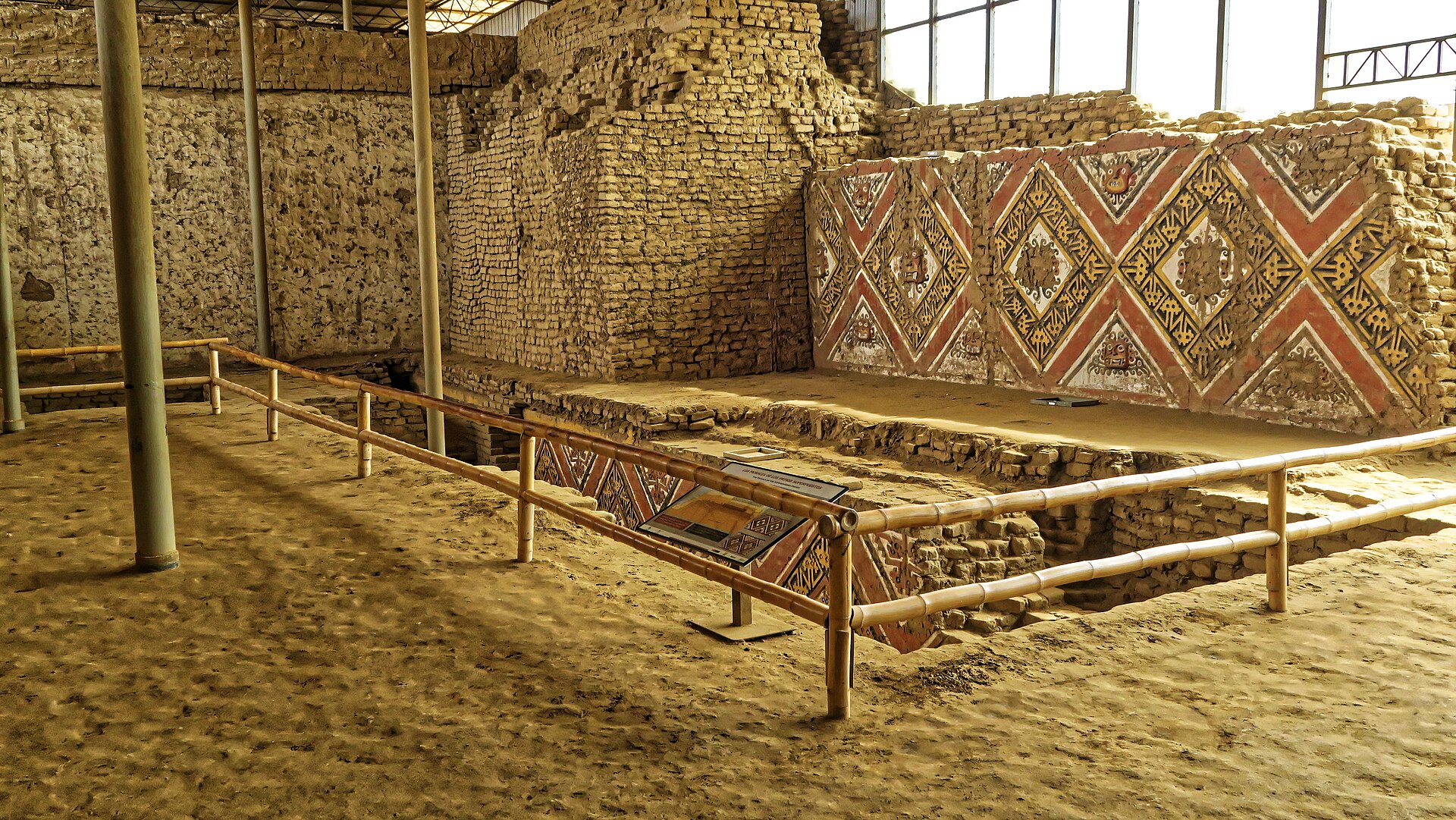
Inside the temple, the walls still hold traces of the Moche world. Murals depict deities with fanged mouths and serpentine bodies, scenes of ritual sacrifice, and glimpses of daily life. The colors—deep reds, ochres, blacks, and whites—have barely faded, though centuries have passed. One of the most striking figures is Ai Apaec, a god associated with water and fertility, his fierce expression a reminder of how closely the Moche tied their survival to the forces of nature. Nearby, archaeologists have uncovered burial sites, including the remains of those offered in sacrifice, a testament to the importance of ritual in Moche culture.
Just a short distance away stands the Temple of the Sun, the administrative heart of the Moche world. Together, the two temples formed a single complex where spiritual and political power were intertwined. The Temple of the Moon was where the divine met the earthly, where priests performed ceremonies that shaped the fate of the civilization. The scale of these structures suggests a society with vast resources and a highly organized labor force, capable of feats that still impress today.
The desert around the temple feels vast and timeless. From the upper terraces, the view stretches across the Moche Valley, a landscape that once sustained a thriving culture. There are no crowds here, no tour buses lining the horizon—just the quiet hum of the wind and the occasional murmur of visitors. The absence of modern noise makes it easier to imagine the temple as it once was: a place of processions, prayers, and the steady rhythm of a civilization in motion.
The Moche were master engineers, building intricate irrigation systems to tame the desert and feed their people. They were also skilled artisans, crafting pottery and jewelry that reveal a deep connection to both the natural and supernatural worlds. Their society flourished for centuries before vanishing around the eighth century, leaving behind only fragments of their story. The Temple of the Moon is one of those fragments, a place where the past feels almost tangible.
Standing in the shadow of the ruins, it’s hard not to feel a sense of connection to the people who once walked these same steps. The temple wasn’t just a religious site; it was the center of a worldview, a place where the Moche sought to understand their place in the universe. That search for meaning is something that still resonates today, drawing not just archaeologists but anyone who has ever wondered about the lives that came before.
Visiting the Temple of the Moon is a reminder of how fleeting even the most powerful civilizations can be. The Moche left no written history, but their art, their architecture, and their rituals offer a glimpse into a society that was as complex as it was creative. The temple stands as a quiet witness to their achievements, a place where the past isn’t just remembered—it’s felt.