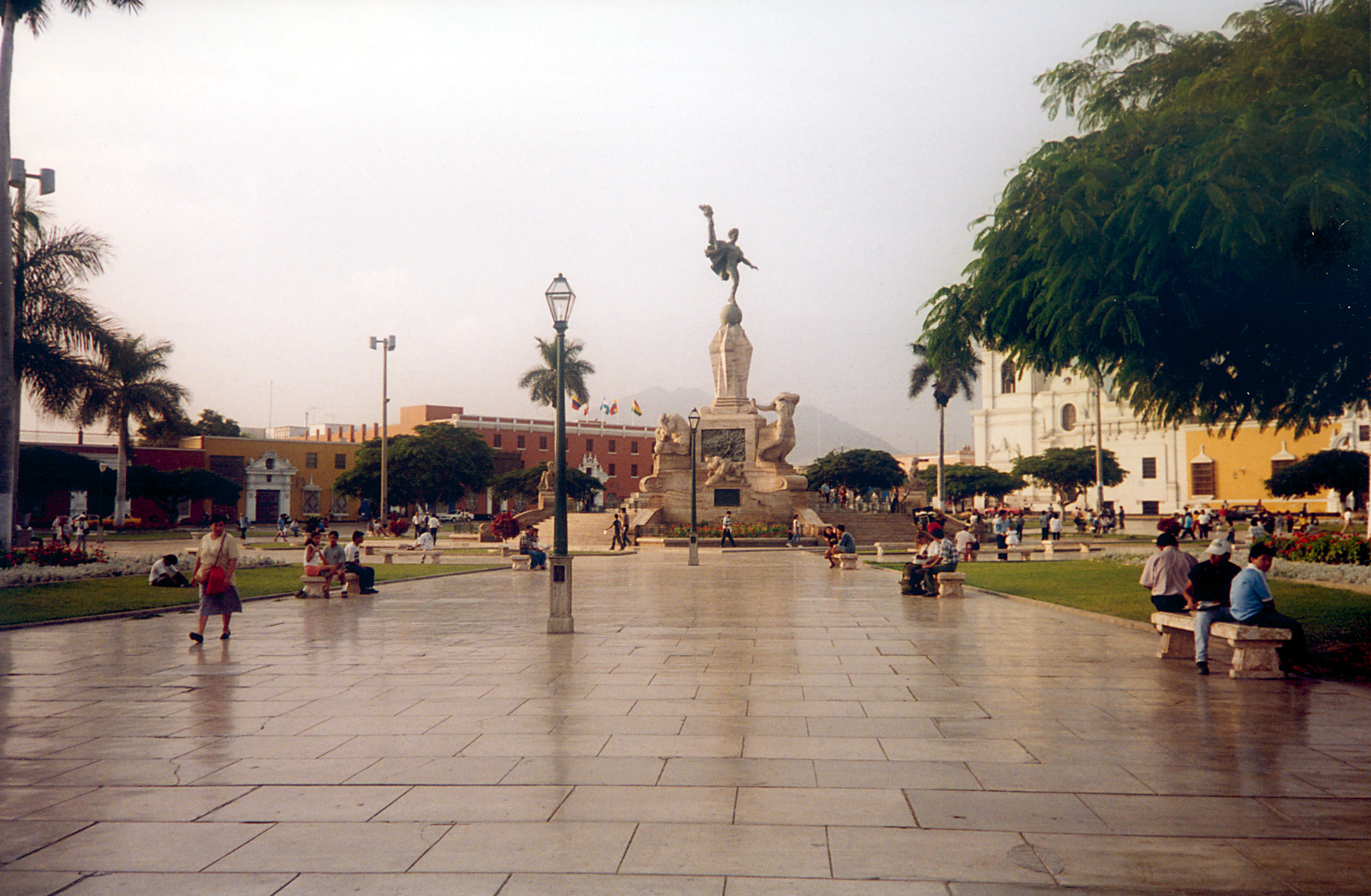
Trujillo’s main square is where the city breathes. Unlike Lima’s central plaza, this one isn’t a stage for tourists. It’s smaller, quieter, and lived-in. The rhythm here is slow—no crowds, no rush. Just the steady pulse of a place shaped by history but not defined by it.
The buildings around the square are low and sturdy. Their facades, painted in faded pastels—dusty pink, pale blue, buttery yellow—glow in the afternoon light. Wooden balconies jut out, their carvings offering shade. These weren’t just for show; they kept interiors cool while letting the breeze through. The cathedral on the north side stands out for its simplicity. Its white facade and twin towers are modest, yet it anchors the square with permanence. No gilding, just solid craftsmanship that has lasted.
Trujillo was founded in the 16th century. Plaza de Armas—"Square of Arms"—was its heart from the start. Soldiers drilled here. Proclamations were read. Power was displayed. By the 19th century, it became the stage for Peru’s fight for independence. Trujillo was one of the first cities to rally behind liberation. In 1820, the Peruvian flag was raised here for the first time. Today, a bronze monument in the center marks that moment. It doesn’t demand attention. It just fits into the square’s quiet story.
During the day, the plaza is a place of small moments. Locals sit on benches, chatting or reading. Vendors sell fresh fruit and sweets from carts. Tourists wander, taking photos of the cathedral or the fountain. No one performs. They just live.
The real magic happens in the late afternoon. The heat eases. Street musicians set up near the edges, playing guitars and cajóns. Sometimes, a small group sings creole songs. Their voices carry across the plaza. It’s not a show. It’s life.
At night, the square changes. Streetlights pick out the details—the cracks in the plaster, the worn edges of the balconies. The fountain in the center, installed in the early 1900s, glows. Couples stroll. Children dart between benches. Cafés fill with people lingering over coffee or pisco sours. The night air is warm. The mood is relaxed. The square feels like the city’s shared living room.
Plaza de Armas keeps Trujillo’s traditions alive. In October, the city celebrates Día del Trujillano. The square becomes the center of parades, music, and fireworks. In December, a Christmas tree is erected. Families gather to enjoy the decorations. But even on ordinary days, the square draws people in. It’s where old friends meet. Where children play. Where the city’s pulse is easiest to feel.
For visitors, the plaza is the best place to start. From here, you can walk to museums, colonial mansions, and the ruins of Chan Chan. But you don’t need to go far to understand why Trujillo is called the "City of Eternal Spring." Sit on a bench with a cup of coffee. Watch the world go by. The square doesn’t shout its history. It lets you discover it in the light on the cathedral’s facade, in the laughter of children near the fountain, in the quiet conversations of locals who know this place well.
Plaza de Armas isn’t timeless. It’s alive. It’s not frozen in the past or chasing the future. It’s a gathering place. A crossroads. A quiet witness to the lives around it. In a country where history is often dramatic, Trujillo’s main square offers something different—continuity. Small, everyday moments that add up to something lasting. It won’t leave you breathless. But it will stay with you.